The split between a wa handle and a yo handle is best treated as a comparison of common constructions, not a universal rule about weight. A typical wa handle surrounds a hidden or partial tang; a typical yo handle uses two scales around a broader tang, often with pins or rivets. Handle shape, material, dimensions, attachment method, tang mass, and blade mass determine the final grip and balance.
Both can be excellent, which is exactly why the decision should come from the blade and the grip rather than from a preference for tradition or familiarity. A handle should orient the hand, sit cleanly at the blade, and be simple to live with, and either style can do that on the right knife.
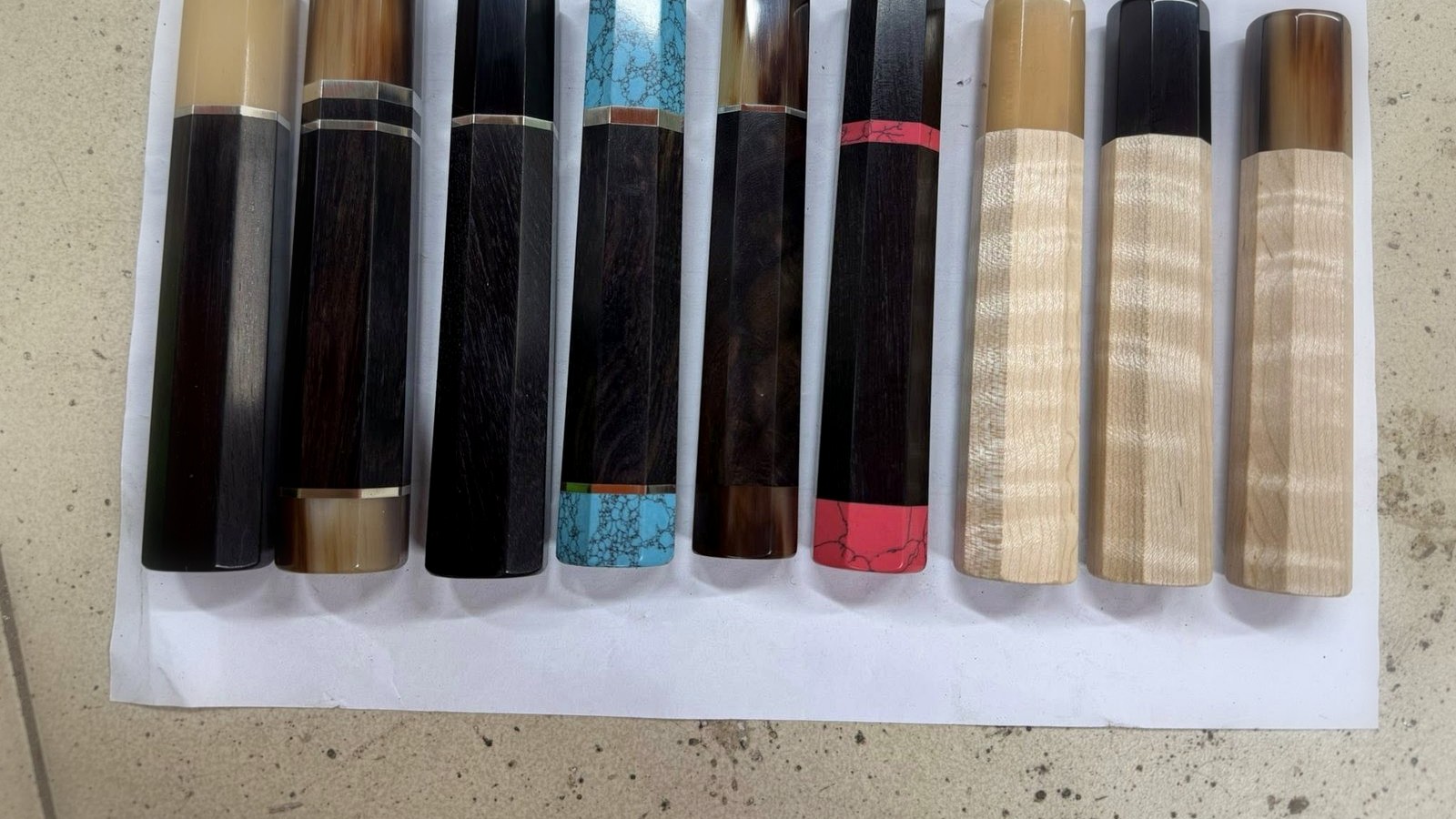
The short answer
Short answer: start with the knife’s tang and the repair you are actually planning. A typical wa handle surrounds a hidden or partial tang and is often replaceable; a typical Western handle uses scales around a broader tang and can often be professionally re-scaled. Neither label guarantees a lighter or heavier result because the blade, tang, handle dimensions, materials, and attachment all contribute.
Confirm construction and compatibility before choosing a direction for grip or balance. Horn & Grain makes wa handles; its configurator does not offer Western scales, promise a full-tang-to-wa conversion, or simulate the finished balance. If metal is exposed around the entire handle, send photographs and measurements to a qualified rehandler before ordering.
Wa and yo at a glance
| Decision point | Wa handle | Yo handle |
|---|---|---|
| Tang | Typically surrounds a hidden or partial tang | Typically uses two scales around a broader tang |
| Balance | Often lower in rear mass and more blade-forward; not guaranteed | Often adds more rear mass; not guaranteed |
| Care and repair | Often replaceable after compatibility and attachment are identified | Suitable scales can often be professionally replaced |
| Look | Often wood and horn in octagonal, oval, or D-shaped forms | Often pinned or riveted scales, from nearly straight to deeply sculpted |
Check whether a wa handle is compatible with your blade
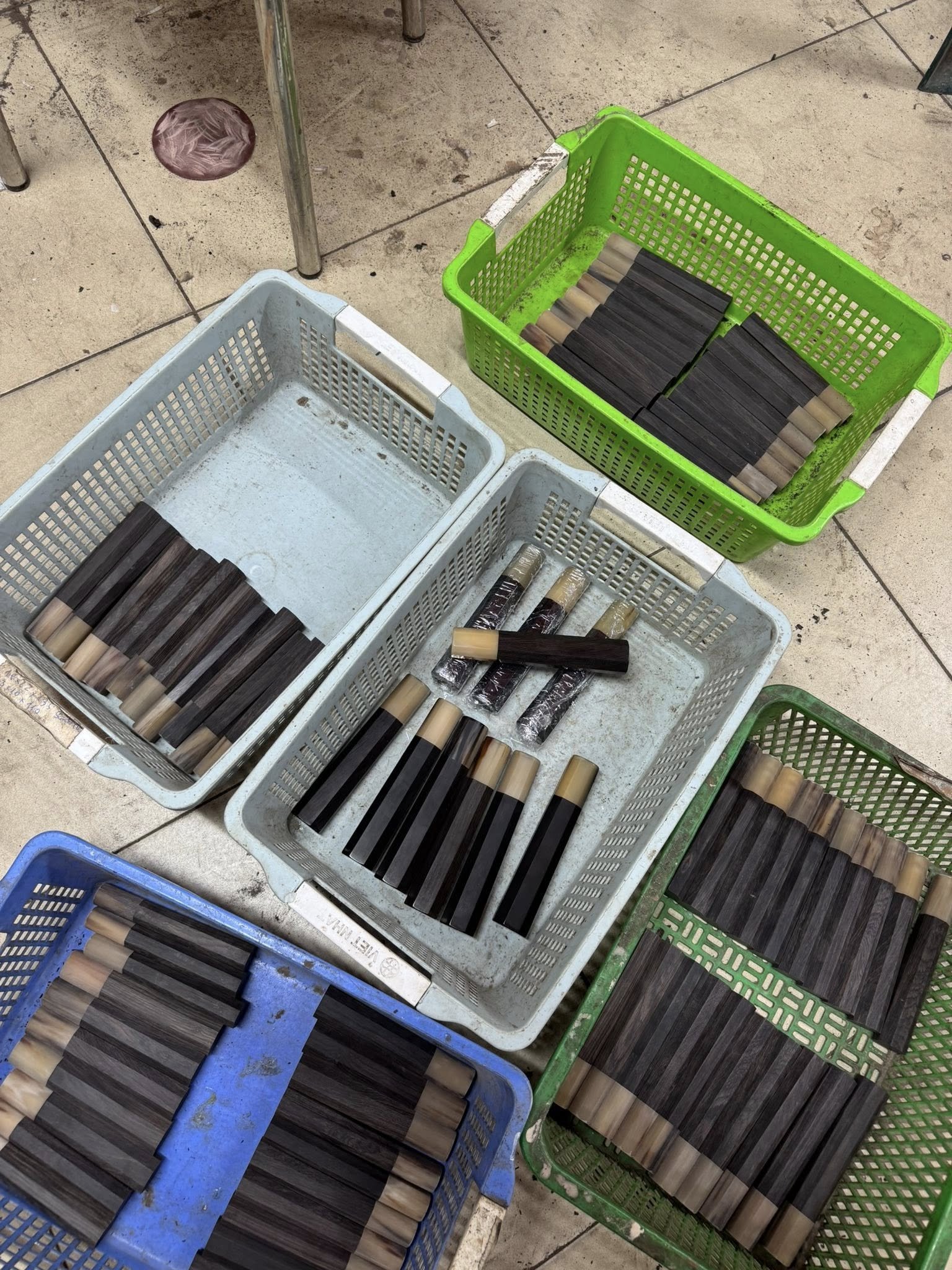
Use the configurator to explore wa-handle options after confirming a compatible hidden or partial tang. It does not simulate balance or offer Western scales or full-tang-to-wa conversions; the actual blade, tang, handle dimensions, materials, and attachment determine the result.
Lean wa when
- The knife has a compatible hidden or partial tang.
- The planned dimensions and materials suit your grip and desired balance.
- You want a wood-and-horn option, with an attachment method understood before future removal.
Lean yo when
- The knife has a broader tang designed for attached scales.
- Its actual scale material and geometry give your hand secure, comfortable orientation.
- The existing balance suits you, or a qualified rehandler recommends new Western scales.
What to check before deciding
- If the current handle is secure, leave it installed. Guard the edge and photograph the blade-handle junction from both sides, with spine and edge-on views, plus the handle end and any damage.
- Accessible junction height and face-to-face thickness are useful partial evidence, but they are not hidden-tang dimensions.
- If the tang is already exposed, record exactly three primary dimensions in millimetres: usable length from the shoulder or seating line to the tip, height near the shoulder, and face-to-face thickness at that same station.
- Assess balance with the actual knife; photographs cannot establish it. Maker or model, blade length, current handle length, and wider knife photographs are optional context.
How each style can influence balance
Wa handles are often described as light and blade-forward, while Western handles are often described as heavier and neutral or handle-forward. Those are tendencies, not promises. Dense wa wood, large horn components, metal spacers, or an end cap can add rear mass, while light Western scales and a skeletonized tang can reduce it. Grip style does not change those underlying variables.
Blade length alone cannot predict the right balance: a 210 to 240mm gyuto or a 120 to 150mm petty can each finish forward, neutral, or rearward depending on the blade, tang, handle mass, dimensions, and attachment. Check the actual knife in hand. After confirming a compatible wa construction, the wa handle size guide can help compare suitable handle dimensions.
Grip, comfort, and shape
The two categories include many different shapes. Wa handles are commonly octagonal, oval, or D-shaped, while Western handles range from nearly rectangular scales to deeply sculpted molded grips. The actual dimensions and contours determine orientation and pressure points; the category name alone does not.
There is no universally more comfortable shape. A contour that fits one hand can create a pressure point in another, and neither a pinch grip nor a handle grip belongs exclusively to one style. Look for secure orientation without a forced wrist position or concentrated pressure during normal work.
Repair, longevity, and cost
Serviceability depends on the construction and attachment. A compatible wa handle is often replaceable, but friction or burn fits, hot-melt adhesive, epoxy, and earlier repairs behave differently, so removal is not automatically straightforward. A professional can often replace the scales on a suitable Western full-tang knife; fixed scales are not inherently permanent.
Both constructions can use varied materials, while Horn & Grain’s specialty is wa handles in wood-and-horn combinations. For those wa options, the wa handle wood guide and the best wa handle woods guide compare choices from quiet and dense to boldly figured.
Which cook should choose which
Choose first by construction compatibility, then compare the actual handle geometry, dimensions, materials, and mass. A compatible wa build may support a lighter or more blade-forward goal, and a Western scale build may add rear mass, but neither outcome is guaranteed and either style can support a pinch grip or a handle grip.
If the knife has a full or unusually broad tang, do not assume that a standard wa handle will slide on. A Western-to-wa conversion may require permanent tang modification or a custom handle engineered around the geometry, so send photographs and measurements to a qualified rehandler before ordering. Horn & Grain does not list Western scales or promise this conversion through its configurator.
Fit and measurement notes
Before ordering, identify the construction and apparent attachment. If a secure handle remains installed, leave it in place; accessible junction height and face-to-face thickness are only partial fit evidence, not hidden-tang dimensions. If the tang is already exposed, take exactly three primary measurements in millimetres: usable length from the shoulder or seating line to the tip, height near the shoulder, and face-to-face thickness at that same station. Maker or model, blade length, current handle length, and wider photographs are optional context. The full method is in the guide to measuring a knife tang for a wa handle.
Do not choose by a rule that heavier is better or by blade length alone. Assess the current balance with the actual knife, then consider the replacement’s dimensions, material, attachment, intended seating depth, and the blade and tang mass. Photographs can document construction and condition, but they cannot establish balance.
Keeping either handle sound
Whichever style you choose, keep the handle clean and dry and avoid soaking or direct heat. Confirm finish compatibility before oiling: there is no universal schedule, and oil belongs only on a clean, dry, stable handle whose known finish is meant to receive the maker-recommended product. Oil cannot repair movement, cracking, a widening gap, or persistent moisture or odor at the joint; those conditions need fit or structural assessment first. The wa handle care guide covers the routine in detail.
Wa handle vs Western handle balance: common tendencies
The practical difference in wa handle vs western handle balance is not the tang label alone. Wa construction often produces a lighter, more blade-forward result, while Western construction often carries more rear mass, but the blade, tang, handle dimensions, materials, and attachment determine the actual balance.
Choose a compatible wa handle when its specific build suits the intended grip and balance. Keep or professionally re-scale a suitable Western construction when that geometry works better for the knife and hand. Wa removal is not always easy, and Western scales can be replaced.
Making the call
The wa-versus-yo decision starts with construction compatibility, then the actual geometry, dimensions, material, attachment, blade mass, and tang mass. Check balance and comfort with the physical knife; photographs, a configurator, and online browsing cannot establish balance or let you feel a shape in person. Once a compatible hidden or partial tang is confirmed, the configurator can help select a wa build, and the current made-to-order handles can be compared by their listed dimensions and materials.