Quick answer: in the Horn & Grain catalog captured on 19 September 2026, practical available starting points include Walnut in Entry; Rosewood, Tabaek, Purpleheart, Curly Maple, Wenge or Huong in Standard; Bocote, Ebony, African Blackwood, Macassar Ebony or Stabilized Maple in Premium; and Siamese Rosewood, Amboyna Burl or Snakewood in Exotic. These are dated availability examples, not performance rankings or permanent stock promises. Start with your budget, then approve the actual blank and complete build.
Current budget tiers and availability
The prices below are the totals for a medium base build with black horn, before paid choices and size changes. Check the live configurator before ordering because prices and stock can change.
| Tier | Captured base price | Marked available | Marked check stock |
|---|---|---|---|
| Entry | $48 | Walnut | Cherry, Maple, Oak |
| Standard | $55 | Tabaek, Rosewood, Purpleheart, Curly Maple, Wenge, Huong (Padauk) | Mahogany, Palm Wood |
| Premium | $68 | Bocote, Ebony, African Blackwood, Macassar Ebony, Stabilized Maple | Cocobolo |
| Exotic | $90 | Siamese Rosewood, Amboyna Burl, Snakewood | Curly Rosewood, Desert Ironwood |
“Available” describes the captured catalog state, not a guarantee that every figure, color or dimension is on hand. “Check stock” means supplier confirmation is required. A tier indicates price positioning only; it does not establish strength, quality, durability or suitability for a particular knife.
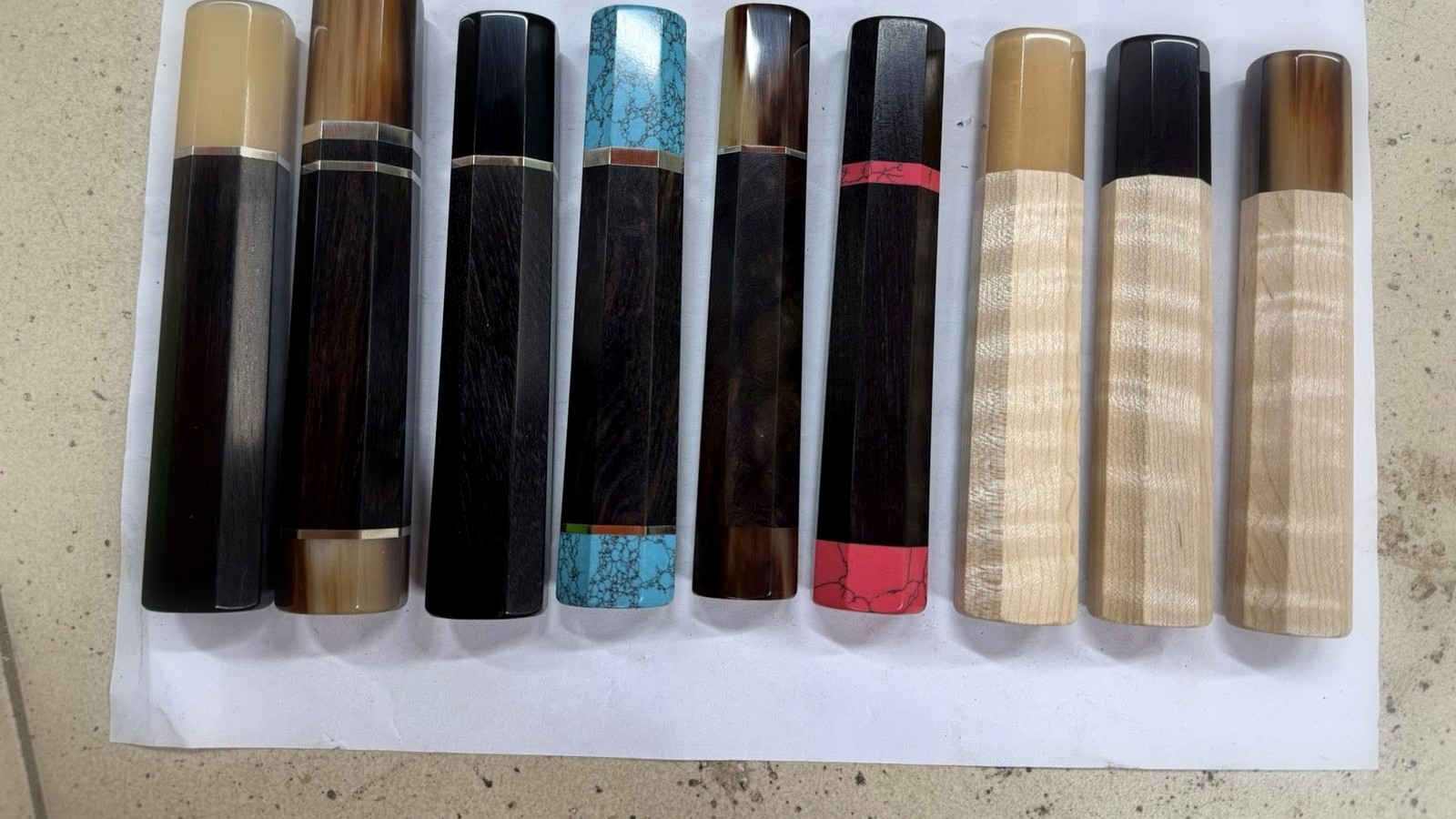
Choose the build after choosing a budget
- Confirm the actual blank. Ask for photographs of the candidate piece and its current availability. If botanical identity or origin matters, ask what catalog declaration, supplier record or batch information supports the name.
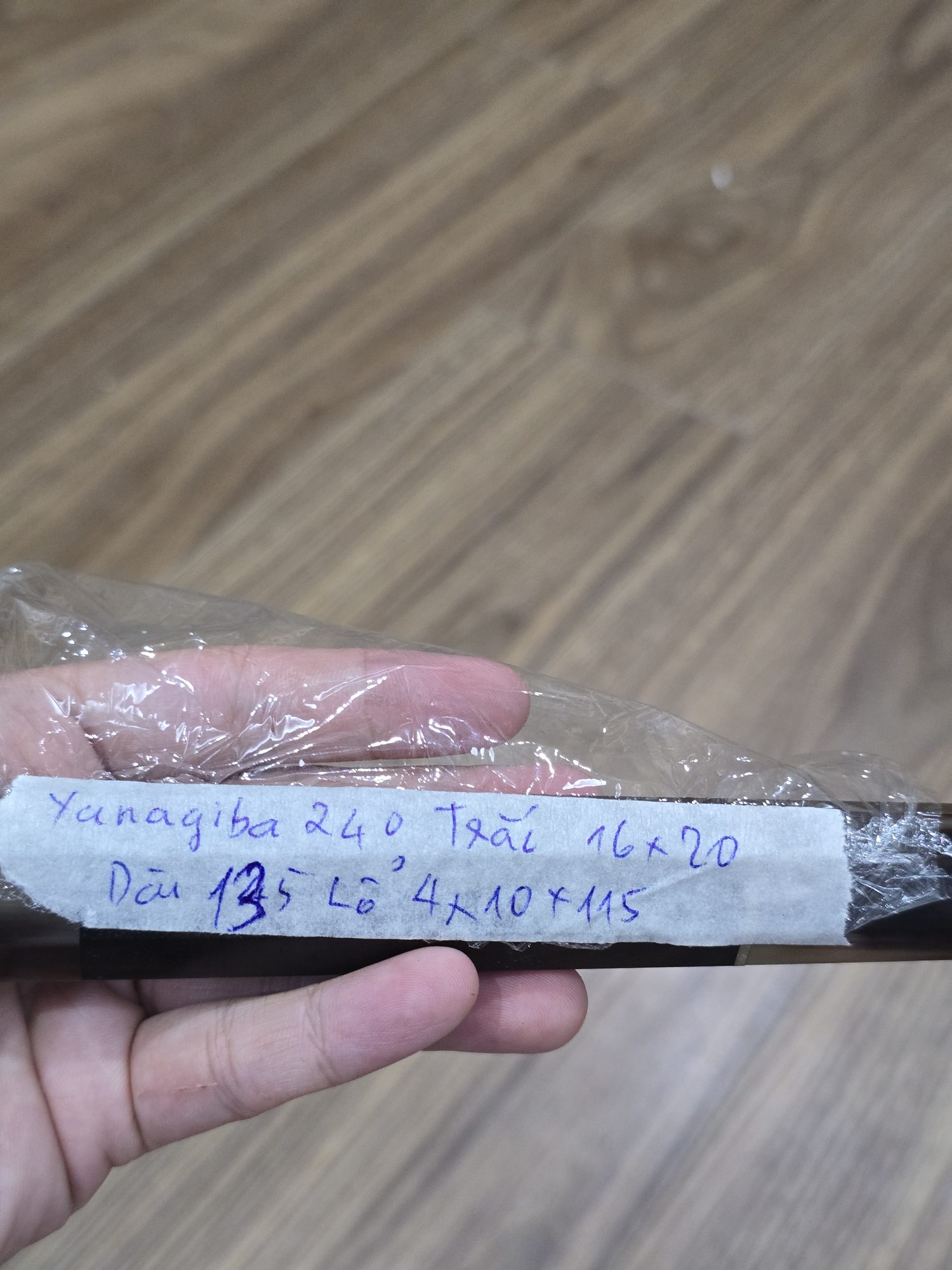
- Confirm finished dimensions and tang fit. Begin with the current ordering guide; complete measurements are not a prerequisite for making an enquiry. If a secure handle is installed, leave it installed. Clear photographs plus visible junction height and face-to-face thickness provide partial evidence, not hidden tang dimensions.
- Measure an exposed tang correctly. If the tang is already exposed, provide exactly three primary dimensions in millimetres: usable length from the shoulder or seating line to the tip, height near the shoulder, and face-to-face thickness at that same station. The wa handle size guide explains how those readings inform the fit.
- Specify ferrule, finish and intended balance. Approve the actual horn or other ferrule material when color variation matters. Ask what finish will be applied and describe the desired balance comparatively—preserve the current feel, move it slightly toward the hand, or reduce rear presence.
What a species name cannot tell you
A wood name alone cannot establish the finished handle’s weight, balance, moisture response, durability, grip control or care routine. Dimensions, bore depth, moisture condition, ferrule, spacers, end cap and finish all affect the completed result. A maker profile from Hitohira/Taihei likewise notes that individual timber and horn pieces differ in weight, density, fineness and character; it is useful context, not proof about a Horn & Grain blank.
Ask for the candidate handle’s planned dimensions and finished weight when balance matters, then judge it with the actual knife. For care, follow the confirmed finish instructions. Do not adopt a fixed oil interval or assume that dry-looking wood automatically needs oil.
Use appearance to break a well-qualified tie
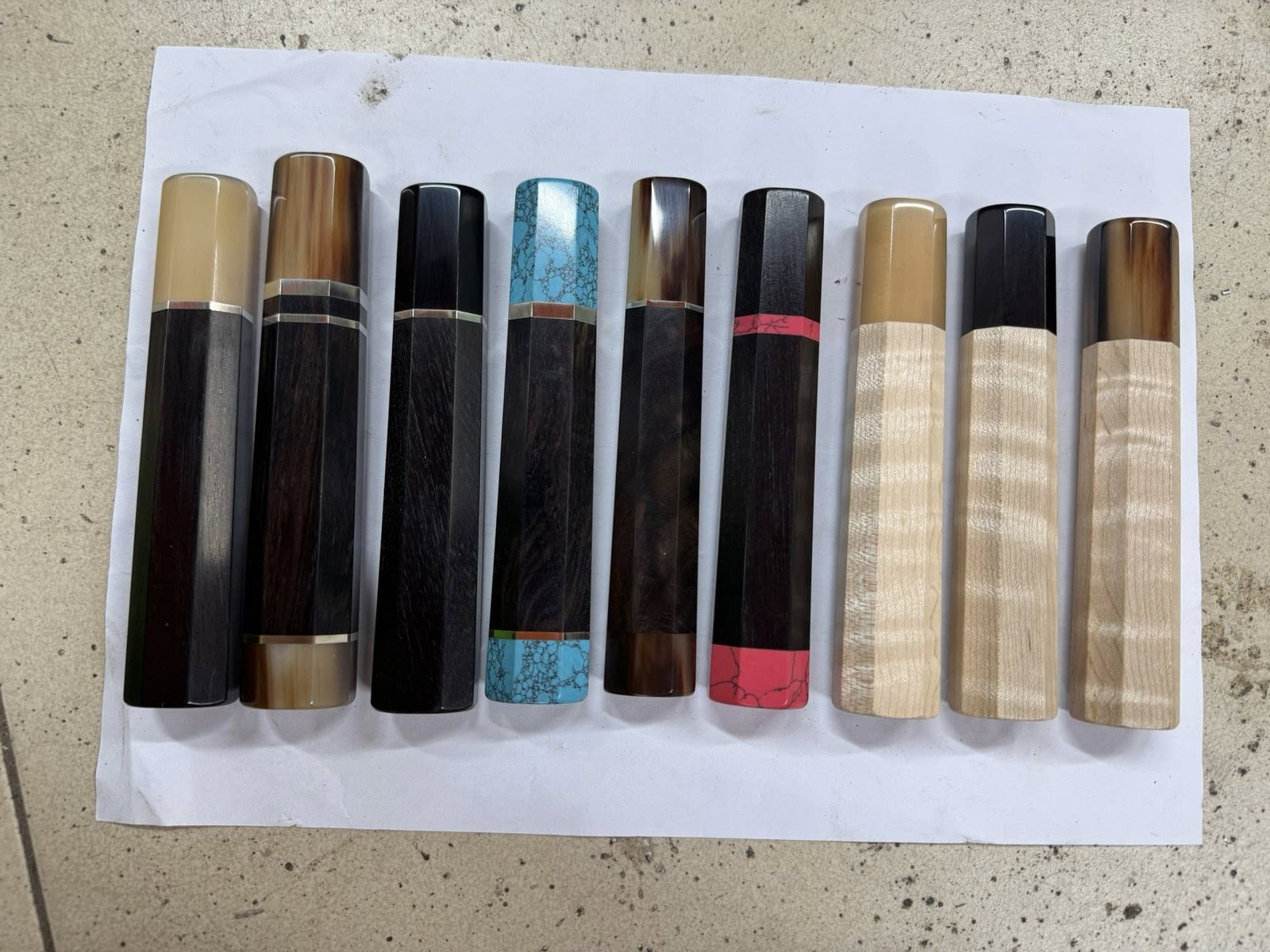
Once two candidates meet the same fit, budget and build requirements, choose the appearance you prefer. The Walnut, Rosewood and Ebony guides can help frame material-specific questions, but their photographs and descriptions do not replace approval of the current blank.
Next step
Turn the shortlist into a build
Use the current menu to choose a realistic tier, then confirm the individual wood, finished geometry, fit plan, ferrule, finish and desired balance before production.