Some wa-handled knives feel light or blade-forward because their particular build puts comparatively little steel and handle mass behind the grip. A hidden tang sits inside a bore, and a compact handle made from lower-mass materials can leave the knife’s balance farther forward. But wa does not describe a weight class: tang dimensions, handle materials, blade geometry, and assembly position vary, so a wa-handled knife is not automatically lighter.
That distinction matters because a lightly built rear end can feel unobtrusive or agile to one cook, while another may notice the same knife’s forward pull as heaviness. Neither response proves that the complete knife weighs less or that its balance is better.

Four different ideas often get mixed together
| Term | What it means |
|---|---|
| Complete-knife weight | The total mass of the blade, tang, handle, ferrule, adhesive, and any other components. |
| Handle mass | The mass of the completed handle assembly. Material density matters, but so do handle volume, ferrule size, spacers, and end caps. |
| Balance point | The location of the knife’s centre of mass. It depends on how much mass each part contributes and where that mass sits. |
| Perceived agility | How readily the knife seems to start, stop, turn, or guide through familiar work in the cook’s normal grip. It is an experience, not a material specification. |
These properties can move independently. Adding rear mass may shift the balance toward the hand while increasing the knife’s total weight. Reducing rear mass may leave the blade more present without making the complete knife especially light. A balance point also cannot tell you by itself whether a knife will feel comfortable for a particular grip or task.
Why one wa build can feel lighter than another
- Tang extent: A wa handle commonly encloses a hidden tang inside its bore, but tang length, height, thickness, taper, and seating depth vary. When a particular tang contributes less steel behind the grip than an alternative build, it can reduce rearward mass; hidden-tang construction alone does not guarantee that result.
- Handle volume: Two handles made from the same material can differ in mass because one is longer, wider, or fuller through the body and ferrule.
- Wood, horn, and accent density: Handle woods vary in weight and density, as the Hitohira/Taihei handle collection notes. Horn, spacers, and end caps also contribute, so a species name or the word “wa” cannot predict completed mass.
- Blade geometry and mass: Blade length, height, thickness, distal taper, grind, and steel distribution can outweigh differences at the handle. A substantial blade may remain forward-balanced even with a relatively heavy handle.
- Installation position: The intended tang seat determines where the handle’s mass lies relative to the blade. Bore and tang fit vary, and different knives may use different valid seating and joining methods.
Published weights are counterexamples, not a controlled test
Complete-knife specifications show why the handle label is insufficient. Hitohira lists one 210 mm Western wine-pakka gyuto at 156 g, one 210 mm wa gyuto with a Macassar ebony and horn handle at 174 g, and a different 210 mm Western-pakka gyuto at 172 g.
Those are different knives with different blades and constructions, so none of the weight differences can be assigned to the handle style. They serve only as counterexamples to a universal rule: a wa knife can weigh more than one Western-handled knife and near the same as another. A matched comparison would be required to isolate the handle’s effect.
Evaluate the actual knife
- Use the clean, dry knife in your normal secure grip during familiar prep. Notice unwanted forward pull, rear presence, and how direction changes feel; do not rely on a staged balancing trick.
- Treat total grams and balance location as separate observations. Neither number alone defines agility, comfort, or suitability.
- If a replacement is being considered, assess the proposed handle, tang compatibility, intended seat, and blade together. A desired balance change cannot justify a weak or incompatible fit.
For a fuller actual-knife assessment, see how heavy a wa handle should feel. If the handle will be replaced, the wa-handle installation walkthrough explains why bore fit, dry-fitting, alignment, and the intended seating position come before the permanent joint. Leave a secure existing handle installed rather than removing it solely to investigate hidden dimensions.
Compare the complete build
Use the knife’s present feel, blade construction, tang fit, and desired balance direction together. The configurator and available handles can help frame a specific build, but the finished knife matters more than the handle label.
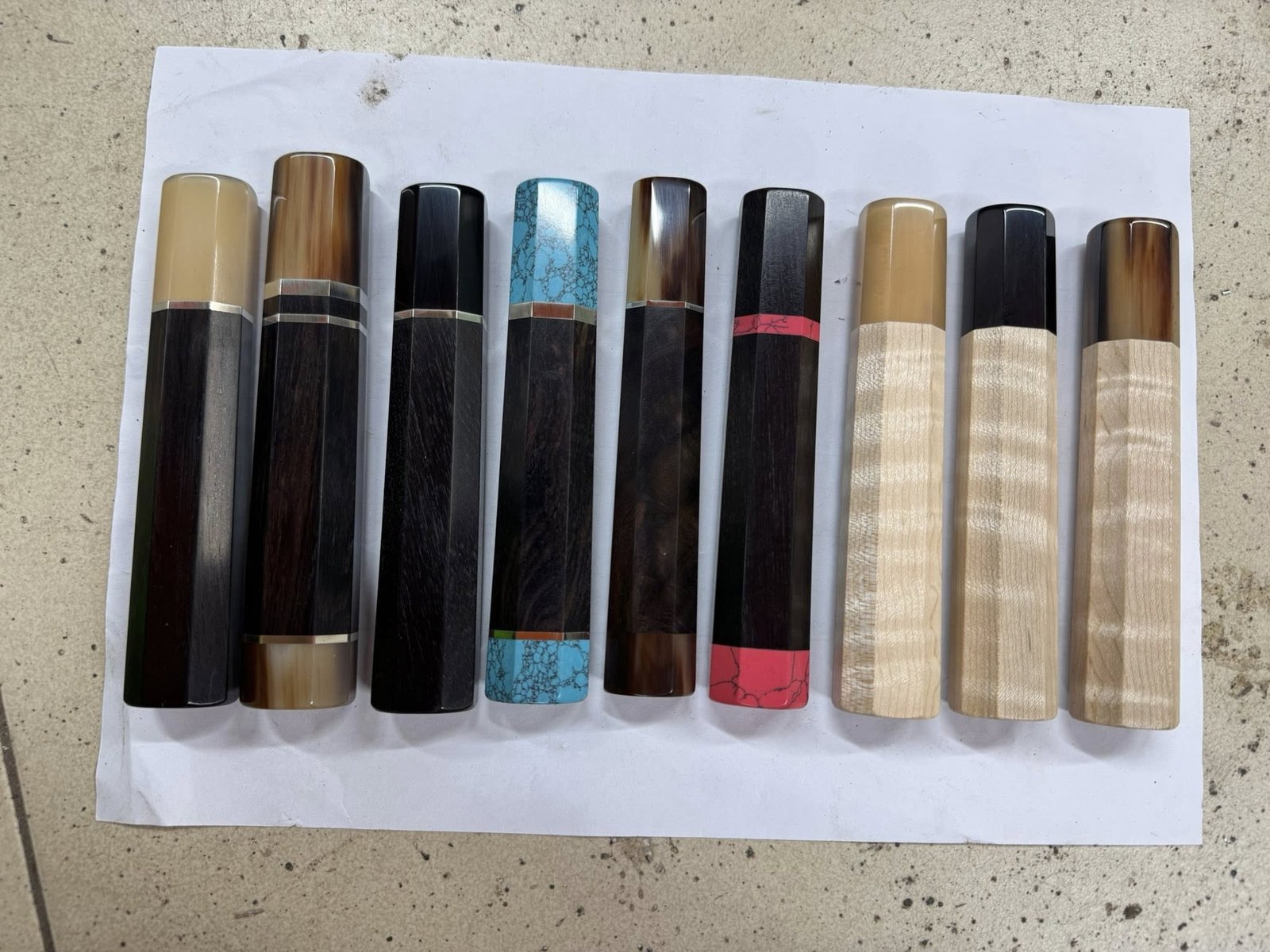
The wa handle wood guide and best wa handle woods guide provide material context, but wood choice remains only one part of the mass distribution. Use those references to understand materials, not to infer a finished knife’s weight or balance from appearance alone.
Bottom line
Some wa-handled knives feel light or blade-forward because their specific combination of hidden-tang steel, handle volume, material mass, blade geometry, and installation position leaves less mass behind the grip. Other wa builds do not. Judge the complete knife and the way it behaves in your hand rather than assuming that wa construction, a hidden tang, or any particular wood guarantees lightness or improved control.