There is no universal gram target for a wa handle. The right feel depends on comfort and control on the actual knife, the balance you want, the knife’s total weight, and a handle that is compatible with its tang. A number alone cannot tell you whether the finished knife will suit your hand or work.
Start with what the knife does now. Name any unwanted forward pull, rear heaviness, slow direction change, cramped grip, or excess bulk. Then decide whether the new handle should preserve that feel or move it slightly.
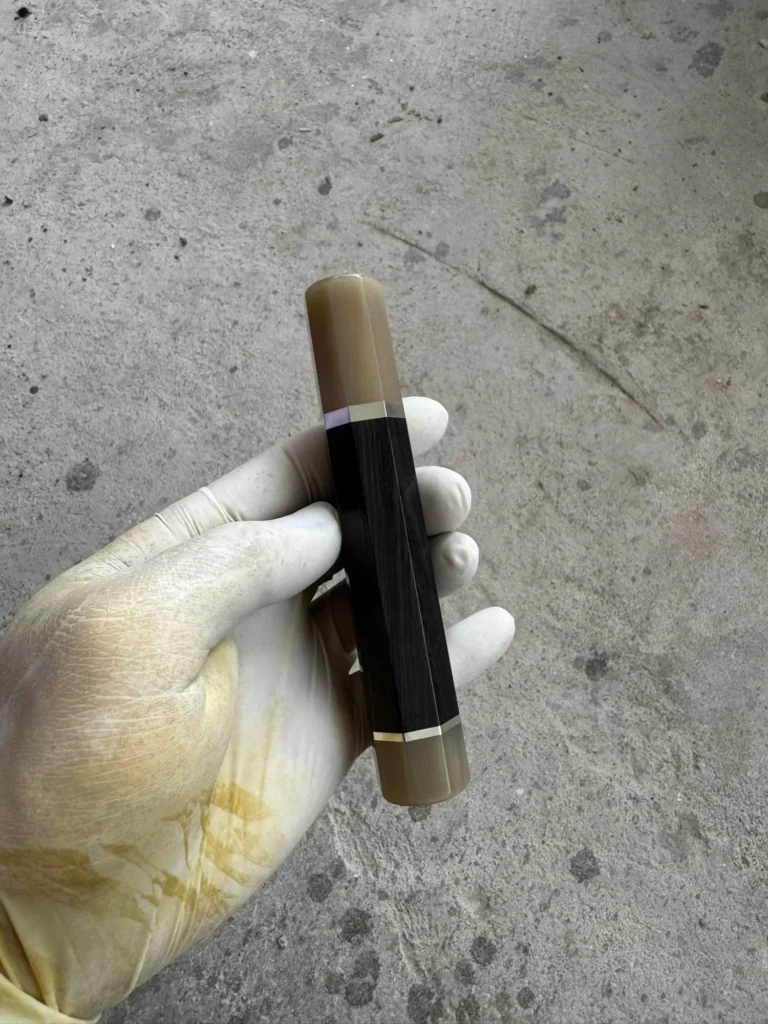
Total weight and balance point are different
A knife’s balance point follows its centre of mass: it depends on both the amount of mass and where that mass sits, consistent with the general mechanics described in OpenStax’s explanation of moments and centres of mass. Moving or adding mass near the rear can therefore move the balance toward the hand.
That does not make the whole knife lighter. A rear end cap may shift the balance rearward while increasing total weight. The useful question is whether that combined change improves control in your normal grip—not whether one component sounds light or heavy by itself.
Decide from normal use
Use a short observation sequence rather than trying to calculate an ideal handle weight:
- Hold the clean, dry knife in your normal secure grip during familiar prep. Observe the knife you have rather than attempting a staged balancing trick.
- Name the present issue: excessive forward pull, too much rear presence, sluggish direction changes, or a handle that feels cramped or bulky.
- State the desired change comparatively: preserve the feel, shift the balance slightly rearward, or reduce rear presence. Avoid turning that preference into an arbitrary gram target.
- Confirm that the proposed handle dimensions and tang fit remain suitable. A balance preference cannot excuse a weak or incompatible installation.
If the knife already feels controlled, there may be no balance problem to solve. In that case, protect the familiar feel while refining grip shape, fit, or appearance.
Confirm fit without unnecessary removal
If the current handle is secure, leave it installed. Clear photographs and the visible height and face-to-face thickness at the blade-handle junction provide useful partial evidence, but they are not hidden tang dimensions. If the tang is already exposed, provide exactly three primary measurements in millimetres: usable length from the shoulder or seating line to the tip; height near the shoulder; and face-to-face thickness at the same station. Blade length, handle length, and maker/model are optional context, not substitutes for those measurements. See the wa handle size and fit guide for the two paths.
Judge the complete build
Compare the proposed handle with the actual blade, grip, fit information, and desired balance direction. The finished knife matters more than an isolated handle weight.
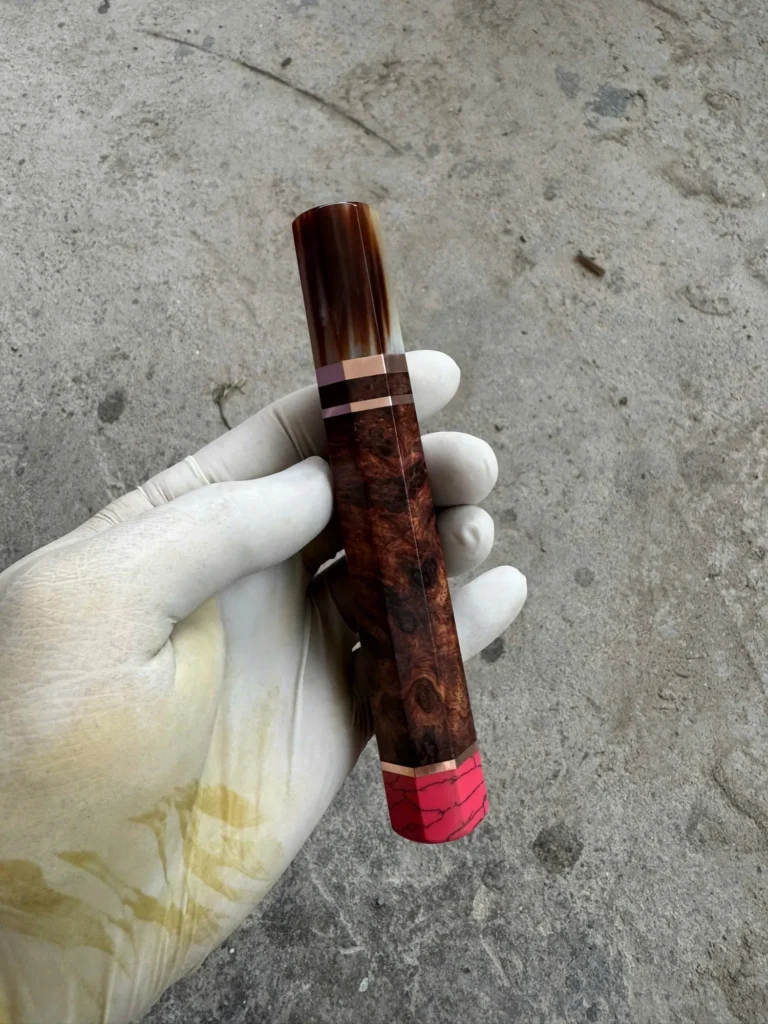
Choose materials after the target is clear
Wood, handle dimensions, ferrule, spacers, and an end cap all contribute to the finished mass and its location. A species name alone does not predict how a particular completed handle will balance your knife. Use the wa handle wood guide to compare practical material considerations, and the ferrule guide to decide whether the front and rear details should blend, contrast, or connect.
Bottom line
A handle feels too heavy when the complete knife becomes less comfortable or controlled for its owner—not when it crosses an invented gram threshold. Describe the present knife, choose the balance direction you actually want, and confirm tang compatibility before settling the construction.