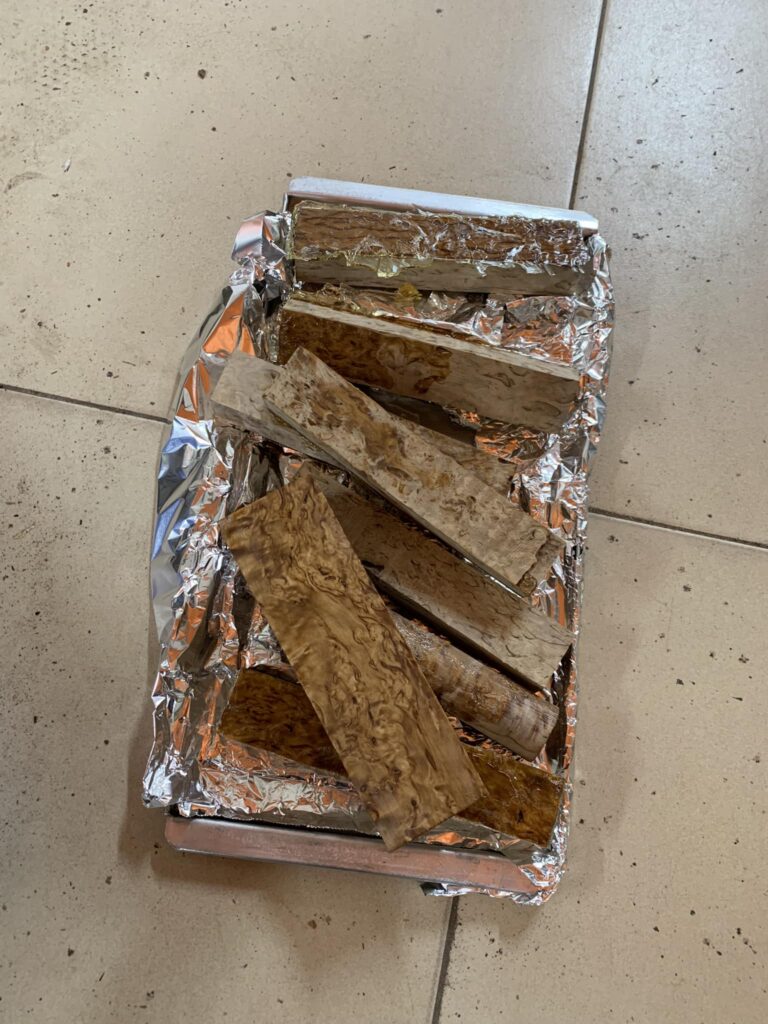
The best wood for a wa handle is the one that gives your knife the balance, grip character, appearance, and care routine you actually want. Species matters, but the finished dimensions, tang fit, ferrule, and shape matter just as much. Use this guide to narrow the wood direction, then confirm the build against your knife measurements.
Compare current catalog examples
These catalog images show example wood tones and grain; each piece varies, and stock or configurations can change. Open a product to check its current options.
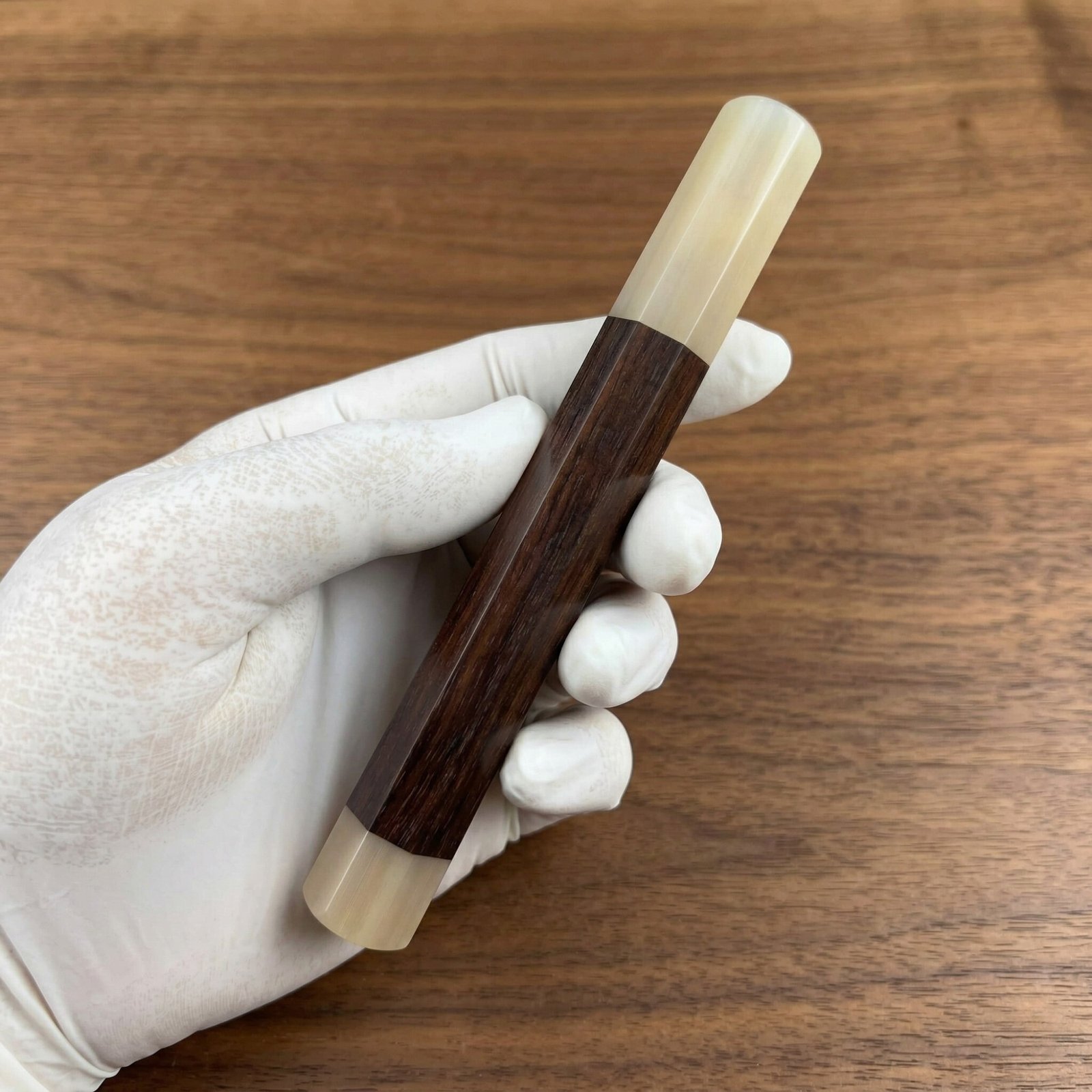
African blackwood handle shown in the existing catalog photo; the light ferrule is a separate material.
View African Blackwood handle
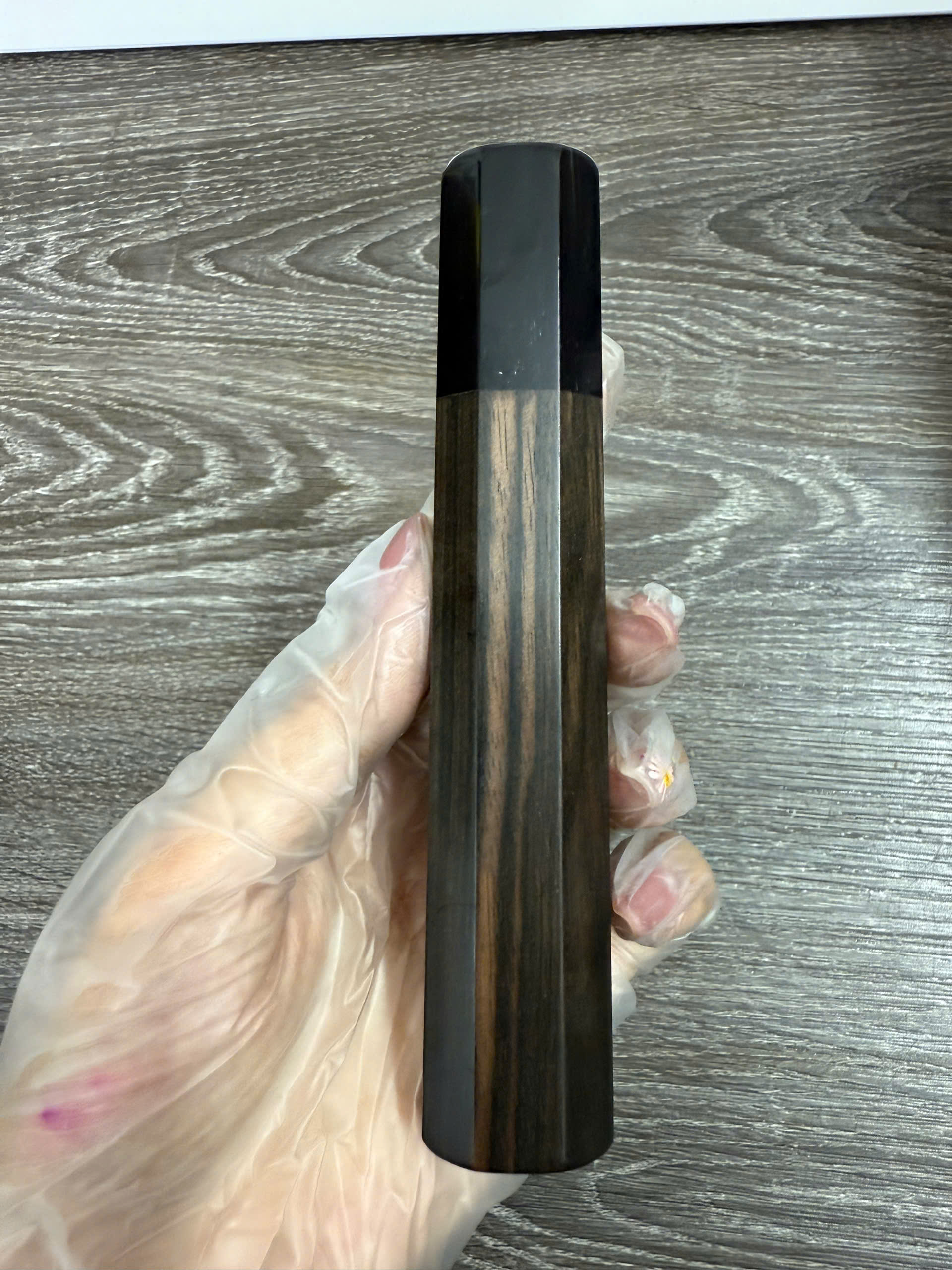
Macassar ebony handle from the current product gallery; this is one product example, not a color standard.
View Macassar Ebony handle
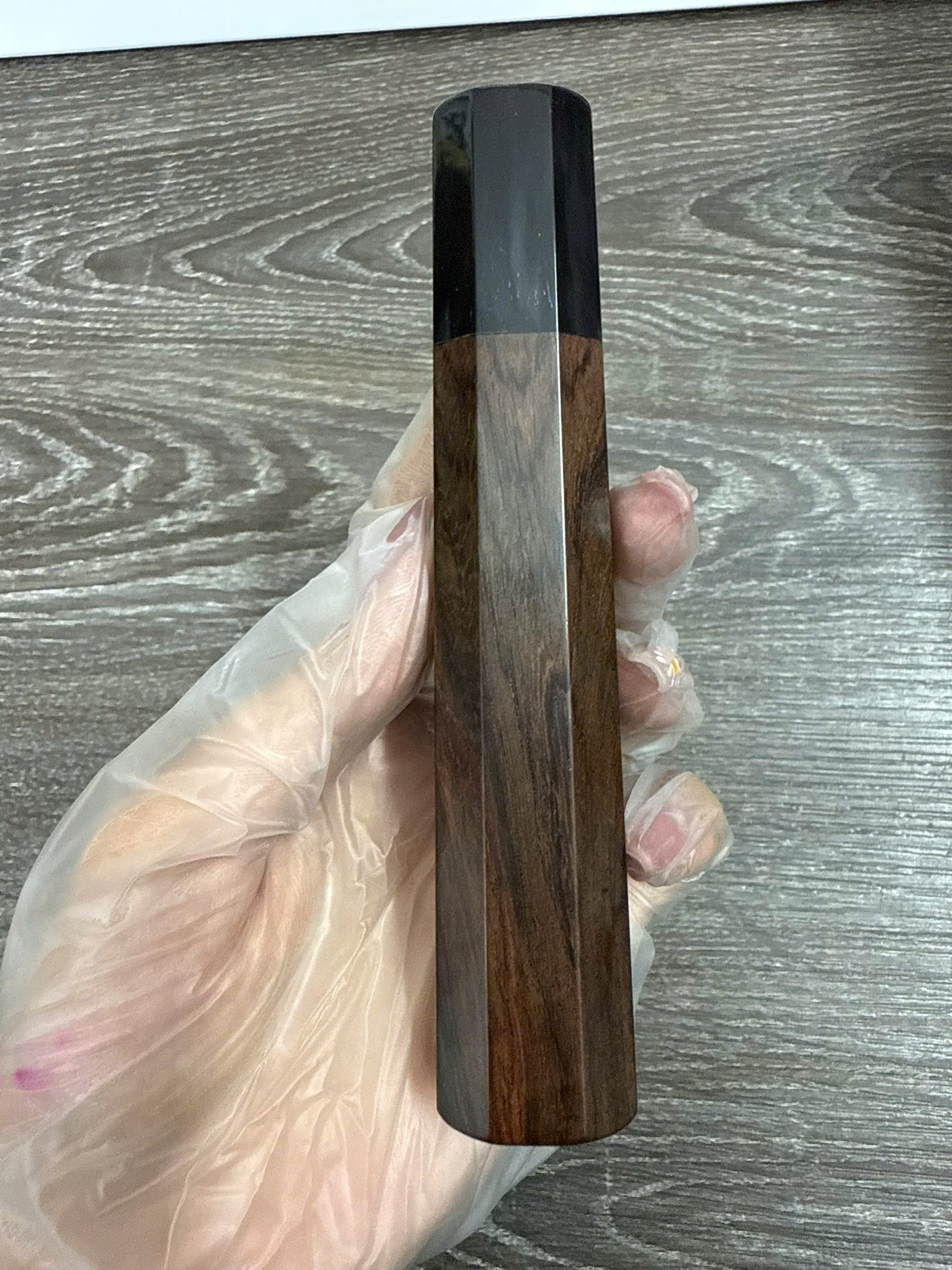
Rosewood handle from the existing product gallery; color and grain vary between pieces.
View Rosewood handle
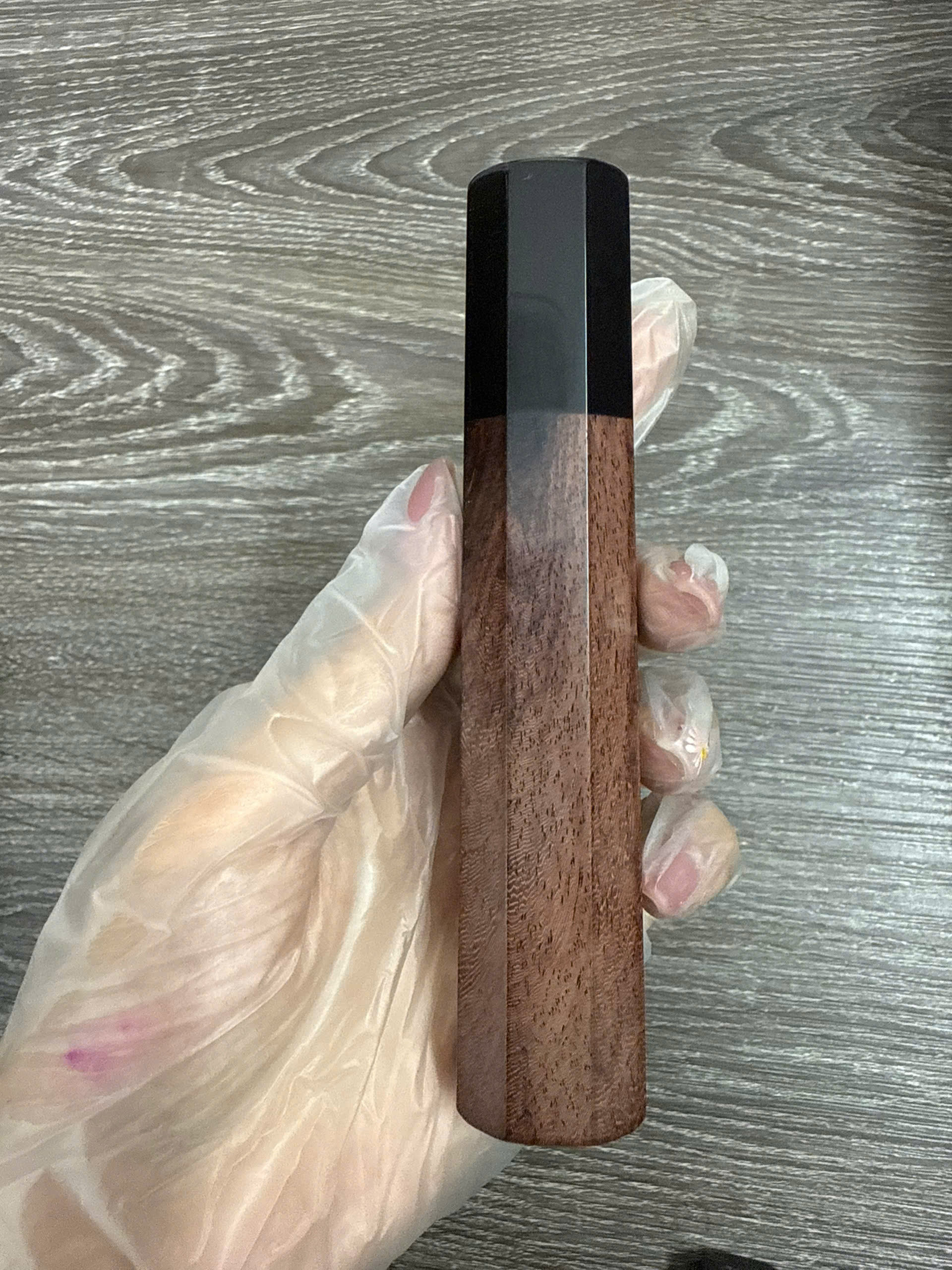
Walnut handle from the existing product gallery; color and grain vary between pieces.
View Walnut handle
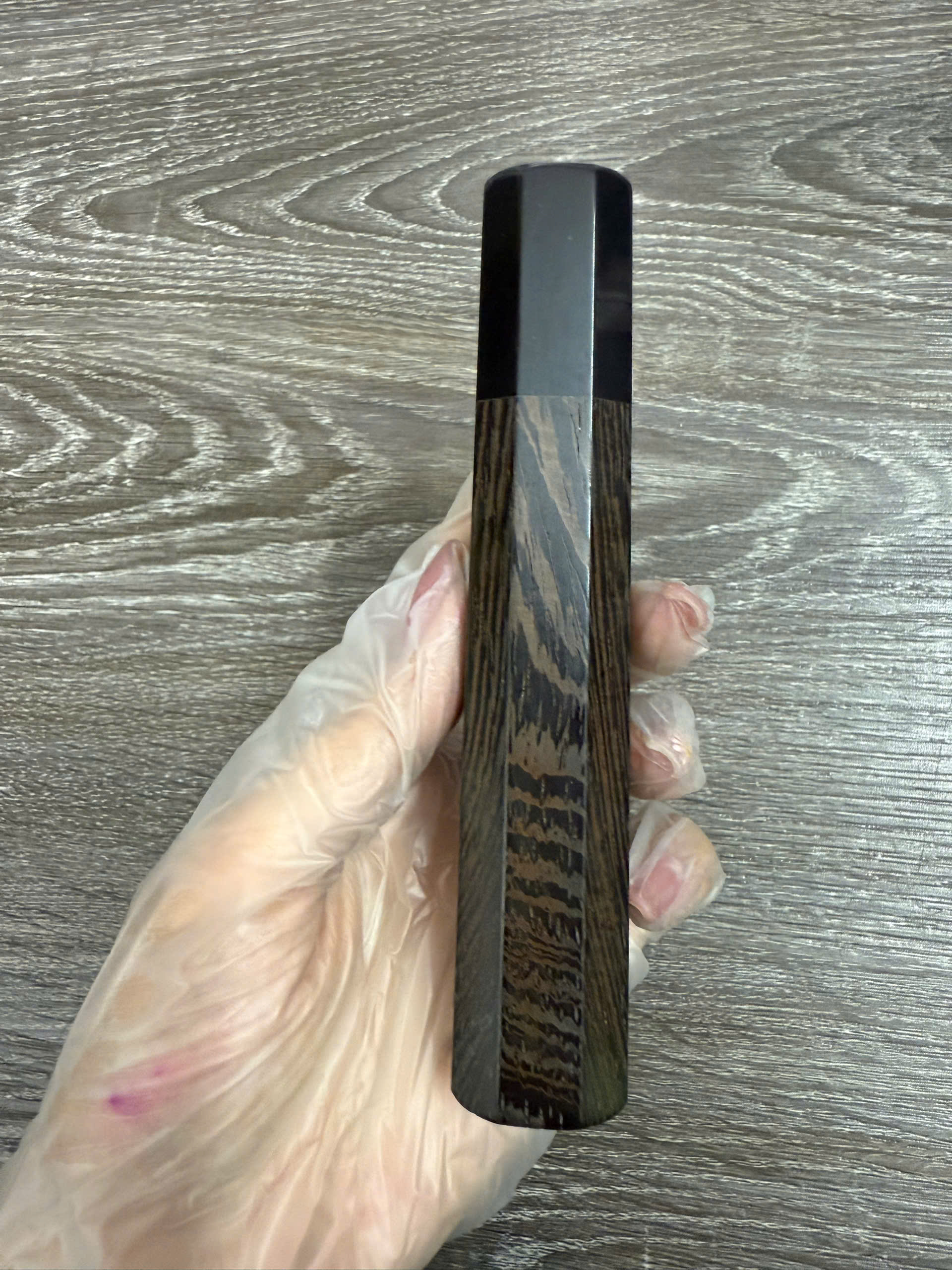
Wenge handle from the existing product gallery; this catalog image does not establish a universal shade.
View Wenge handle
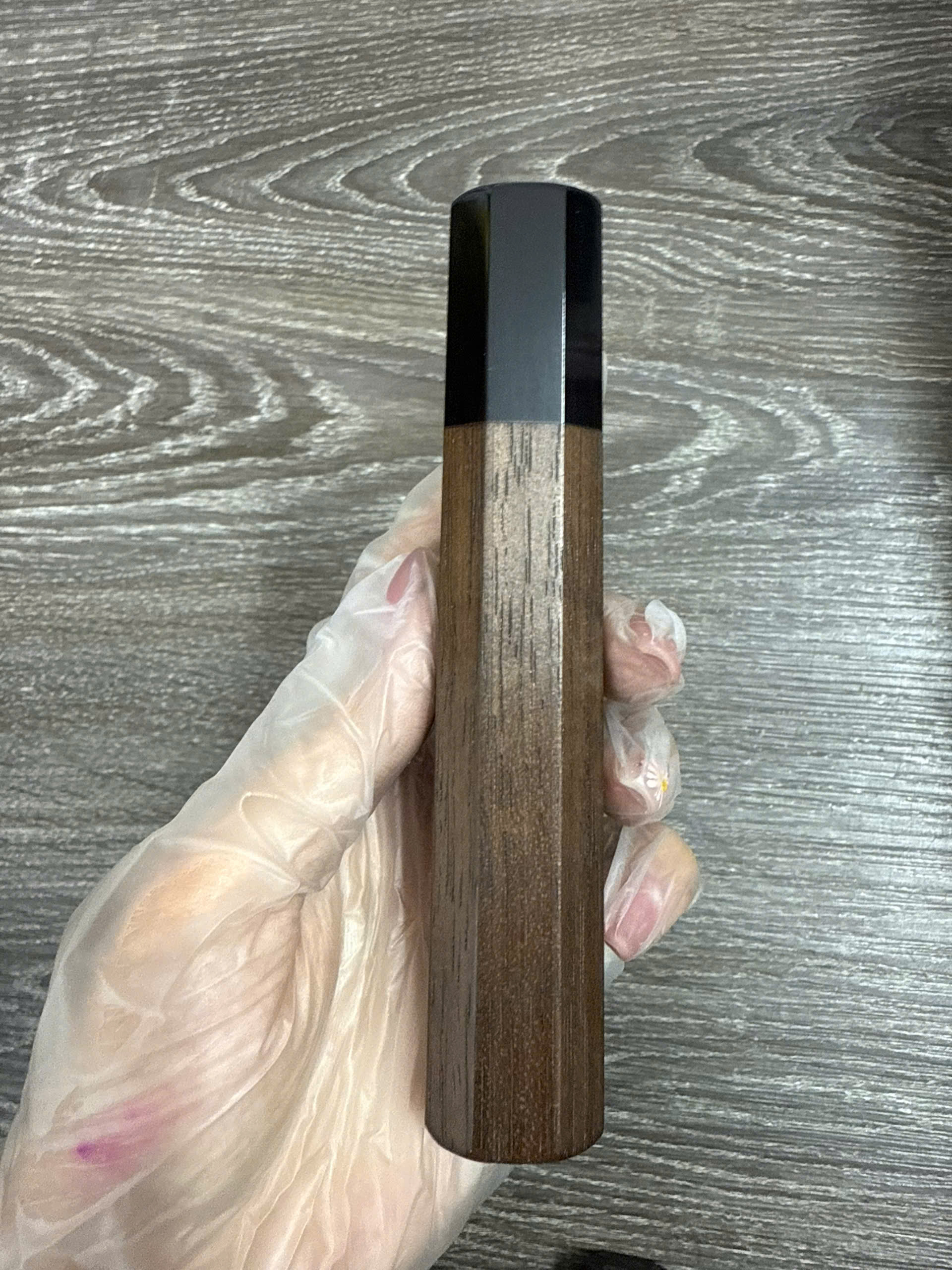
Teak handle from the existing product gallery; this catalog image is one example, not a color standard.
View Teak handle
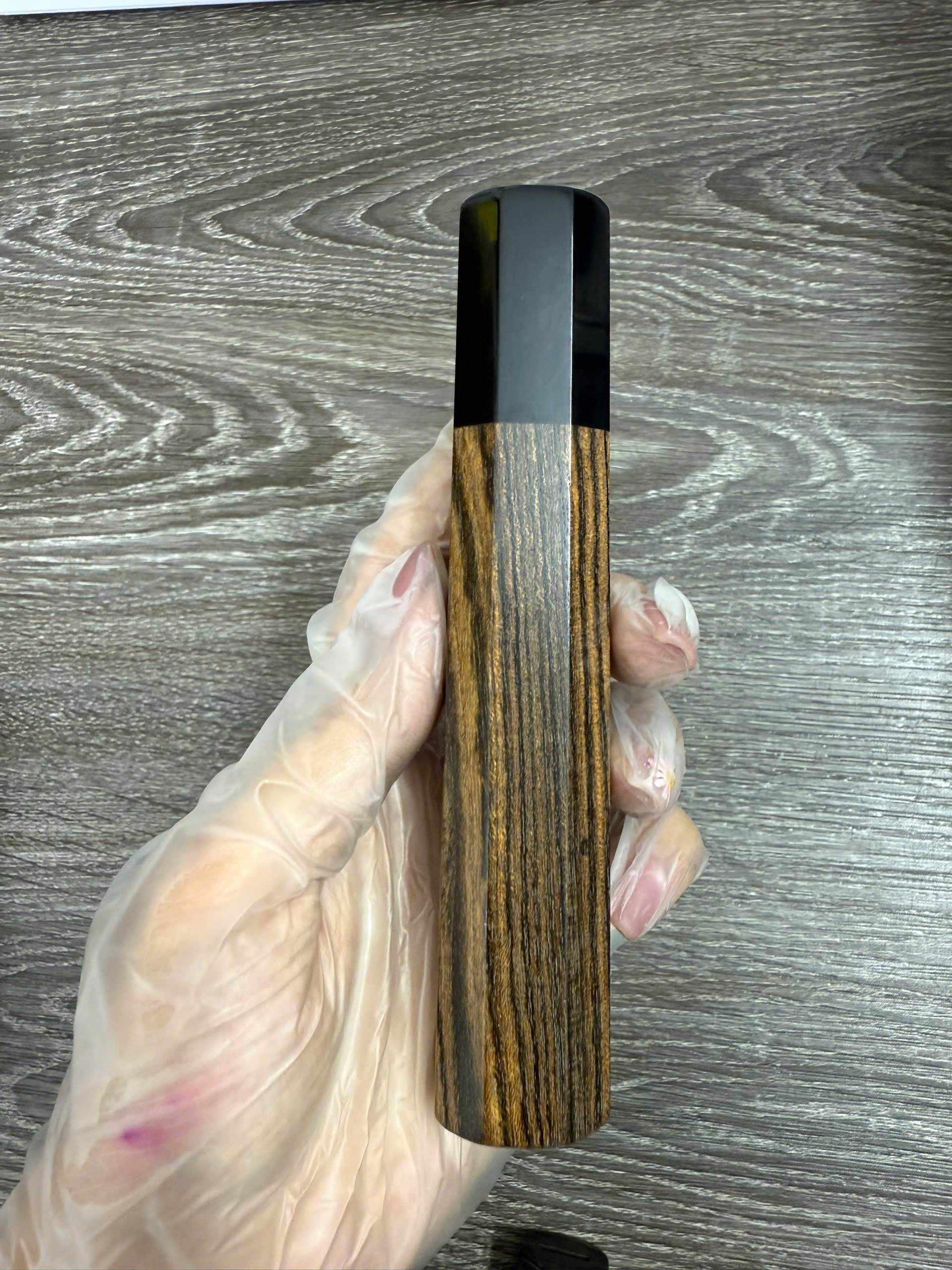
Zebrawood handle from the existing product gallery; grain varies between individual pieces.
View Zebrawood handle
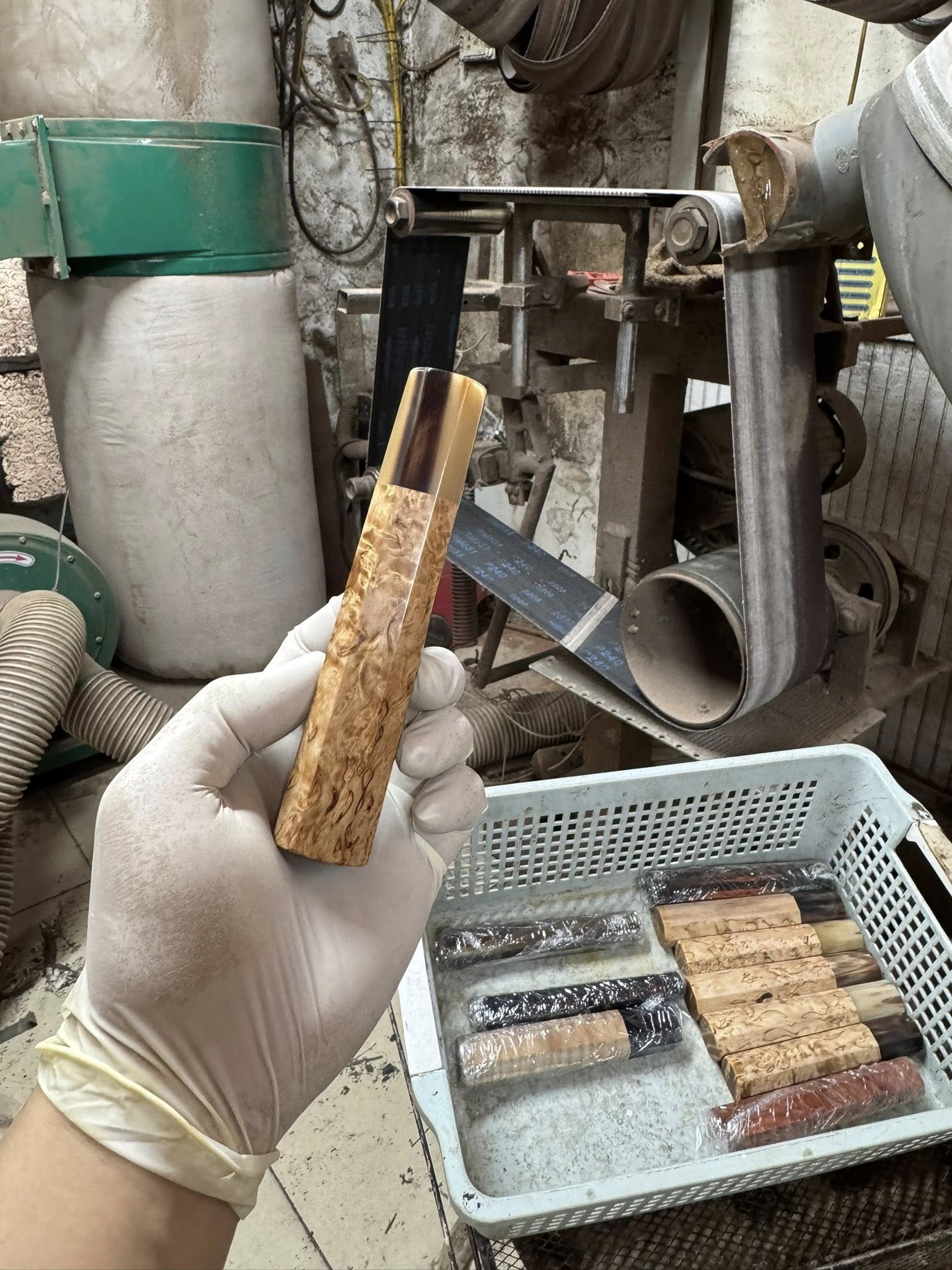
Curly maple handle from the existing product gallery; the figure varies from handle to handle.
View Curly Maple handle
Quick wood selector
| Wood | Visual character | Relative handle feel | Good starting point for |
|---|---|---|---|
| African blackwood | Near-black with quiet brown or purple grain | Substantial | A dark, restrained build with subtle natural figure |
| Ebony | Near-black or visibly striped, depending on species and blank | Substantial | High contrast, clean geometry, or a statement grain pattern |
| Rosewood | Warm red-brown to deep brown with flowing grain | Balanced to substantial | A classic warm look that pairs with any horn color |
| Walnut | Soft chocolate and grey-brown figure | Often lighter-feeling than the darkest dense woods | An understated everyday handle or a blade-forward preference |
| Wenge | Dark, bold linear grain | Textured visual character | Strong contrast and a modern, graphic build |
| Teak | Golden to medium brown with calm grain | Warm and practical | A relaxed working-knife appearance |
| Zebrawood | High-contrast light and dark stripes | Visually energetic | A handle where the wood should be the main feature |
| Curly maple | Pale wood with changing figured bands | Bright and visually light | Maximum contrast with dark horn or a dark blade finish |
Start with the knife, not the wood name
A wa handle is part of the knife’s balance system. Before comparing woods, note the knife type and blade length, what you like or would change about its balance, and whether its handle is still securely installed or its tang is already exposed. The fit evidence you can provide depends on that state; the wood choice does not require removing a secure handle.
There is no universal S/M/L standard across makers. Use the actual blade-to-handle guidance in our wa handle size guide, then let the final dimensions follow the tang and intended balance.
Dark woods: African blackwood and ebony
African blackwood and ebony are often grouped together because both can appear almost black. They are not the same botanical material. African blackwood is Dalbergia melanoxylon; ebony describes multiple species in the Diospyros genus. Read our African blackwood vs ebony comparison before deciding.
Choose dark woods when you want a substantial, quiet handle or a dramatic contrast with blonde buffalo horn. Compare the current catalog examples: grain and color vary, and “ebony” without a species name is incomplete information.
Warm woods: rosewood, walnut, and teak
Rosewood
Rosewood gives a wa handle warm color and flowing grain. It can bridge a polished blade, a dark ferrule, and a traditional octagonal shape without making any one detail dominate. Because “rosewood” also covers multiple species and trade names, species identification and sourcing information still matter.
Walnut
Walnut is a strong choice when you want quieter figure and less visual weight. Its chocolate and grey-brown tones suit working knives and make scratches or patina feel less formal. For cooks who want to preserve a blade-forward feel, a correctly sized walnut build is a sensible direction to discuss.
Teak
Teak brings golden-brown warmth and a straightforward working-knife character. Choose it because you like the actual grain and tone, not because any wood species can remove the need to wipe and dry a handle after use.
Graphic woods: wenge, zebrawood, and curly maple
Wenge reads as dark and linear. Zebrawood is much higher contrast, with stripes that make each face of an octagonal handle look different. Curly maple is pale, and its figure changes as the handle moves in the light. These woods work best when the ferrule supports the intended hierarchy: black horn can frame a pale or striped body, while blonde or marbled horn can soften a very dark one.
Strong figure is not automatically better. On a small petty handle, a quiet grain may preserve the knife’s proportions. On a larger gyuto or slicer, a bold board has more surface area to show its character.
How the ferrule changes the choice
A ferrule changes both appearance and construction. Black buffalo horn gives continuity with African blackwood, ebony, or wenge. Blonde horn gives a deliberate break and can lift a dark handle. Marbled horn connects mixed brown, grey, and cream tones. A mono-wood build is visually simple, but the front transition and tang opening still need precise work.
See the wa handle ferrule guide for material, color, transition, and care trade-offs.
Shape and finish affect feel as much as species
An octagonal handle gives clear edge orientation. The width, height, taper, and amount of easing at each corner determine whether that shape feels crisp or forgiving. A finely finished dense wood can feel very smooth; an open, visible grain can read as more tactile even after sealing. Tell the maker whether you pinch-grip, use the knife for long prep sessions, or prefer a strong indexing surface.
Do not choose a larger handle simply to show more expensive wood. Oversizing can change balance, interfere with grip, and make a small blade feel disconnected.
Kitchen care
- Hand-wash the knife and wipe the handle rather than soaking it.
- Dry the ferrule, tang opening, and handle promptly.
- Never put a wooden handle in a dishwasher.
- Use only the care product recommended for the existing finish.
- Stop and inspect the fit if you see a growing gap, movement, or a persistent moisture line.
For a complete routine, read the wa handle care guide.
Sourcing questions worth asking
Common names can cover multiple species. Ask for the botanical identity when it is known, the source or country of origin, and the documentation appropriate to an international shipment. This is especially important for Dalbergia and some Diospyros material. The official CITES species database is the current reference for listings; a marketplace nickname is not a substitute.
What fit information can you provide?
If the handle is still installed and secure: Leave it in place; do not remove it just to measure. Close side and spine photos of the handle-to-blade junction can show visible alignment, height and thickness. Those are useful partial fit clues, not measurements of the hidden tang. Maker or model, blade type and length, and your preferred balance are optional context.
If the tang is already exposed: Send exactly three primary measurements in millimetres: usable tang length from the shoulder or seating line to the tip; tang height near the shoulder; and face-to-face thickness at that same station. Do not expose a tang solely to take these measurements.
A practical decision sequence
- Start with the knife type, blade length, preferred balance, and handle state. Use the matching fit-information path above.
- Choose a visual family: dark and quiet, warm and flowing, or pale/high-contrast.
- Choose the ferrule color and whether it should blend or contrast.
- Confirm the handle length and cross-section against the actual knife; there is no universal S/M/L standard.
- Review photographs of the actual handle or blank before approving highly variable grain.
Browse made-to-order handles to compare actual pieces, or build a custom wa handle. Horn and Grain confirms the knife and tang information before custom work begins.