Hard maple, black walnut, cherry and teak are the woods well-known board makers use, and all four sit in a moderate hardness range: 950 to 1,450 lbf in the USDA Wood Handbook’s tests. No single wood wins on every count. John Boos offers its cutting boards in hard maple, black walnut and cherry, TeakHaus makes teak boards, and the Wood Database describes maple and cherry as fine and even in texture. Moderate hardness, a fine or even surface and a wood that stays reasonably flat are the practical criteria. Much harder woods such as purpleheart, osage orange and ironwood, and much softer ones such as western red cedar, sit well outside that range. This guide compares them with figures from those two references and links to our guide for each wood we cover in depth.
What makes a wood good for a cutting board
“Best” depends on what you weigh most, so it helps to separate the questions:
- Hardness: how much force it takes to dent the surface. A harder board resists dents better; a softer one shows marks sooner.
- Texture and pores: whether the surface is fine and even, or coarse with large, open pores.
- Stability: how much the wood shrinks and swells as its moisture changes, which affects warping and cracking.
- Edge care: how the surface treats a knife, which depends far more on the board material and your habits than on the species.
- Care and safety: how the wood is washed and oiled, and whether it is known to cause reactions.
Board woods compared
The table gives two hardness figures for each wood: the Wood Handbook’s side hardness at 12% moisture content and the Wood Database’s Janka hardness. Both measure the force needed to press a 0.444-inch (11.28 mm) steel ball halfway into the wood, but they come from different samples, so the same species can differ between them. Texture and pore notes are the Wood Database’s.
| Wood | Side hardness, Wood Handbook (lbf) | Janka, Wood Database (lbf) | Texture and pores | Our guide |
|---|---|---|---|---|
| Hard (sugar) maple | 1,450 | 1,450 | Fine, even texture; diffuse porous | Maple vs walnut |
| Black walnut | 1,010 | 1,010 | Medium texture; semi-ring-porous | Maple vs walnut |
| Black cherry | 950 | 950 | Fine, even texture | Cherry |
| Teak | 1,000 | 1,070 | Coarse, uneven texture; silica up to 1.4% | Teak |
| American beech | 1,300 | 1,300 | Fine to medium, uniform texture; diffuse porous | — |
| Northern red oak | 1,290 | 1,220 | Coarse, uneven texture; very large, open pores | — |
| Purpleheart | 1,860 | 2,520 | Medium texture; diffuse porous | — |
| Osage orange | Not listed | 2,620 | Fine to medium texture; ring-porous | — |
| Olive | Not listed | 2,710 | Fine, uniform texture; diffuse porous | Olive |
| Indian (East Indian) rosewood | 3,170 | 2,350 | Medium texture; narrowly interlocked grain | — |
| Desert ironwood | Not listed | 3,260 | Fine, even texture | — |
| Western red cedar | 350 | 350 | Coarse texture; a softwood | — |
Acacia is a genus of more than a thousand species, so a board labeled only “acacia” has no single figure; see our acacia cutting board guide. Hinoki (Japanese cypress) is not covered by the figures used here; our hinoki cutting board care guide covers how to look after one.
Hardness: why the middle of the range is the usual choice
Maple, walnut, cherry, beech and teak fall between 950 and 1,450 lbf. Hard maple is the hardest of the woods John Boos uses, so it resists dents most. Walnut and cherry are about a third softer, so they dent more easily. Beech, at 1,300 lbf, is close to maple.
Above about 1,800 lbf come purpleheart, osage orange, olive, rosewood and desert ironwood. The Wood Database describes osage orange, olive, East Indian rosewood and desert ironwood as difficult or somewhat difficult to work because of their density; it calls desert ironwood “very difficult to work.” At the other end, western red cedar’s 350 lbf is about a quarter of maple’s, so it dents easily.
What the numbers do not tell you is how fast a board dulls a kitchen knife. We found no published test that compares kitchen-knife edges across board woods. The makers’ claims point one way without measuring it: John Boos says wood boards “are known to be easier on your expensive knife blades,” and TeakHaus says teak boards “are known to be knife-friendly.” The difference that matters most is between materials. Wood and rubber are forgiving surfaces; glass, stone and marble are not. Our guide to cutting boards for Japanese knives explains why the gap between sound board woods is much smaller than that.
Grain and pores: fine and even, or coarse and open
The Wood Database describes hard maple and black cherry as having a fine, even texture and beech a fine to medium, uniform texture. At the other extreme, it describes red oak’s pores as so large and open that air blown into one end of a straight-grained piece comes out the other. The Wood Handbook describes teak as coarse and uneven in texture; its silica is a separate question, covered in our teak cutting board guide.
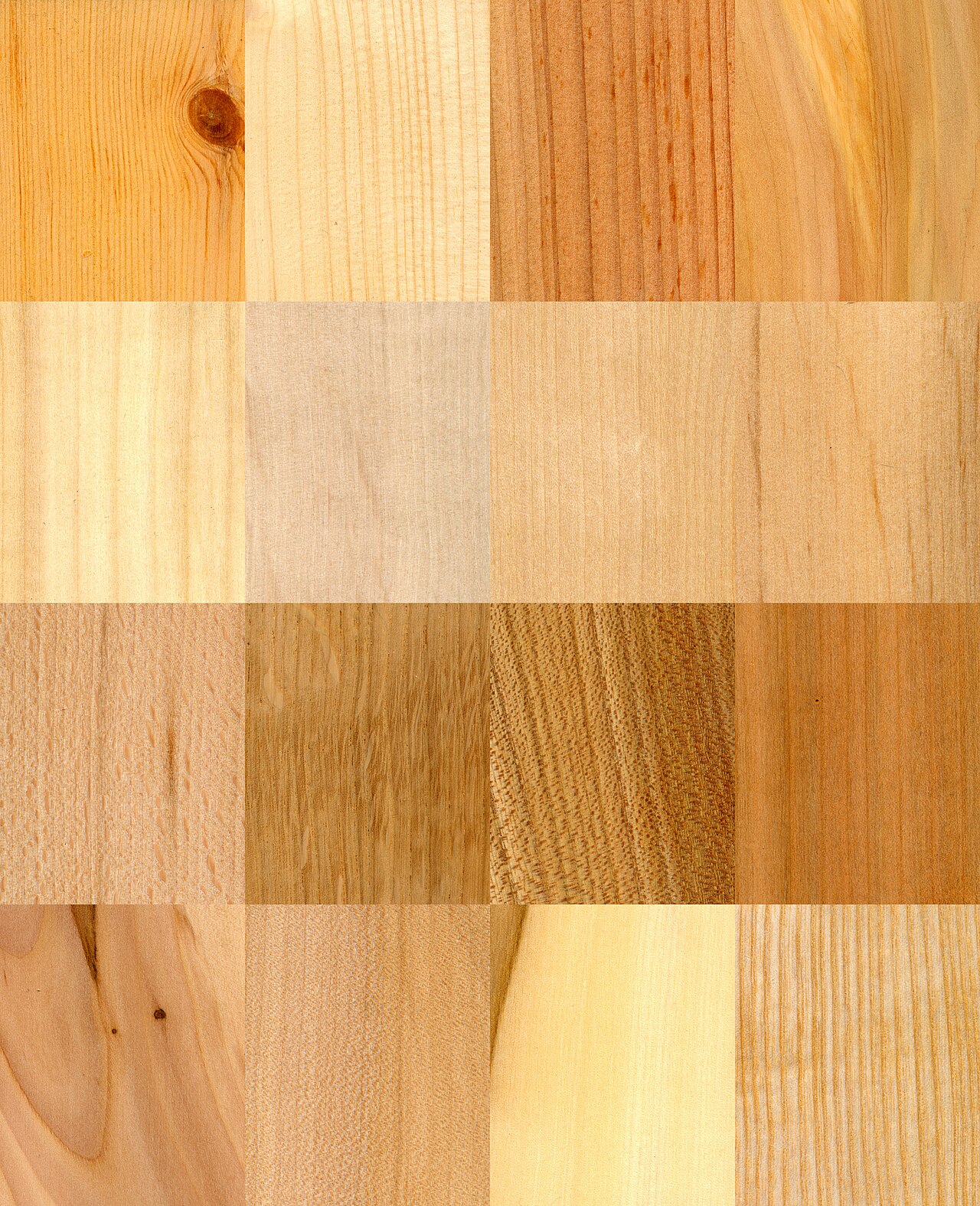
How the board is built matters as much as the wood. An end-grain board turns the ends of the fibers toward the knife; an edge-grain board presents their long sides. John Boos makes end-grain blocks in maple, walnut and cherry, so the best wood for an end-grain board is the same short list. Our end-grain versus edge-grain guide compares the two constructions.
Stability: how much each wood moves
The Wood Handbook notes that lumber “shrinks and swells with changes in moisture content,” most in the direction of the growth rings (tangentially) and about half as much across them. Its shrinkage tables, measured from green to oven-dry, give a useful comparison of tangential shrinkage: 5.8% for teak, 7.1% for black cherry, 7.8% for black walnut, 9.9% for sugar maple and 11.9% for American beech. Lower figures mean less movement as a board gets wet and dries, so of these five, teak and cherry are the steadiest and beech the least steady. If a board has already cupped, see our guide to a warped wooden cutting board.
What board makers use
- John Boos offers three woods: northern hard rock maple, which it calls “strong and dense”; American cherry; and American black walnut. Our maple versus walnut comparison and cherry guide cover them.
- TeakHaus makes teak boards in end-grain and edge-grain forms; see our teak guide.
- Japanese makers such as Hasegawa make soft-surfaced boards, some with a wood core; Hasegawa says its soft board “cushions and absorbs the blows of your knife.” Our Hasegawa versus Asahi comparison covers these boards.
- Bamboo belongs to the grass family rather than being a wood; our bamboo versus wood guide explains how it differs. For olive and acacia boards, see our olive and acacia guides.
The other woods people ask about
- Beech: 1,300 lbf, close to maple, with a fine to medium, uniform texture. Its 11.9% tangential shrinkage is the highest of the woods compared here, so it moves more with moisture than maple, walnut or cherry.
- Purpleheart: 1,860 lbf in the Wood Handbook and 2,520 lbf in the Wood Database, well above maple. The Wood Database notes that it can exude a gummy resin if dull tools heat it, and that it has been reported as a sensitizer.
- Osage orange: 2,620 lbf in the Wood Database, which calls it very stable and one of the most decay-resistant woods in North America, and notes that its sap has been reported to cause dermatitis. It is not usually harvested for lumber.
- Ironwood: a common name for several very hard, dense woods rather than one species, so ask which tree a board is made from. Desert ironwood, for example, is 3,260 lbf in the Wood Database, which notes that it is considered a protected species in Mexico.
- Rosewood: Indian rosewood is 3,170 lbf in the Wood Handbook and East Indian rosewood 2,350 lbf in the Wood Database. The Wood Database notes that East Indian rosewood is listed on CITES Appendix II under the restriction covering all Dalbergia species, and that it has been reported as a sensitizer.
- Cedar: western red cedar is 350 lbf and coarse in texture, and the Wood Database reports an elevated rate of allergic reactions to it, particularly occupational asthma. Aromatic red cedar has a distinct scent and is commonly used in closets and chests to repel moths.
- Red oak: 1,290 lbf, so hard enough, but its large, open pores set it apart from the fine-textured woods above.
Woods to be careful with
The Wood Database answers the common question of whether a wood is safe for a cutting board directly: “very few woods are actually toxic in and of themselves,” but many can cause allergic reactions in sensitive people, and that risk for finished items “is greatly lessened (but not eliminated)” by a food-safe finish. Its pages list black walnut, purpleheart, olive, East Indian rosewood and western red cedar as reported sensitizers, and hard maple as reported to cause skin irritation and asthma-like effects. If anyone in your household reacts to a wood, choose another one. For finishes, see our guide to food-safe cutting board finishes.
Caring for any wooden board
The same routine applies whichever wood you choose. John Boos tells owners not to soak or submerge its boards and says wood cutting boards are not dishwasher safe. Wash the board by hand, dry it straight away and oil it when it starts to look dry. Our guides cover how to clean a wooden cutting board and how to oil one.
How to choose
- For most kitchens: hard maple for the hardest, lightest-colored surface; walnut or cherry for a darker board that shows marks sooner; teak for a wood that moves little.
- For Japanese knives: any of those woods, or a soft rubber or synthetic board, used without twisting or scraping the edge; see our guide to cutting boards for Japanese knives.
- Check the species: a listing that names the tree, such as hard maple, black walnut or Tectona grandis, tells you more than “hardwood” or “ironwood.”
- Check the size: match the board to your counter and sink with our cutting board size guide.
For more board and kitchen tool guides, see the kitchen tools guide.
Sources: USDA Forest Products Laboratory, Wood Handbook (FPL-GTR-190, 2010), Tables 5–3b and 5–5b (side hardness at 12% moisture content), Tables 4–3 and 4–4 (shrinkage) and chapters 2, 4 and 5 (teak texture, shrinking and swelling, hardness test); The Wood Database, hard maple, black walnut, black cherry, teak, American beech, red oak, purpleheart, osage orange, olive, East Indian rosewood, desert ironwood, western red cedar, aromatic red cedar and Wood Allergies and Toxicity; John Boos, cutting boards and cherry, maple and walnut collections, and FAQ; TeakHaus, FAQ; Hasegawa, cutting boards; Wikipedia, Ironwood, Acacia and Bamboo.