Choose an acacia cutting board by checking the exact model’s usable dimensions, construction, fittings and care instructions. “Acacia” alone does not tell you whether the board is end grain, how thick it is, or whether it will fit your sink and storage.
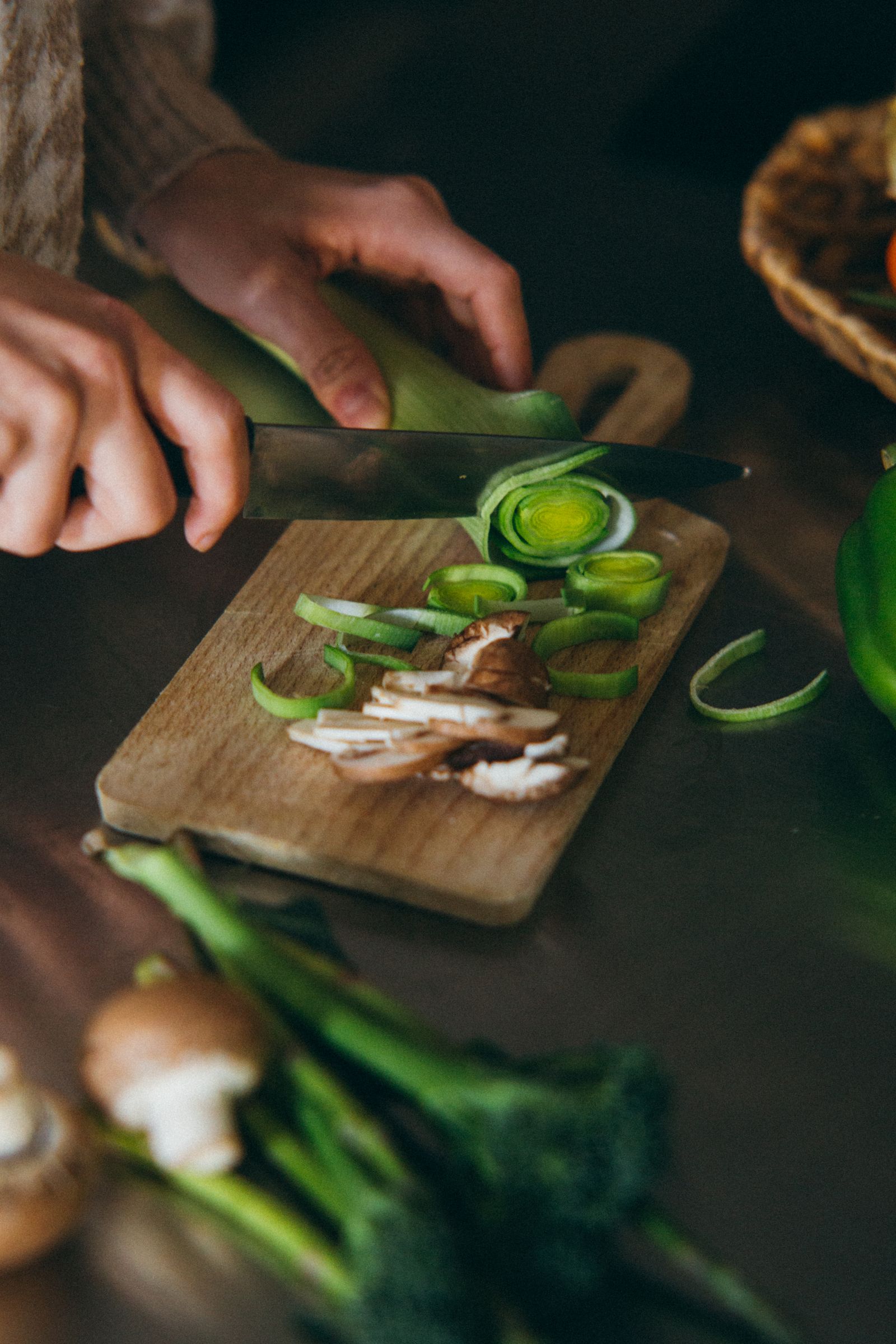
Photo by Viktoria Slowikowska via Pexels; used under the Pexels license.
Compare the listing, not just the wood name
Two acacia boards can differ in footprint, thickness, grain orientation, edge features and maintenance. These current maker listings show why the model details matter:
| Model | Listed size | Construction and features | Maker care |
|---|---|---|---|
| All-Clad K27248SC | The page title and description say 19 × 14 × 1 in; the specification field says 19 × 14 × 1.5 in. | Acacia end grain; juice groove, feet and handles are listed. | Hand wash with hot soapy water, dry thoroughly, do not soak; apply food-grade mineral oil regularly. |
| Schmidt Brothers 18-inch board | 18 × 12 × 1.2 in | Acacia end grain | The maker says to apply mineral oil monthly. |
The All-Clad page contains conflicting thickness figures, so check with the seller or maker before relying on a dimension that affects fit. The figures describe those listed products; they are not standard acacia-board sizes.
Test the board against your kitchen
Measure the clear counter space where you prepare food, then check whether the board can fit through the sink and into its storage place. A paper template helps reveal whether the listed footprint leaves room for a bowl, plate and comfortable stance. Check thickness and weight too if you will carry it to wash or dry it upright.
Look at the working surface and the underside. A groove can catch liquid, but it reduces the flat area available for cutting. Feet may help a board stay in place while also making it harder to turn over. Handles change the outside dimensions and can affect storage. Read whether the listing describes end-grain or edge-grain construction instead of assuming the species name supplies that information. For the construction distinction, see our end-grain and edge-grain guide.
Match care to the exact finish
Follow the care instructions for the board you buy. The two examples above both specify mineral oil, but their listed routines are not a universal rule for every acacia board or finish. Avoid soaking or machine washing unless the maker explicitly allows it; standing water and incomplete drying can damage many wood products. For general board-cleaning steps, see how to clean a wooden cutting board.
If the board is for a fine kitchen knife, check the knife maker’s surface guidance as well as the board listing. The acacia name alone does not establish a particular construction or a knife maker’s recommendation. Our cutting-board guide for Japanese knives explains the surface and construction questions to check.
Before ordering, confirm the model’s dimensions, flat working area, fittings, cleaning routine and oil recommendation. Those details make the choice useful for your counter and tools.