Octagonal and oval wa handle profiles differ in how their geometry can affect grip reference. An octagon has flat facets that may give the fingers orientation cues; an oval has a smoother surface with fewer facet cues and may turn more freely in some grips. Neither is inherently better, so judge the actual profile with your grip and the knife it will sit on.
Treat the choice as a grip-orientation question as well as a looks question. Octagonal facets may give useful orientation cues in a pinch grip, but they do not guarantee edge direction or precise cuts. An oval’s smoother sweep may suit a grip that shifts or rotates, though comfort depends on the actual profile and your hand. Judge each shape in your normal grip if possible.
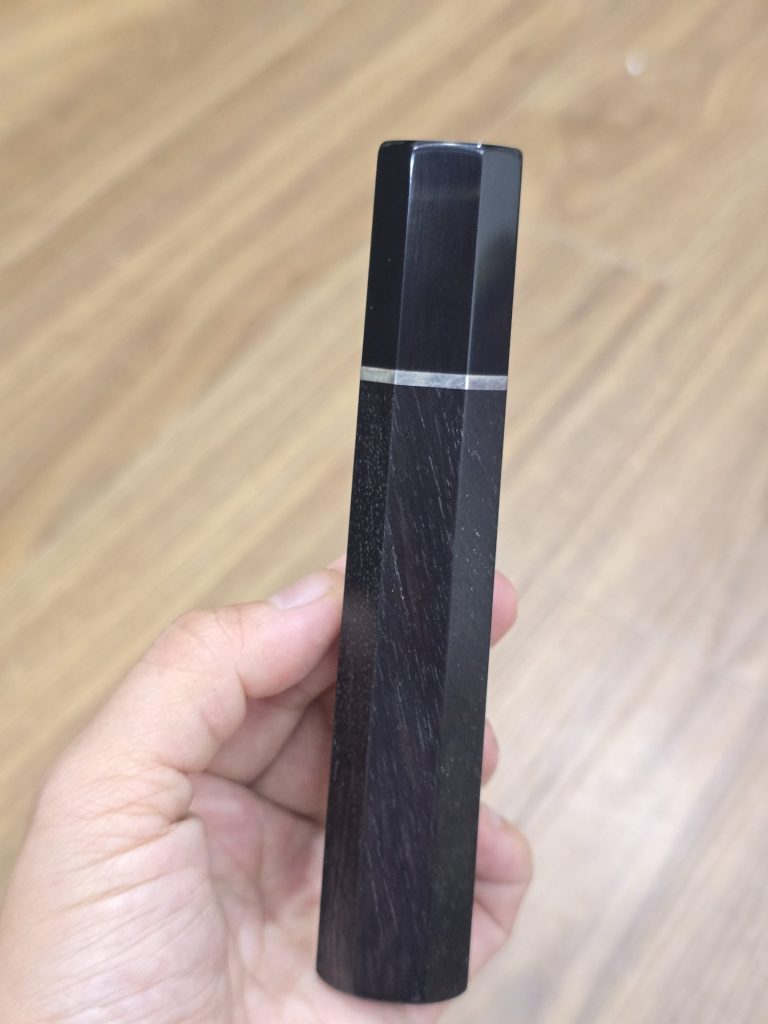
Octagonal vs oval at a glance
An octagonal handle has flat facets and defined corners that may register against the fingers and provide orientation cues, but they do not guarantee knowledge of edge direction. Flats can affect how a handle rests on a board; check the actual handle rather than assuming it will not roll. The same definition may feel firm in some grips, so judge its corners and facets in your own hand.
An oval handle has a smoother profile with no facets to find, which may make rotation feel easier in some grips. That does not guarantee comfort or freedom of movement, and the result depends on the actual profile and your hand. An oval may offer fewer handle-based orientation cues than an octagon, so judge how you read the edge from the whole knife in your normal grip.
| What you care about | Octagonal | Oval |
|---|---|---|
| Edge orientation | Facets may provide orientation cues | Smooth, so you orient off the blade |
| Grip style | May suit some pinch grips; judge the actual profile | May suit a relaxed or rotating grip |
| On the board | Flats resist rolling | Can roll if set down loosely |
| Feel in the palm | Defined, with corners | Soft and continuous |
Match the shape to your knife
Use the configurator to compare octagonal and oval against your blade length, tang size, balance, and grip style before you settle on wood and ferrule details.
Reach for octagonal when
- You use a pinch grip and find facet cues helpful for orientation.
- You have checked the actual profile and like how it rests on the board.
- You like a defined, faceted feel rather than a smooth one.
Reach for oval when
- You rotate or rock the knife and want it to turn freely in the hand.
- You prefer a soft, continuous profile with no corners.
- You are comfortable indexing the edge off the blade rather than the handle.
How shape changes the grip
The clearest way to feel the difference is to ask whether you value facet cues or a smoother surface. Octagonal facets may help you notice orientation and return to a familiar grip, but they do not guarantee a repeatable hand position or precise cut. On a thin slicer or single-bevel blade, assess whether the actual profile gives you a useful reference in your normal grip.
An oval presents a smoother surface, which may make grip changes feel natural for some cooks, but it does not guarantee easier movement, greater comfort or faster work. If you choke up or change angles often, judge whether the actual oval profile supports those movements in your hand. Neither oval nor octagonal shape guarantees a lighter or more neutral knife than a Western handle; whole-knife construction controls weight and balance. Compare the complete formats in the wa handle vs western handle guide.
Shape, blade length, and balance
Handle shape changes indexing and palm contact, but shape alone does not correct the balance of the whole knife. Compare actual handle length, front width and height, taper, and corner treatment against your hand, grip, blade, and desired balance direction; use the handle weight and balance guide for that decision. If the current handle is secure, leave it installed. Clear photographs and visible junction height and face-to-face thickness provide partial fit evidence, not hidden tang dimensions. If the tang is already exposed, provide exactly three primary measurements in millimetres: usable length from the shoulder or seating line to the tip; height near the shoulder; and face-to-face thickness at the same station. Blade length, handle length, and maker/model are optional context only. Check the size guide and measurement guide before ordering.
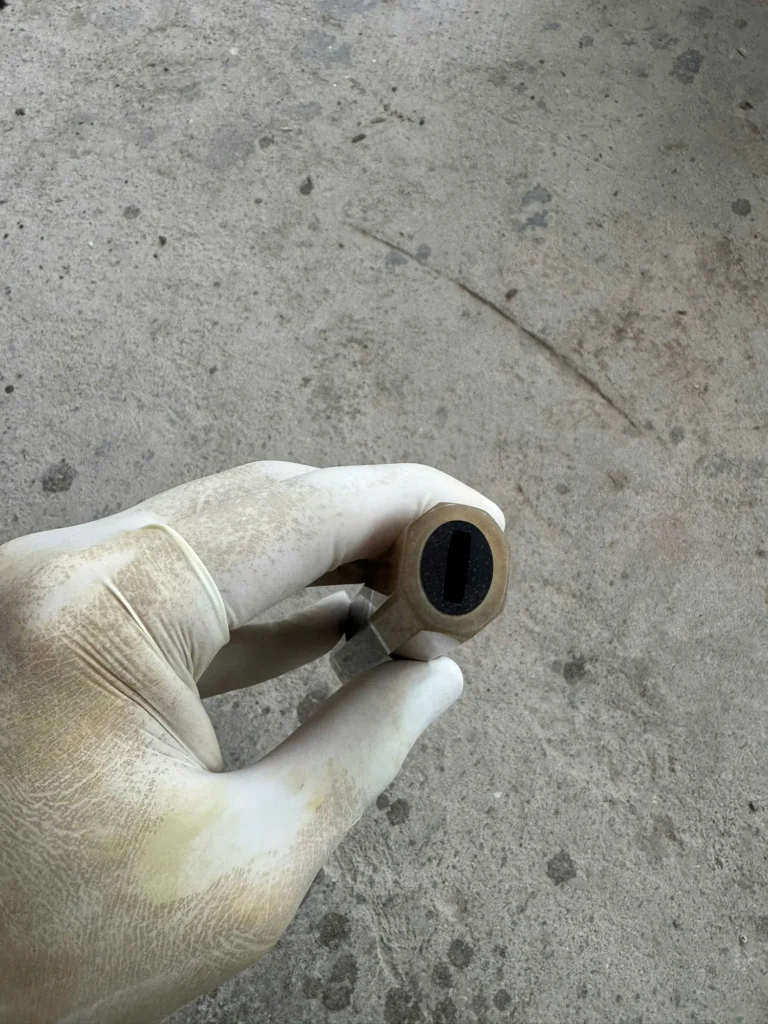
Where a D-shape fits in
Here, chestnut describes a handle profile, not chestnut timber. Makers may use D-shape and chestnut as overlapping labels: Ibuki labels one walnut example with both terms and specifies it for the right hand. That example does not establish that every D handle has the same handedness or is unusable in the other hand. Check the maker’s stated handedness and inspect the actual end-on profile before choosing. Compare width, height, taper, flat and rounded areas, and corner treatment against your hand and normal grip. Choose by that real geometry and feel before the wood name; species does not determine whether the profile will be comfortable.
Comfort and finish
Both profiles can be made to feel refined, so finish quality matters as much as the silhouette. A well-shaped octagon has its corners eased just enough to register without biting, while a good oval keeps a subtle bias so it does not feel completely featureless. The wood and ferrule you pair with either shape are a visual choice once the grip question is settled, not a substitute for it. If you want a handle to read clean and formal, both shapes accommodate dark woods and pale horn equally well.
Making the call
If you are still split, compare the actual profiles in your normal grip: choose an octagon if its facets give you useful orientation cues, or an oval if its smoother surface better suits how you reposition the knife. Neither shape guarantees comfort or a universal preference. When the choice is close, let the knife and your grip decide, and confirm the handle length and tang fit before committing.