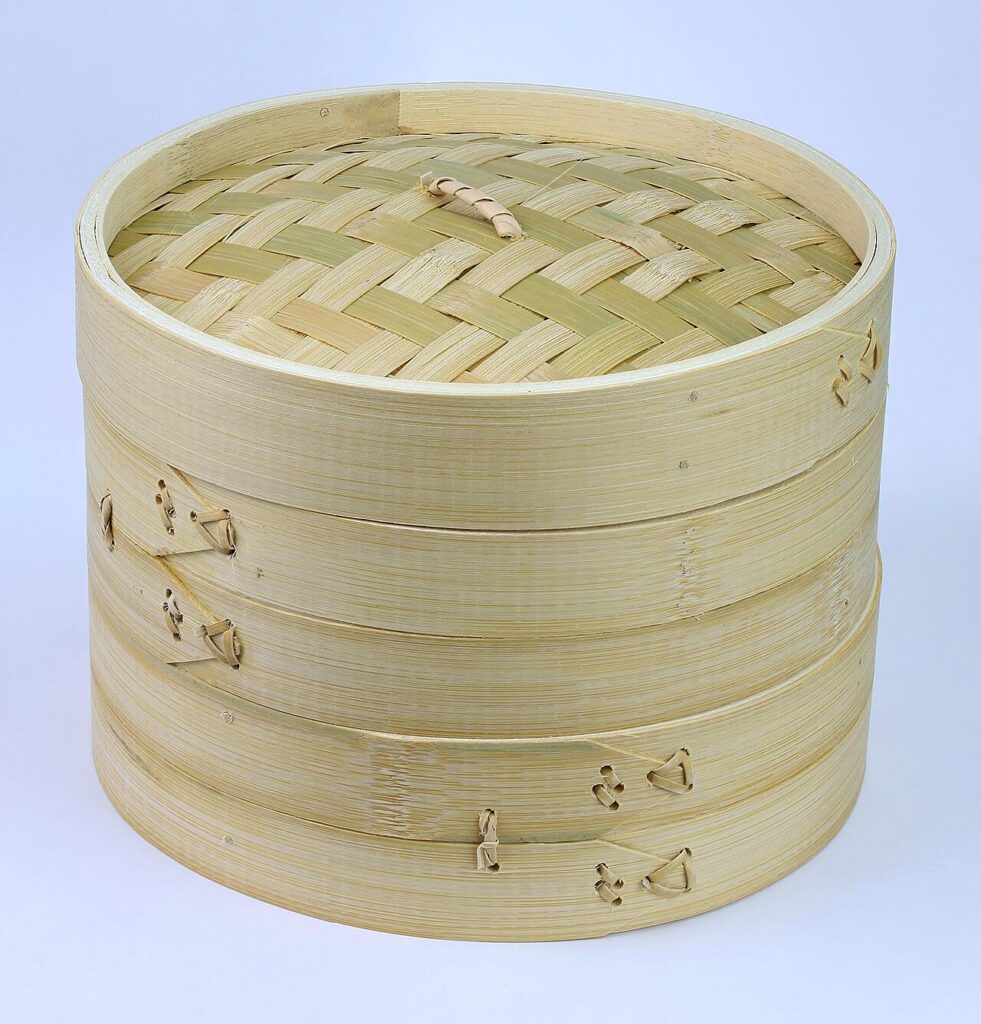
How to Use a Bamboo Steamer: Setup, Liners and Care
To use a bamboo steamer, support it securely over boiling water, keep the food above the water, and leave a
Guides, wood stories, and care notes for choosing and maintaining Japanese wa handles.
To use a bamboo steamer, support it securely over boiling water, keep the food above the water, and leave a
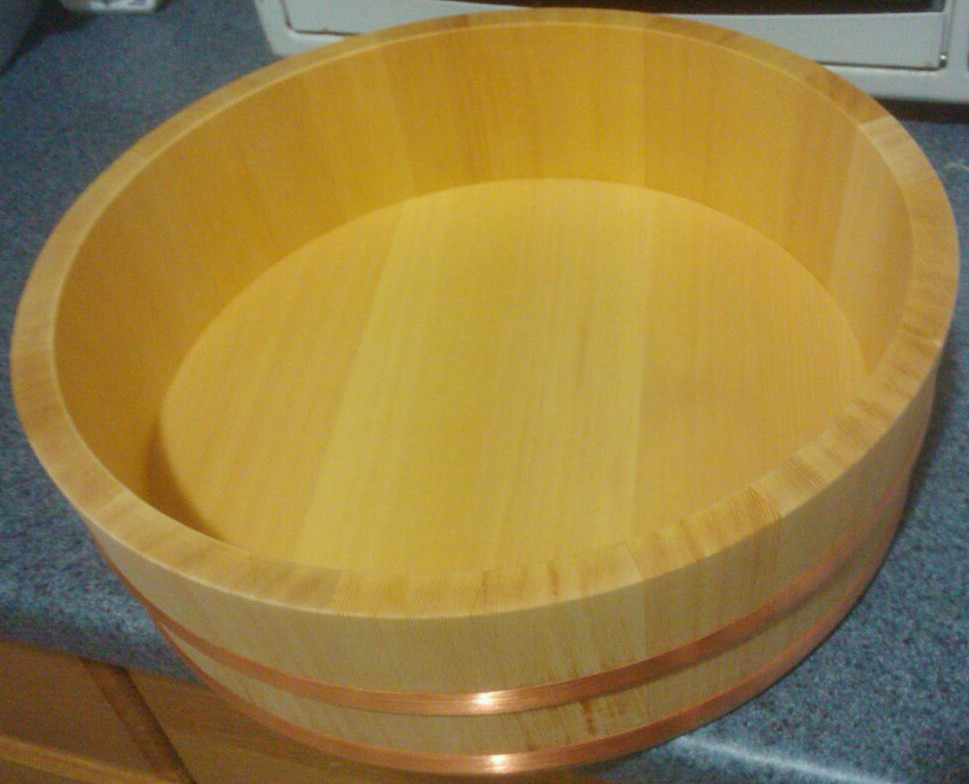
Choose a hangiri when you regularly season and mix sushi rice. Choose an ohitsu when you want a vessel for
Ginsan is a stainless knife steel, also encountered as Gin 3 or Silver 3. It is worth considering if you
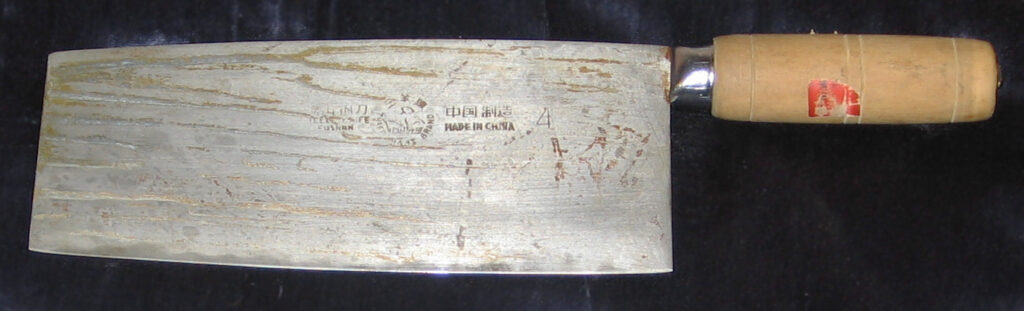
For a compact knife devoted to vegetables, a nakiri is the simpler starting point. A Chinese vegetable cleaver makes sense
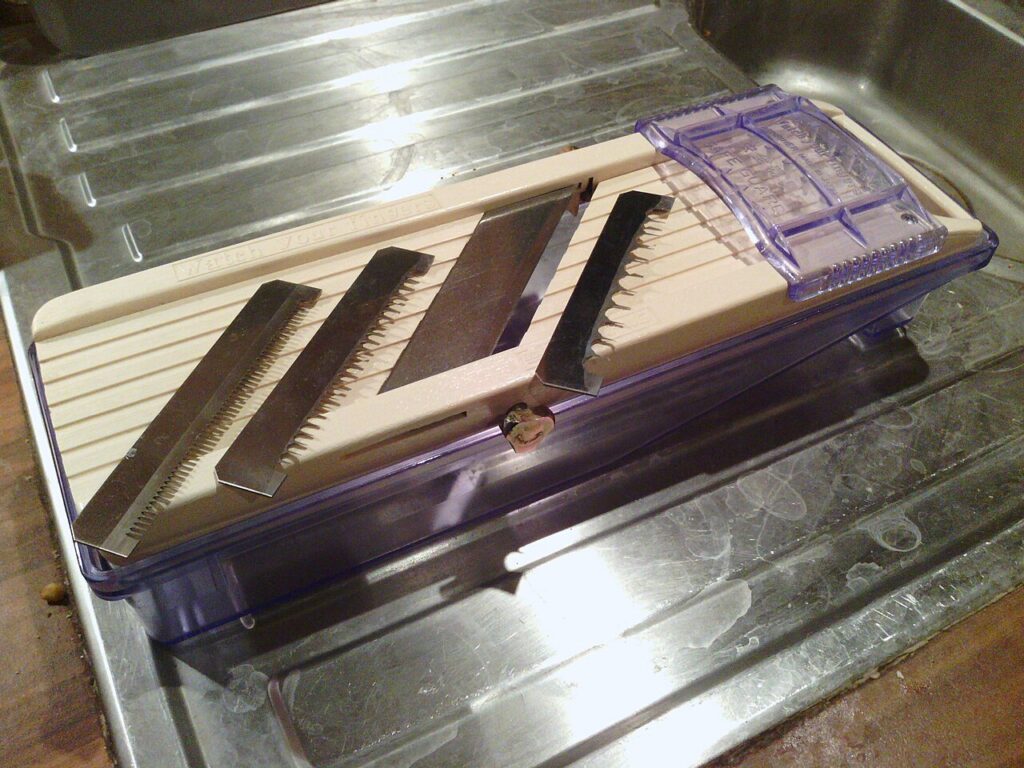
For a Benriner that makes both slices and julienne strips, narrow the choice to the 64 or 95 mm families.
The yanagiba—a long Japanese knife for preparing sashimi, raw fish or seafood sliced for serving—is long because the cut is
Urushi is the tapped sap of the lacquer tree, brushed in thin coats over a wooden base and hardened rather
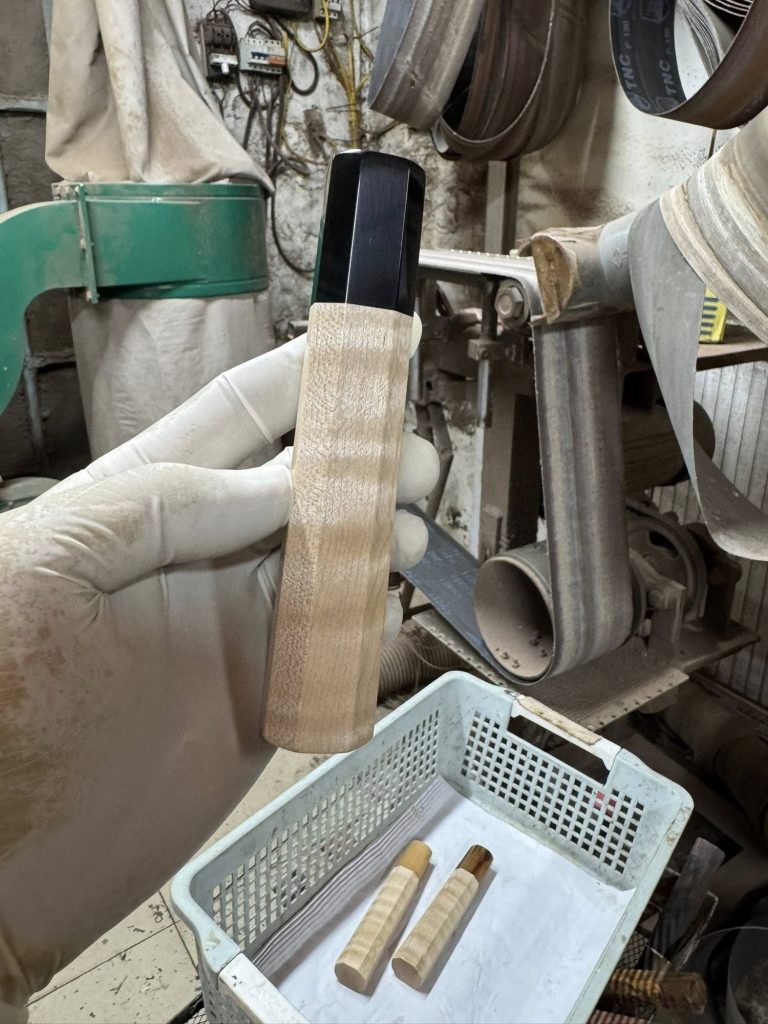
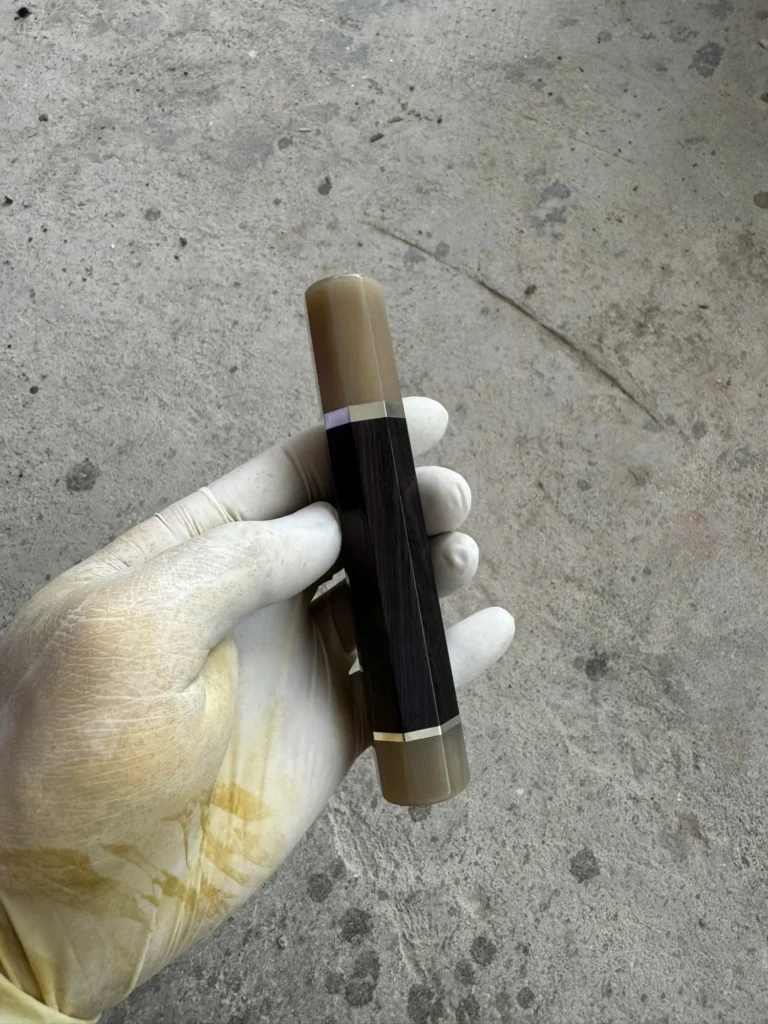
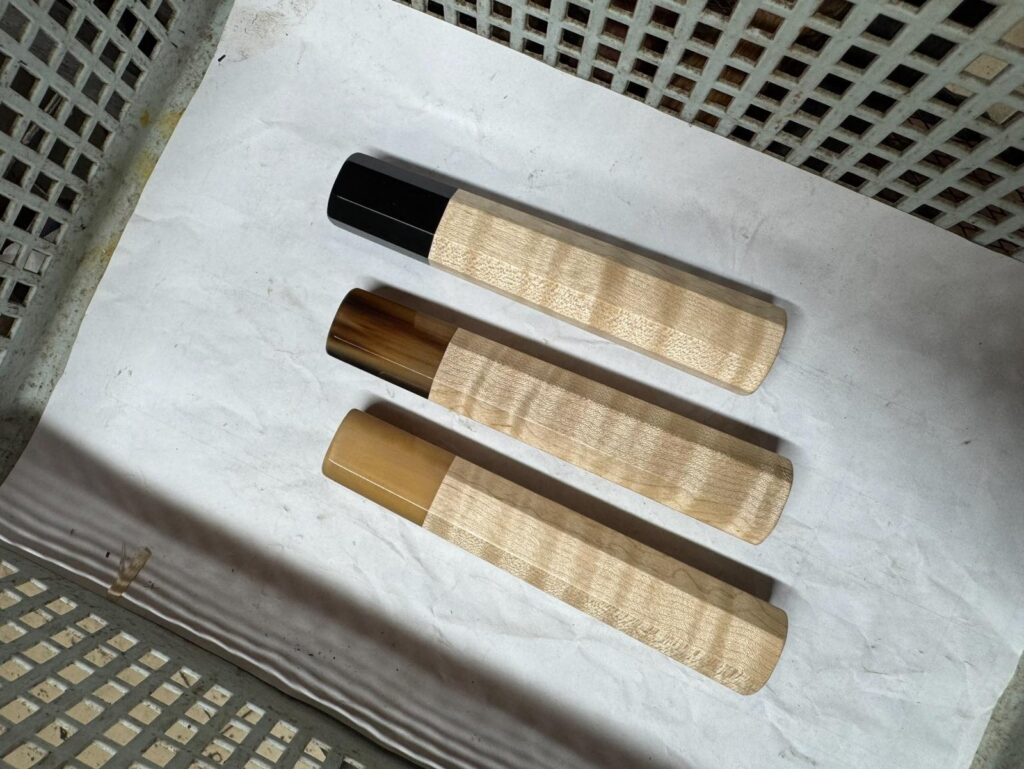
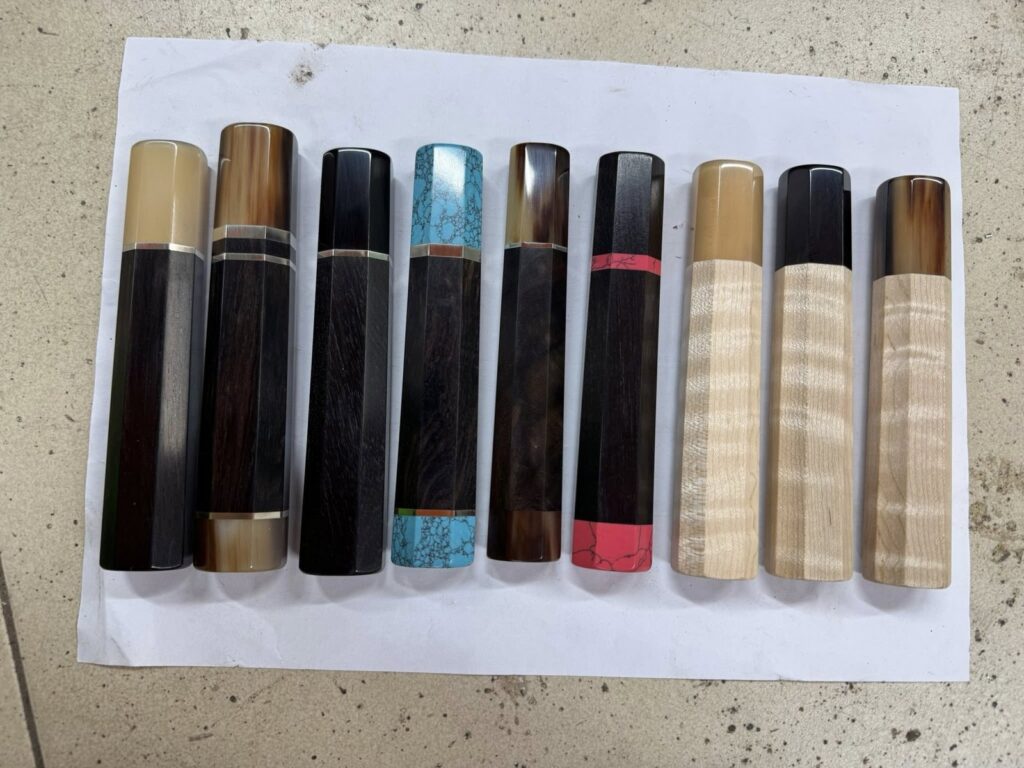
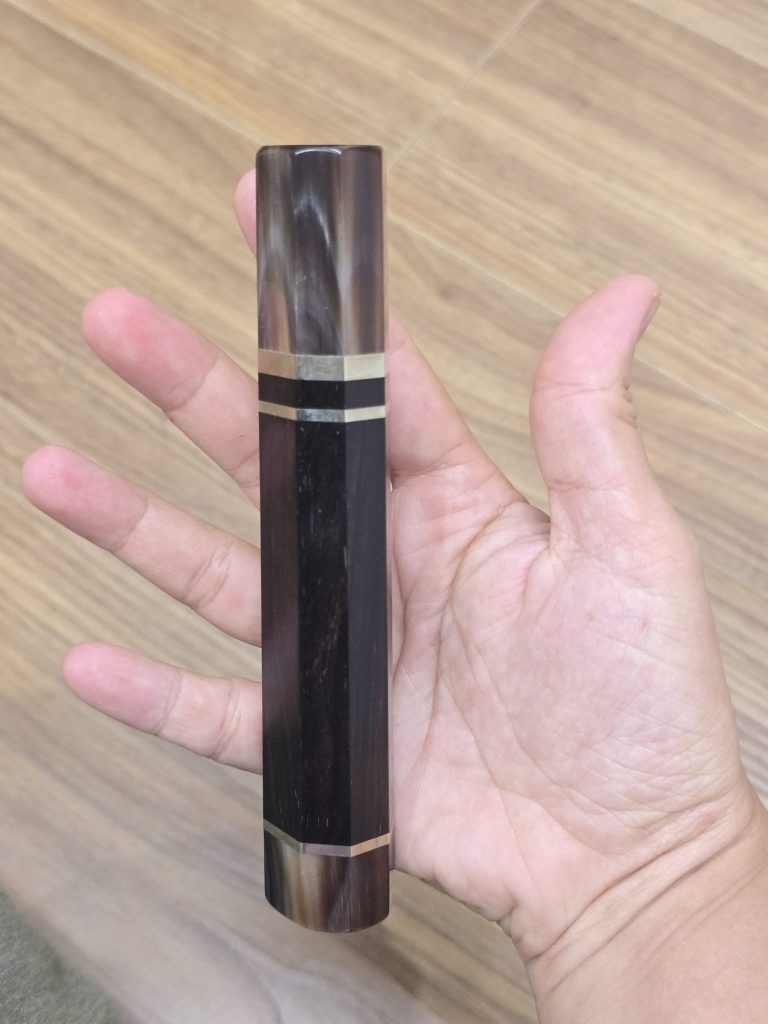
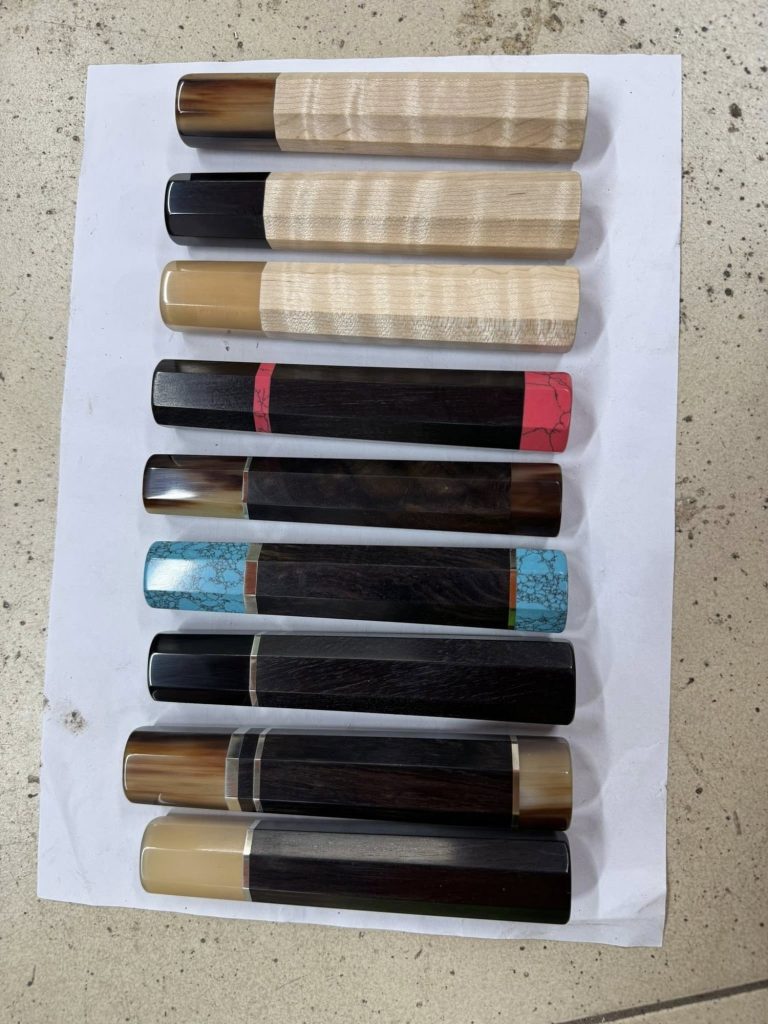
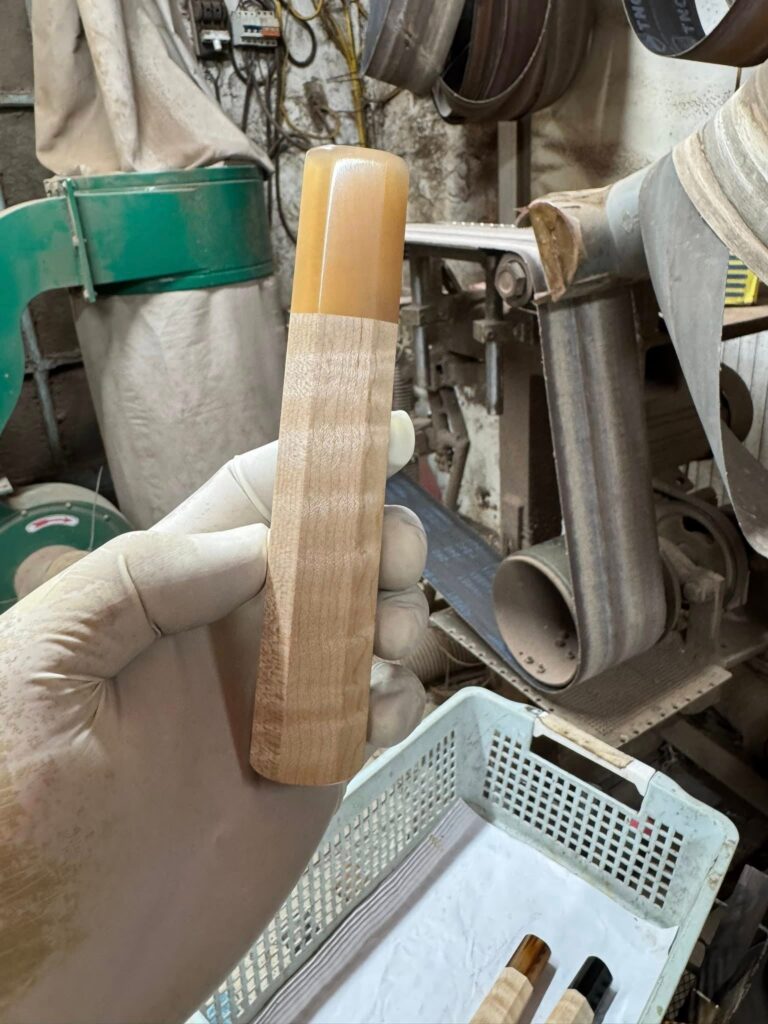
Traditional Japanese knife handles often use ho (hō / hōnoki, magnolia) because it is light, soft, straight-grained, low in resin
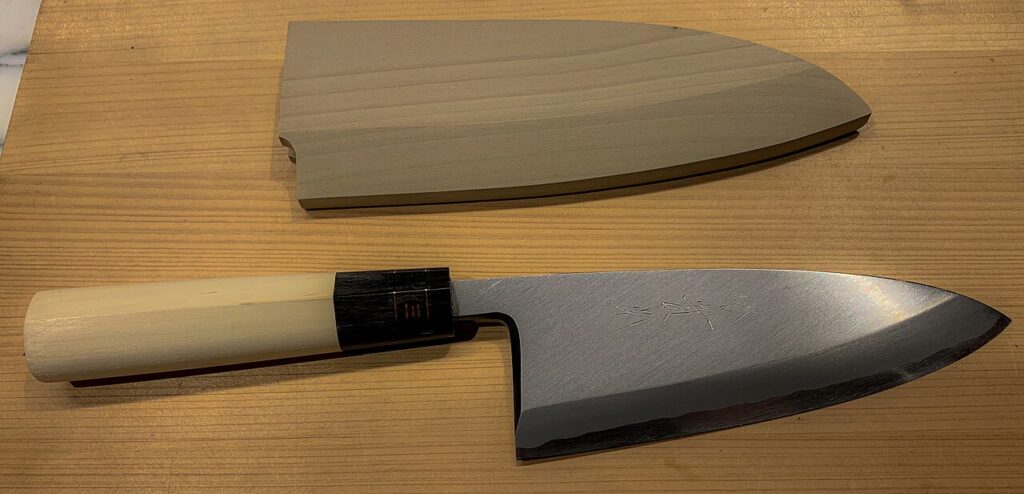
A deba is a thick-spined, single-bevel Japanese knife made to break down whole fish: removing heads, working through collars, freeing
Hōchō (包丁, older 庖丁) is the everyday Japanese word for a kitchen knife. Japanese dictionaries say it began with a
White and Blue are Yasugi carbon cutlery steels from Proterial. White is close to iron and carbon; Blue adds tungsten
Stropping is a finishing step: it clears the burr left by the stone and refines the last few microns of

A san-mai blade uses three layers: a hard cutting core wrapped in softer steel or iron. It is one form
Does a left-hander need a left-handed Japanese knife? For double-bevel knives—gyuto, santoku, bunka, nakiri and petty—no special version is normally
Carry a knife roll if a few knives make the daily commute and the roll can be opened flat after
For a Japanese kitchen knife that will sit unused, choose a blade oil whose label identifies it for knife or
In a Japanese kitchen, shears take over the jobs most likely to chip a thin, hard knife edge: poultry joints,
A Japanese natural whetstone, or tennen toishi, is sedimentary stone quarried around Kameoka in Kyoto Prefecture. The prefecture’s museum listing
We use cookies for analytics and to measure our ads, so we can see how the site is used. Nothing is stored until you choose. Privacy policy