For a Benriner that makes both slices and julienne strips, narrow the choice to the 64 or 95 mm families. Choose between them by the width of the food you actually prepare. The 120 mm Jumbo is the wider option for flat slicing, but it does not take the comb blades used for julienne. It is a different choice of work, rather than an automatic upgrade.
After width and cut type, compare the way the slicer adjusts and sits over your work surface. Those differences explain why two Benriners with the same width can still suit different routines.
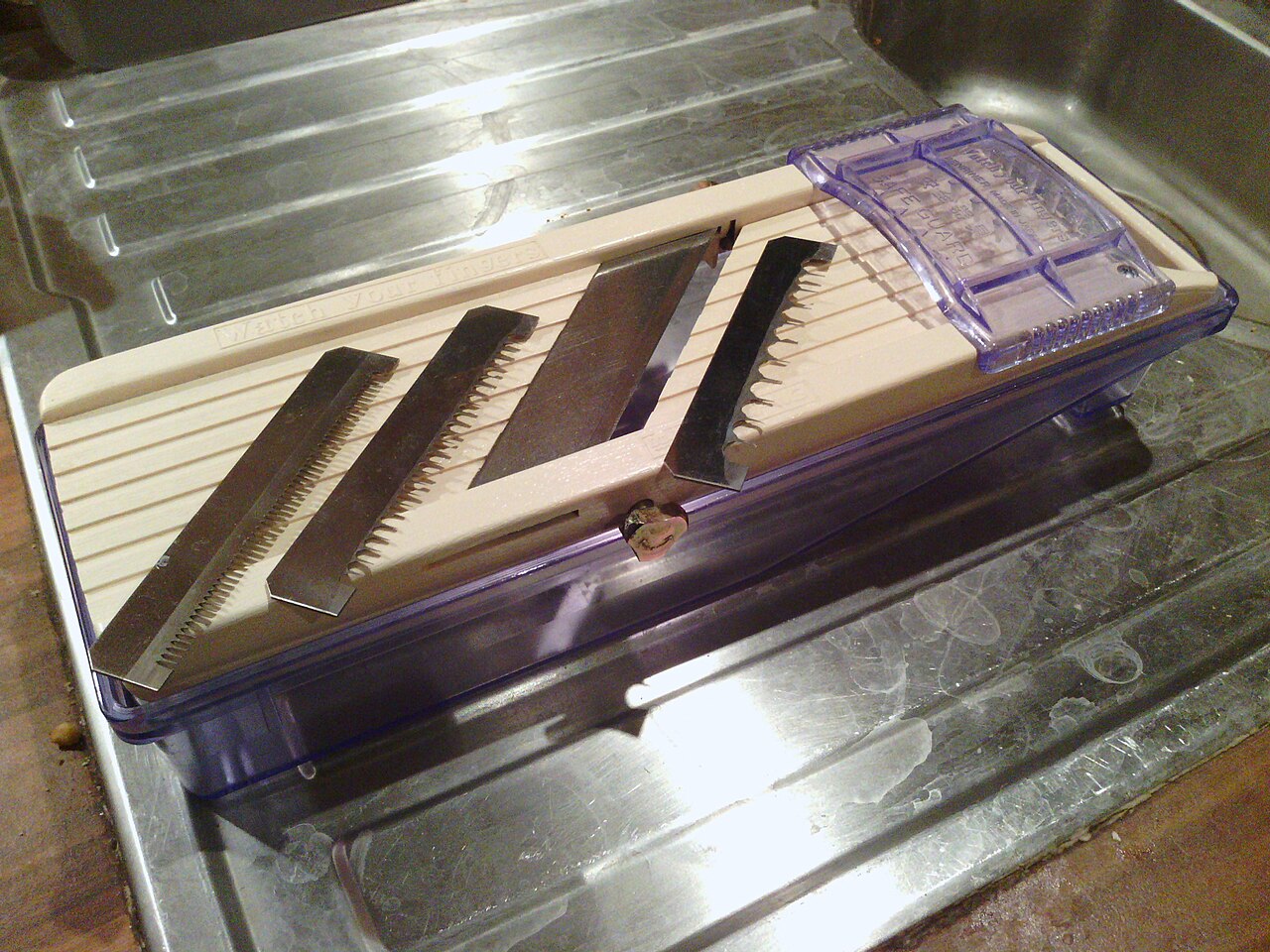
What the three widths mean in a kitchen
Benriner describes these numbers as board widths. They are useful for comparison, but they are not the tool’s overall width or a guarantee that a whole vegetable will fit. The maker’s current Japanese catalog supplies the model details below.
| Width family | Models in this comparison | Blade provision |
|---|---|---|
| 64 mm | Classic, Classic with tray, Pro No.64 | Flat blade and three comb blades |
| 95 mm | Super Standard, Super Pro No.95 | Flat blade and three comb blades |
| 120 mm | Jumbo Pro No.120 | Flat blade only |
Think about the face of the ingredient that will cross the blade. A cucumber cut across its width presents a different shape from a broad section of cabbage. A large ingredient may already be divided for the dish you are making; if so, accommodating it whole is not necessarily a useful buying goal.
For example, if your recurring task is a small bowl of cucumber rounds, start by checking the narrower family. If you repeatedly wish you could retain wider slices of the food you prepare, compare the next width up. Buying width for an occasional oversized vegetable is less compelling when dividing that vegetable would not change the dish.
Also measure the storage space using the complete product dimensions. A board-width number leaves out the surrounding body and handle. The slicer has to fit somewhere after the salad is made.
Flat slices and julienne are separate decisions
A flat slice is a sheet or round. Julienne is a set of narrow strips. Before comparing model names, name which result brings you to the slicer: cucumber rounds, broad vegetable sheets, or fine strips for a salad.
That distinction is especially useful when considering the Jumbo. Someone who wants wider flat slices has a reason to investigate it. Someone who wants one tool for slices and comb-cut strips should stay with a family that includes the comb-blade function. Extra board width cannot compensate for a missing type of cut.
Do not confuse finely slicing a piece of cabbage with needing a comb blade for every kind of shredded vegetable. The orientation and structure of the ingredient also affect the final shape. Choose around the cuts you intend to repeat, rather than buying every attachment because its name sounds useful.
The three comb sizes also deserve separate places in the storage plan. A kit is only convenient when its loose cutting parts can be kept together and retrieved deliberately. Count the complete kit when deciding whether the tool earns drawer space.
Classic and Pro change the setup, too
In the catalog, the Classic models use screw adjustment; the Pro No.64, Super Standard, Pro No.95 and No.120 use a dial. Pro No.64 and No.95 add non-slip feet and a bowl-edge hook. Classic with tray includes its own catch tray. These are model features, not ratings of cutting quality.
Choose these conveniences by picturing a complete prep session. Where does the slicer rest? Where do the slices land? Is there room for the receiving bowl, and is the bowl the shape needed by the support arrangement? A hook is useful only as part of an appropriate setup; its presence is not proof that the slicer will sit securely on every bowl you own.
An included tray may make sense if you want a self-contained place to collect a small batch. If you already have a suitable receiving arrangement, the tray may be less important than adjustment or grip. Neither purchase needs to be justified by the word “professional.”
Make the shortlist with two ordinary meals
Use meals you cook regularly to test the choice on paper. Suppose one involves cucumber rounds and another uses julienned vegetables. You need both blade functions; the next decision is how much width those prepared ingredients require. The largest model is already unnecessary to that particular comparison.
Alternatively, suppose the mandoline will be used almost entirely for broad flat slices, while a knife handles strip cutting. The Jumbo’s lack of comb blades may be irrelevant. In that kitchen, width could deserve more weight than attachment count.
These are buying examples, not tested performance comparisons. They help turn “Which is best?” into a smaller question that your own cooking can answer. If two models cover the same actual cuts, decide using their support arrangement, storage footprint and included accessories. After choosing a model, use this mandoline setup and holder routine.
Buying blades for a Benriner you already own
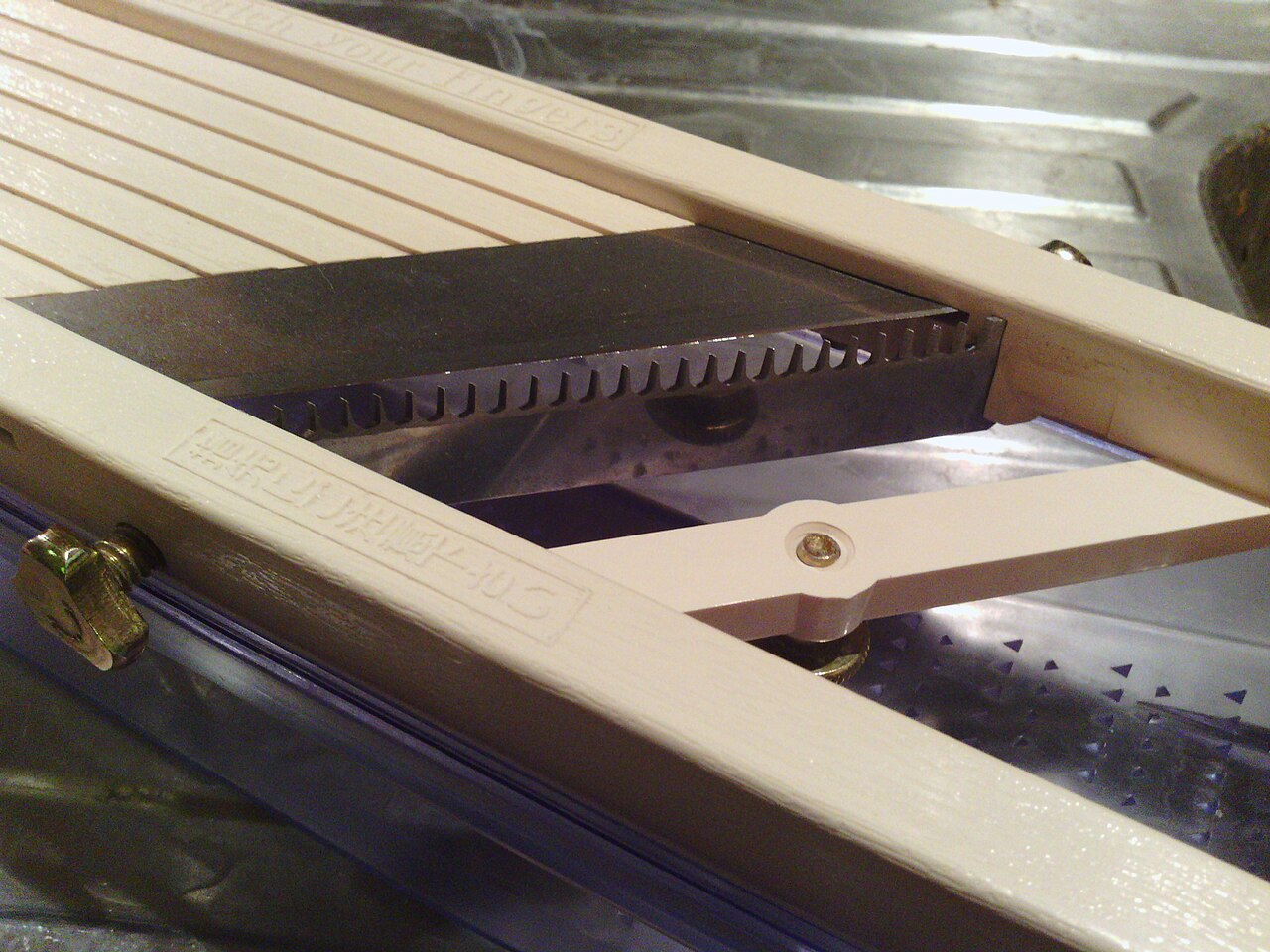
Start with the existing tool, not a generic search for “Benriner blades.” Record its complete name or model label, width family and any packaging details you still have. Identify whether you need the flat blade or a particular comb blade.
A listing that names only the brand leaves the important question unanswered. Match the replacement supplier’s stated compatibility to the exact tool; if the label is missing, provide clear photographs of the body, adjustment mechanism and blade mounting when requesting identification. Similar color, a familiar name or matching width alone should not be treated as a fit confirmation.
The current Japanese range also includes Japan-only Sou and Kiwami models. Regional names and packages therefore need their own check. Keep the model information with the tool’s instructions once you have identified it; that is more useful at replacement time than remembering what a retailer called it.
The purchase is complete when the setup is complete
Before ordering, verify the actual package contains the blade types and guard you expect, and read its operating and cleaning directions. Support features and a guard are parts of the intended setup, not reasons to improvise around the exposed blade.
The most useful choice is the one that covers your recurring cut, fits the prepared ingredient, and has a workable place to collect the result. For the wider question of buying tools you can keep in service, see the kitchen tools guide.