To cut beets, scrub them and trim the leaves and the thin root, then decide whether you are cutting them raw or cooked. Raw beets are peeled first, with a vegetable peeler or a knife, and cut with a flat side down so they cannot roll. Beets roasted or boiled whole are cut after cooking: once they cool, the skins rub off. Either way, beets stain, so wear gloves and use a board you don’t mind marking, or cut on a sheet of parchment.
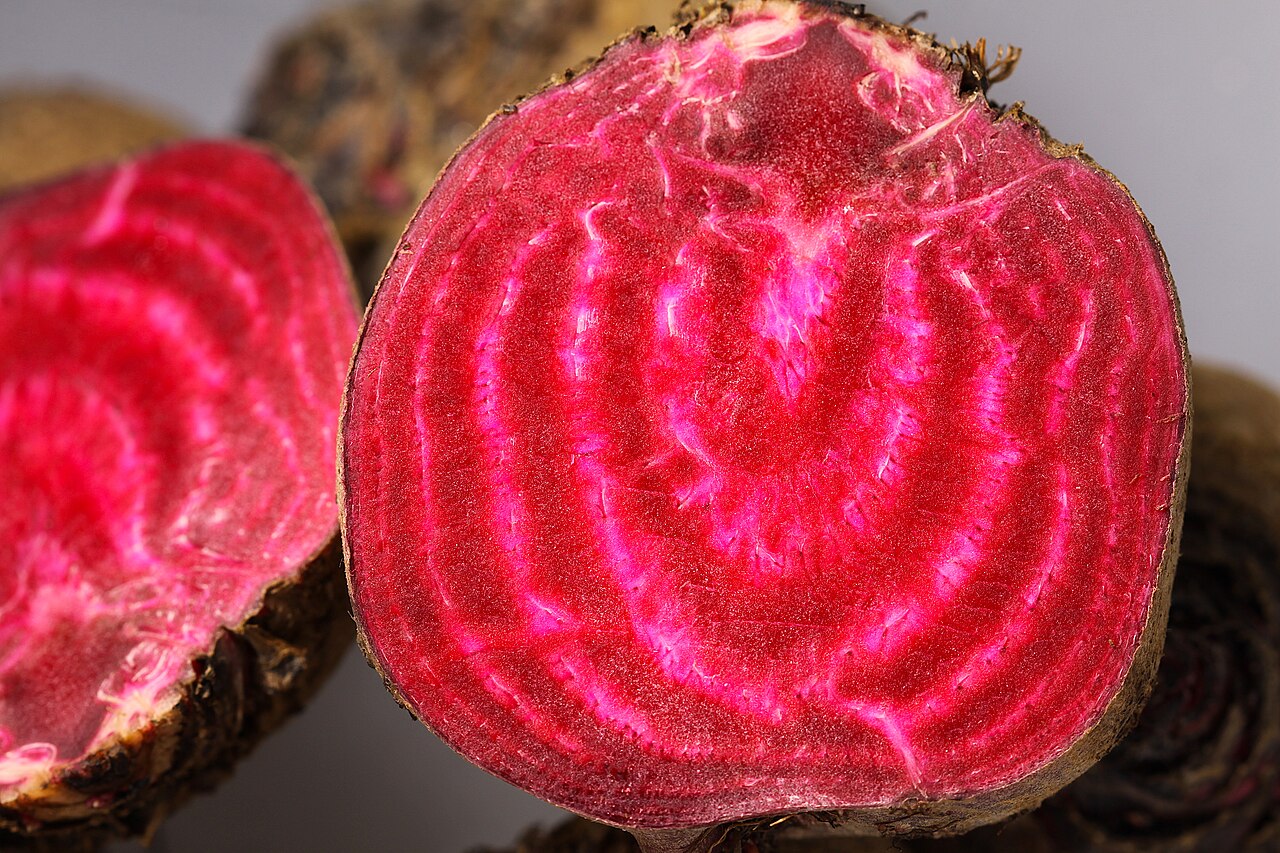
Protect your hands and the board first
Illinois Extension notes that the red pigment in beets stains dish towels, wooden cutting boards and sinks. Its roasted-beet handout goes further: the pigment, called betanin, may leave a permanent mark on marble or wood and can color your skin too, so the handout recommends gloves and a plastic board while you wash, peel and cut beets. Salt easily removes the stain from skin, Illinois adds. If you prefer to keep working on your wooden board, lay a sheet of parchment over it and cut on that, and wipe stray juice off the counter as you go. If a mark does set in, our guide to stains and sanding on a cutting board covers what to try first.
Wash and trim
Utah State Extension advises against washing beets until you are ready to use them; then scrub the dirt off with a vegetable brush under running water. Do it even if you will peel them: the FDA advises rinsing produce before peeling so dirt and bacteria are not carried from the knife onto the food. Illinois Extension asks you to wash them carefully without breaking the skin, because breaks and tears let color escape. If you are cooking them whole, leave about an inch of stem and the tap root on to reduce color loss, as Illinois does in its canning instructions. If you are cutting them raw, trim the stem end and the root flush.
Raw beets: peel, then make a flat side
- Peel. A vegetable peeler takes the thin skin off with little waste; our guide to vegetable peelers compares the shapes. A paring knife works too: cut off the top and bottom, stand the beet on one end and slice the skin away in strips from top to bottom.
- Make a flat base. A raw beet is round and hard. Halve it from top to root, or slice a thin piece off one side, and set it cut side down before any other cut. A beet that rolls is how a knife slips.
- Cut straight down. Raw beet is dense. If the blade sticks partway, draw it back out along the line of the cut rather than twisting it free; our page on why a sharp knife wedges in dense vegetables explains why thin blades grab.
Raw beets need little else. Illinois Extension says they only need to be scrubbed and grated or sliced as thinly as possible, and Utah State peels raw beets and grates them or slices them paper thin, best served cold.
Shapes and what they suit
- Thin rounds. Lay a peeled beet on its flat side and slice across it as thinly as you can control, for a salad or a raw plate.
- Matchsticks. Cut thin planks, stack two or three, and slice them lengthwise into sticks for slaws and salads. Grating gives a similar texture faster.
- Cubes. Cut planks, then sticks, then cut across the sticks. Utah State roasts beets cut into 1/2- to 1-inch cubes, and for canning Illinois Extension cuts medium or large beets into 1/2-inch cubes or slices.
- Wedges. Halve the beet from top to root, lay each half flat and cut it into wedges through the center, the way you would an onion. Wedges suit roasting and cooked beets served on a plate.
Whatever the shape, keep the pieces the same size. How long beets take to roast depends on how big the pieces are, Illinois Extension points out, so it advises making the slices or cubes all the same size.
Cooked or roasted beets: let the skins come off
Cooking beets whole in their skins saves peeling them raw. For boiling, Utah State Extension leaves the tops and roots on, cooks the beets until they are tender when pierced with a fork, lets them cool a little, then holds them under running warm water; the skins should slip off along with the tops and roots. For freezing, Illinois Extension cools cooked beets promptly in cold or ice water, then rubs the peel away and trims the stem and root. Wear gloves for this step too.
A cooked beet is softer than a raw one, so it cuts cleanly into wedges, slices or cubes without much pressure. For canning, Illinois leaves baby beets whole and cuts larger beets in half and then slices them.
For juicing or a smoothie, cut peeled beets into chunks that fit your machine; for pickling or borscht, follow the shape your recipe names, using the cuts above.
Store them
Utah State Extension removes the greens before storing, leaving a small portion of the stems attached, and keeps the roots in a plastic bag in the refrigerator crisper drawer for up to 3 weeks. It adds that the greens are edible and can be used like spinach.
Which knife and board
A gyuto, santoku or nakiri handles a beet that sits on a flat side; a paring knife is easier for the stem, the root and peeling by hand. To roast beets with parsnips, turnips and rutabaga on one tray, see our guide to cutting root vegetables. If you are new to a knife, knife skills for beginners covers the claw grip for the guiding hand. For other fruit and vegetables, browse all our how-to-cut guides.
Sources: Illinois Extension, Preparing Beets (staining, salt on skin, careful washing, leaving stem and root on, cooling and rubbing off the peel for freezing, raw beets grated or thinly sliced, canning cuts: baby beets whole, 1/2-inch cubes or slices, larger beets halved and sliced); Illinois Extension, Balsamic Roasted Beets (betanin stains, gloves, plastic board, cut evenly); Utah State University Extension, Beets (wash just before use, brush, raw beets grated or sliced paper thin, 1/2- to 1-inch cubes, boiling whole and slipping the skins, storage, edible greens); FDA, 7 Tips for Cleaning Fruits, Vegetables (rinse before peeling, brush for firm produce).