Parsnips, turnips, rutabaga and beets share one method: scrub, trim, peel, then cut into even pieces. Three of them add a step of their own: a thick parsnip can have a woody core, rutabaga is often waxed and needs a steady first cut, and beets stain. Cut every root to a similar thickness, about 1 inch for roasting, so a mixed tray finishes at about the same time.
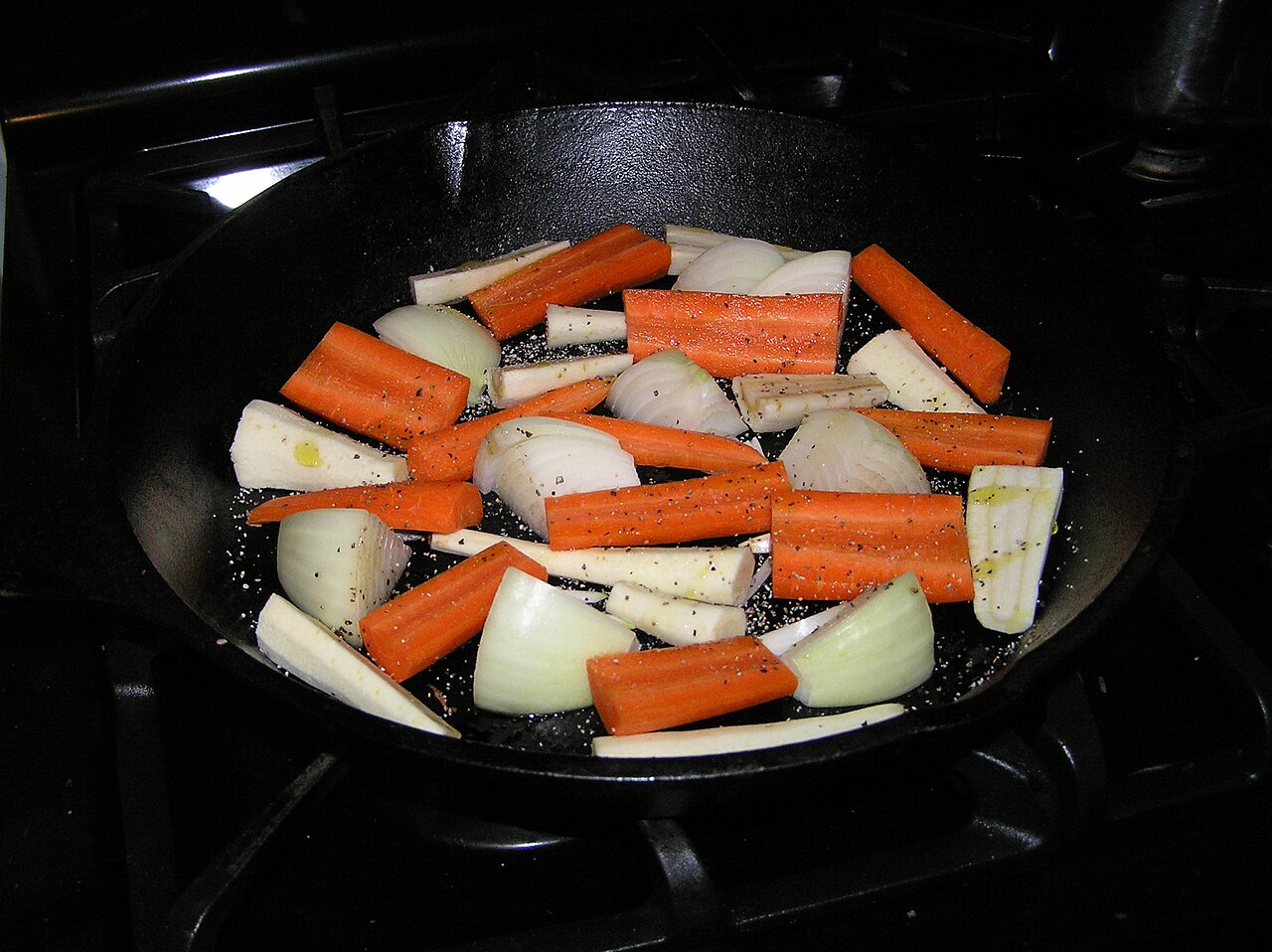
The same start for all four
Scrub each root under running water; the FDA recommends a clean vegetable brush for firm produce and rinsing before you peel. Cut off the top and the tail, and peel. Then give the root a flat face, by halving it or slicing a piece off one side, and put that side down; Mississippi State Extension’s knife basics ask for that on round foods, with the fingertips of the holding hand tucked in.
Parsnips: the thick end and the core
A parsnip tapers from a broad top to a thin tail, so straight crosswise cuts give uneven pieces. Leave the tail section whole or halved, and halve or quarter the thick top lengthwise until it is about as thick as the tail. Utah State Extension’s roasting handout cuts peeled parsnips into 2-inch lengths.
Illinois Extension says a large parsnip’s woody core must be removed, dug out with the end of a vegetable peeler or a sharp spoon; Montana State Extension agrees. With a quarter lying cut-side up, one shallow lengthwise knife cut does the same job.
Rutabaga: wax, then a steady first cut
Texas A&M AgriLife Extension notes that commercially grown rutabagas are often waxed for storage. A University of Rhode Island SNAP-Ed sheet scrubs off the waxy covering with a vegetable brush under lukewarm water, then peels the rutabaga. A waxed, thick skin is easier to take off with a knife than with a peeler:
- Square the ends. Slice off the top and the root end so the rutabaga stands on a flat base.
- Cut the skin away. Stand it up and cut down from top to bottom in strips, following the curve, until no wax or skin is left.
- Halve it. Cut it in half from top to bottom and put each half cut-side down.
- Cut it down. Cut slabs, then strips, then pieces; Utah State Extension roasts rutabaga in 1-inch pieces.
Turnips: peel, halve, cut
Illinois Extension’s advice is to wash turnips, remove the skin with a vegetable peeler and cut them to the size you need. It notes that large turnips tend to be woodier and more bitter than small ones. A turnip is round, so halve it through the root end, set each half flat-side down, and cut it into wedges or into 1-inch pieces, the size Utah State Extension uses for roasting.
Beets: protect your hands and the board
Illinois Extension warns that betanin, the pigment in beets, can permanently stain marble and wood and can stain skin, and it suggests wearing gloves and using a plastic cutting board to wash, peel and cut them. Salt removes it from skin, another Illinois Extension page adds. If a wooden board does pick up a mark, our guide to stains and sanding on a cutting board covers what to try first. Cut the beets after the paler roots.
For roasting, Utah State Extension scrubs and peels beets and cuts them into 1/2- to 1-inch cubes. If a recipe boils beets whole, leave them unpeeled with the tops and roots on, as Utah State Extension does; once they have cooled a little, the skins slip off under warm running water.
One size for a mixed tray
Mixed roots only finish together when the pieces match. Utah State Extension’s handout gives beets, parsnips, rutabaga and turnips slightly different roasting times, and Illinois Extension notes that the size beets are cut into changes their roasting time, so it recommends cutting slices or cubes evenly. Spread the tray in a single layer; the Utah State handout warns that piled vegetables steam instead of roasting. Carrots and potatoes often share the tray; cut them to the same thickness with our guides to carrots and potatoes.
When a dense root grips the blade
A big rutabaga or turnip is dense. Extra blade length helps the first cut; our guide to gyuto length explains when a 240mm earns its place. If a sharp knife goes in and then grips, the blade body may be pushing the two sides apart; why a sharp knife wedges in vegetables explains the cause.
Do not twist or lever a thin Japanese blade to free it. Ease it back out along its entry line and cut smaller sections. Our winter squash guide deals with the same problem on a hard rind, and for the hardest roots a sturdier Western chef’s knife is a fair choice. For carrots, potatoes and the rest, see every guide in our cutting series.
Sources: FDA, 7 Tips for Cleaning Fruits, Vegetables (brush, rinse); Mississippi State Extension, Knife Basics (flat surface); Illinois Extension, Preparing Parsnips and Montana State Extension, Parsnips (woody core); Texas A&M AgriLife Extension, Rutabaga (waxed for storage); URI SNAP-Ed, Veggie Prep: Rutabaga (wax, peeling); Illinois Extension, turnips (peeling; woodier large turnips); Illinois Extension, Balsamic Roasted Beets (staining, gloves, even cutting); Illinois Extension, Preparing Beets (salt on skin); Utah State Extension, Beets (cubes, boiling whole); Utah State Extension, Roasting Vegetables (sizes, single layer).