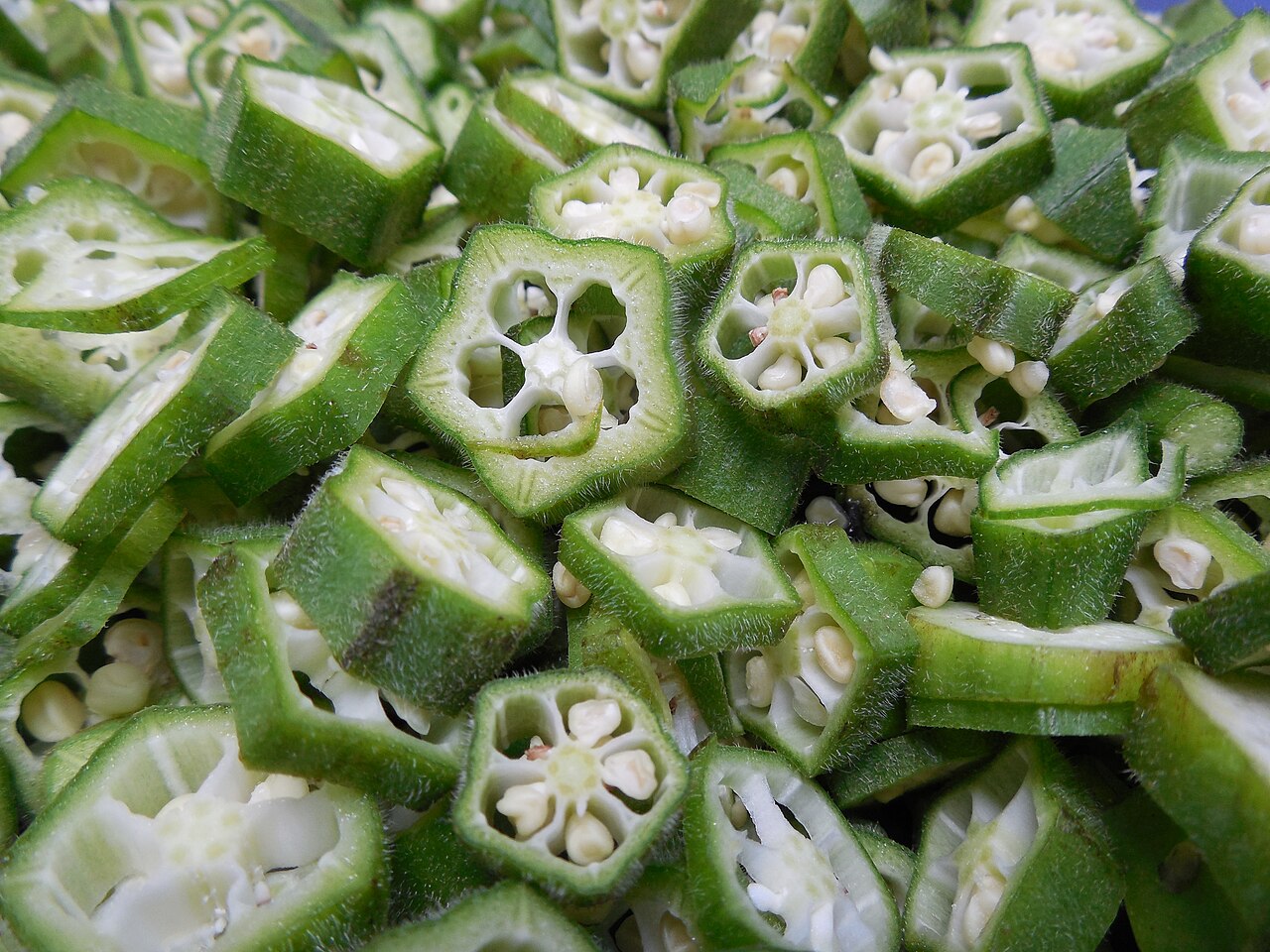
To cut okra, wash the pods and dry them completely, then trim the tip of the stem without cutting into the pod. Leave the pods whole if you want them to stay less slimy, or line several up and slice them crosswise into rounds for frying, gumbo or soup. A cut pod releases a sticky juice that thickens liquid, so how much you cut it decides how much of that you get.
Choose small, crisp pods
University of Florida IFAS Extension in Alachua County advises looking for brightly colored pods under four inches long that are crisp-looking yet tender and free of bruises, and avoiding pods that are limp and old or have brown streaks. Smaller, younger pods, it notes, are more tender and have not yet developed spines. Fresh okra is very perishable: UF keeps it no more than two to three days in the refrigerator, stored unwashed in a paper bag, or wrapped in a paper towel inside a perforated plastic bag, because moisture makes the pods slimy and quickly moldy.
Wash, then dry completely
- Wash just before cutting. UF says to wash okra when you are ready to use it, rather than before storing it, and to keep it away from raw meat and meat juices.
- Rub off any fuzz. Older, larger pods grow small, fuzzy spines. UF holds them under running water and rubs them gently with a scouring pad, vegetable brush or paper towel. Kikkoman instead rubs the pods gently all over with a little salt to remove the fuzz, which also makes the color more vivid and softens the texture; Just One Cookbook rubs salted okra on the cutting board before blanching it.
- Dry it. UF pats the pods dry with a paper towel, then lets them sit on a clean surface until they are totally dry to the touch. Wet okra releases more liquid, or slime, than dry okra, so this step matters more than any knife technique.
Trim the stem
The stem end is woody. UF trims off the very tip of the stem with a paring knife and cuts around the base of the stem without cutting into the pod; the rest of the pod can be eaten whole. Kikkoman takes off the calyx, the tough cap where the stem meets the pod, by inserting the knife blade between the stem and the pod and cutting all the way around. Just One Cookbook cuts off the stem end and peels off the hard part around the top, and warns that if you cut the end off completely, water gets inside when the pods are blanched.
For pods you will slice, trim straight across instead: line up four or five on the board with the stems together and cut them all off in one stroke.
Cut for the dish
- Rounds. Line several trimmed pods up side by side, hold them with the fingertips curled, and slice straight across. Rounds suit frying, gumbo and soups. UF notes that cut okra gives off a viscous liquid that thickens any liquid it is cooked in, which is why it is used in soups, gumbos and stews.
- Angled pieces. Slice across the pods at an angle for longer pieces with more cut surface, for a stir-fry or a tray of roasted vegetables.
- Halved lengthwise. Split each pod from stem to tip. Halves lie flat in the pan and on the grill, with the seeds exposed.
- Whole. Trim the cap only and leave the pod sealed. UF suggests cooking okra whole if you do not want its thickening, and Foodwise notes that sliminess can be avoided by leaving the pod intact, slicing it thinly or cooking it for a long time. Foodwise also calls okra wonderful pickled; for jars, follow a tested pickling recipe for how to trim the pods.
The seeds and the pale core are eaten; there is nothing inside to remove.
Keeping the slime down
Okra’s stickiness comes from mucilage, which Foodwise describes as the sticky juice the fruit releases when cut. Cutting is only part of the story. UF’s tips are to keep the pods dry, to cook them rapidly over high heat, which it says helps reduce the amount of liquid released, and to wait to season okra until you serve it, because adding the seasoning before or during cooking results in sticky okra. It adds that frying okra for one to two minutes lets the mucous membrane around the seeds break down. If you want a gumbo to thicken, do the opposite and cut rounds.
UF also warns against cooking okra in copper, brass or iron pans, which can turn it black.
Which knife
Okra is small and soft-skinned, so a petty knife or a paring knife handles the trimming, and a santoku or nakiri slices a row of pods at once; see what a petty knife is for and paring vs utility knives. Wipe the blade between batches, because the sticky juice makes slices cling to it. For other vegetables, browse all our how-to-cut guides.
Sources: University of Florida IFAS Extension, Alachua County, Plant of the Month: Okra (selection, storage, washing when ready to use, rubbing off spines, drying, trimming the stem tip, cut okra thickens liquid, cook whole to avoid thickening, high heat, late seasoning, frying, copper, brass or iron pans); Kikkoman, How to prepare okra (salt rub to remove fuzz, removing the calyx); Just One Cookbook, Okra Ohitashi (cutting off the stem end and peeling the hard top, water gets in if the end is cut off completely, salt rub on the board); Foodwise, Okra (sticky juice from mucilage when cut, leaving the pod intact, slicing thinly or long cooking, pickled okra).