A Japanese vegetable peeler can mean several different tools. Start with the cut you want: ordinary peeling, a broad strip, julienne, rounded produce or a delicate skin. Then match the form and blade set to that task rather than shopping by the word “best.”
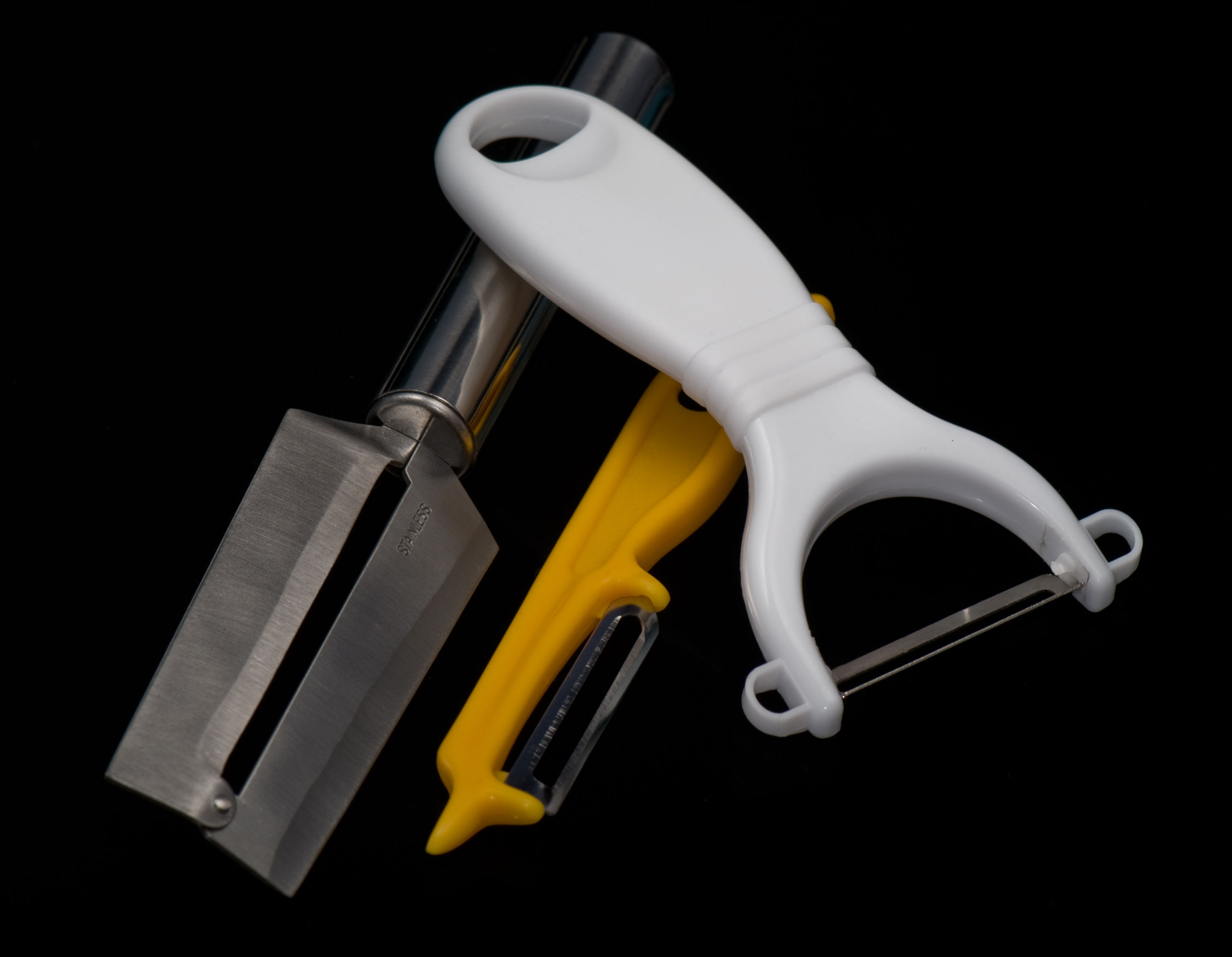
Choose by the cut you want
| Your task | Maker-listed example | What to check |
|---|---|---|
| Everyday peeling | KAI Sekimagoroku DH3334, listed as “Peeler, Regular” | Confirm the blade type and care for the exact model. |
| A wider peeling or slicing pass | KAI DH3300, “Wide Peeler” | Check the usable blade width and whether you can control that width on your usual produce. |
| Julienned strips | KAI DH3301, supplied as a wide slicer and julienne blade set | Confirm which blade is fitted and the exact replacement code before ordering parts. |
| Rounded items such as apples or potatoes | KAI Select100 I-type DH3001 | KAI describes it for rounded produce and includes an eye-remover; it lists this model as made in China. |
| Thin skins such as tomato, peach or kiwi | KAI DH8170 serrated W-peeler | The maker describes the serrated edge for these thin skins and the straight edge for vegetables. |
KAI lists its replacement parts by model: for example, DH3301’s wide slicer and julienne replacements are DH3325 and DH3326. Use the model code on your peeler and the maker’s part listing; brand alone does not establish compatibility. See the Sekimagoroku peeler range.
Before peeling a full batch, make one sample pass on the ingredient. Check whether the blade removes the width you want and whether the grip gives you a controlled stroke. For a julienne set, test a short section first so you can see the strip size before preparing the rest.
Compare shape and grip
A peeler with a crosswise blade moves differently from a narrow, knife-like I-type. Choose the grip that gives you a controlled stroke on the food you usually prepare. If you remove only a few eyes from potatoes, an included eye-remover can be convenient; if you often make strips, a model that explicitly includes a julienne blade is the relevant comparison.
KAI describes the Select100 DH3001 I-type for rounded apples and potatoes and lists its eye-remover, stainless-steel construction, dishwasher compatibility and China manufacture on the model page. KAI’s DH8170 product listing identifies its serrated edge for tomato, peach and kiwi skins and its straight edge for vegetables; that is a description of this model, not every serrated peeler.
Check the exact product before buying
Look for the model number, the blade supplied in the package, replacement-part codes and care instructions. “Wide,” “I-type” and “serrated” describe useful differences, but they do not tell you whether a particular blade is replaceable or dishwasher-safe. Country of manufacture varies by model too: KAI lists DH3001 as China-made and DH8170 as Japan-made. Check the exact product page rather than inferring origin from the brand.
If you are comparing another kitchen tool, the kitchen-tools guide explains how to choose around the task and the part that needs maintenance. For grating rather than peeling, see Japanese graters by ingredient.