When egg catches in a tamagoyaki pan, identify the pan surface first. Coated pans and iron pans use different care instructions. Then look at where the egg starts sticking and compare your cooking steps with the pan maker’s guidance and the recipe you are following.
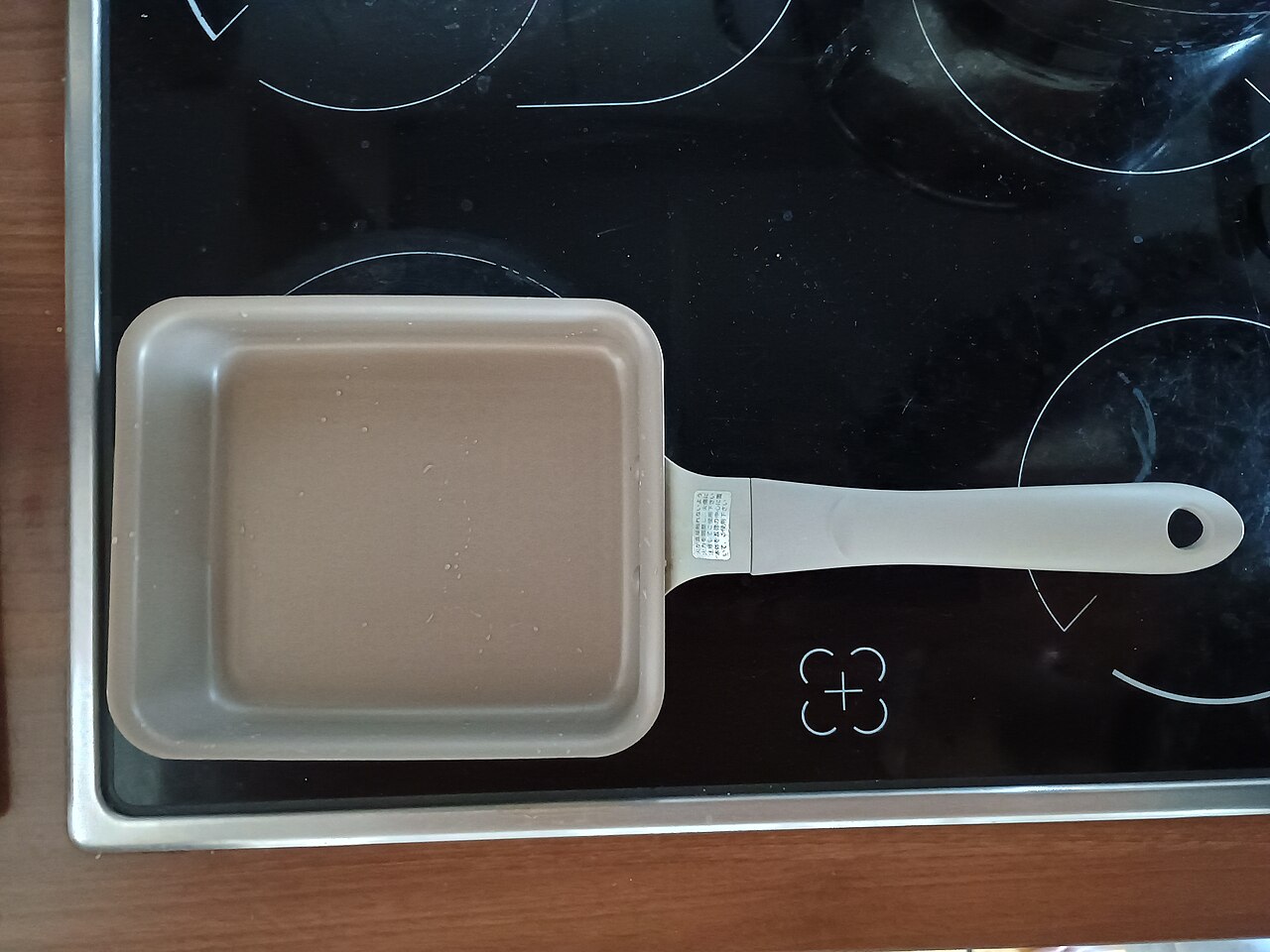
Use the symptom to choose a first check
| What happens | Step that may need checking | First check |
|---|---|---|
| The first layer catches | The surface may not be prepared or oiled as the pan’s instructions require. | Identify whether the pan is coated or iron, follow that model’s first-use directions, then compare with the recipe’s heat and initial oil step. Kikkoman’s example starts over medium heat with an oiled pan. |
| A later layer catches after earlier ones released | The cleared cooking area may not have received the next light oiling. | Before the next pour, check whether you lightly oiled the exposed area as in Kikkoman’s layered method. |
| The layer tears while you fold it | The egg may have passed the recipe’s folding point. | Kikkoman’s method rolls each portion when it is partly set. Keep the heat and pour size steady while you try that timing. |
These are checks to try, not a diagnosis of every pan. Kikkoman’s recipe is one documented sequence: medium heat, part of the egg mixture, fold when partly set, lightly oil the open area and repeat.
Follow the care path for the surface
Coated pan: Use the maker’s temperature, utensil and cleaning instructions for that coating. Do not apply an iron-pan conditioning routine to a coated surface.
Iron pan: Check the maker and model instructions before first use and after washing. For example, River Light’s Kiwame manual gives a product-specific oil-acclimatization and oil-returning routine. It is a guide for that range, not a universal instruction for every iron pan.
If the pan’s material or model is unclear, find it before changing the care routine. A pan-specific instruction is more useful than adding extra heat or oil at random.
If you are still choosing a pan, the tamagoyaki size and stove guide compares working dimensions and compatibility. For the wider question of tool care, see the kitchen-tools guide.