A butcher block is a heavy-duty chopping block, typically laminated hardwood and traditionally hard maple; the name is also used for thick cutting boards and countertops made in the same style. For a cutting board, it usually means a thick end-grain or edge-grain board that stays put under heavy chopping. Care is the same as for any wooden board, only more of it: oil at least monthly, finish with a beeswax cream, wash by hand, never soak it, and dry it on edge.
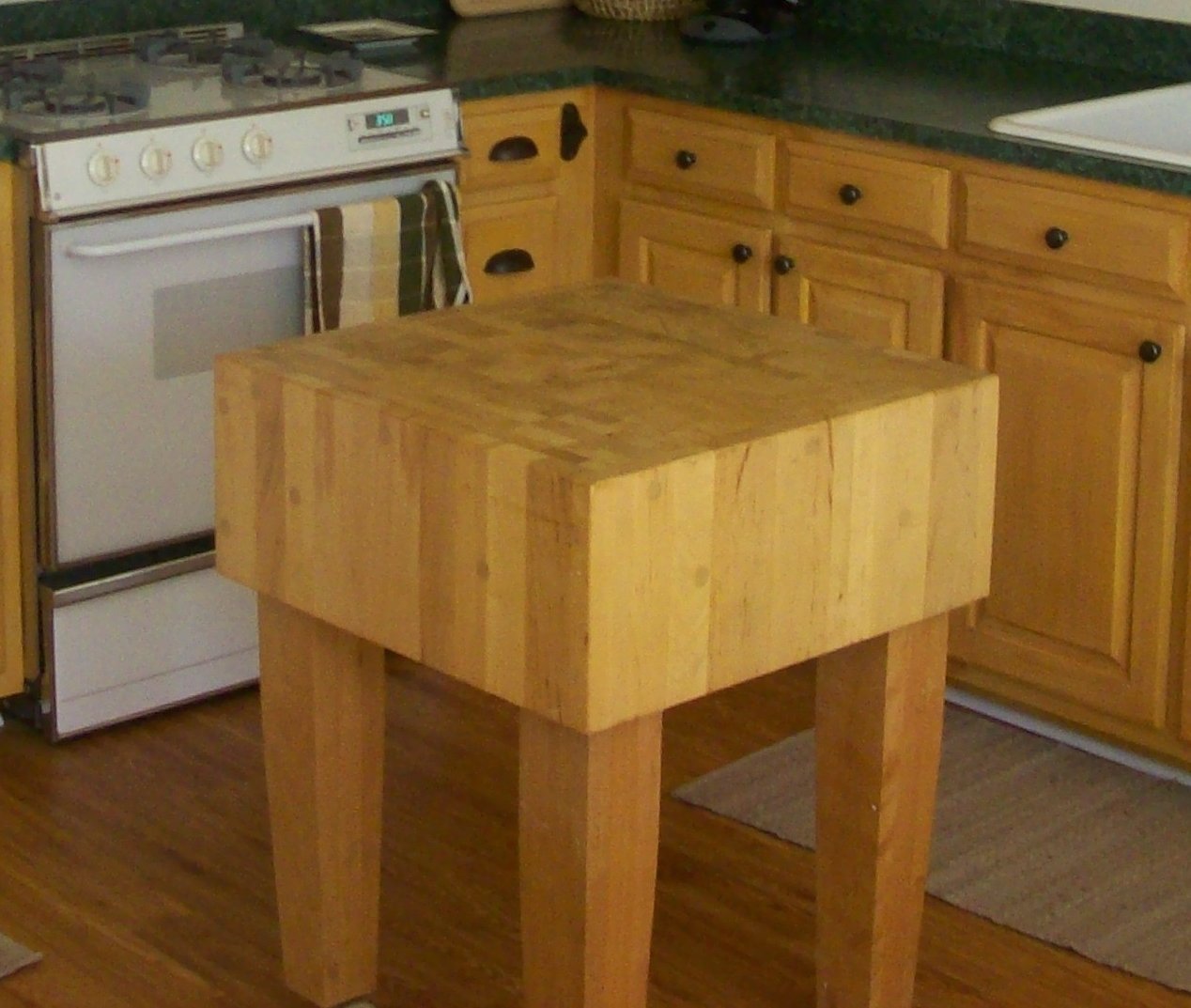
Butcher block, chopping block and cutting board
| Item | Examples from John Boos listings | What it is for |
|---|---|---|
| Butcher block on legs | End-grain tops 4, 10 or 16 inches thick | A freestanding work block, the original butcher-shop form |
| Chopping block | Reversible end-grain blocks 2¼ and 3 inches thick | Heavy chopping on a counter |
| Maple cutting board | Reversible end-grain boards 1½ inches thick | Everyday prep |
| Butcher-block countertop | Sold as a separate countertop range | A kitchen surface; follow the countertop’s own care directions |
Wikipedia describes a butcher block as a heavy-duty chopping block, typically laminated or hardwood, traditionally made of hard maple, in two basic styles: end grain and edge grain. John Boos sells butcher blocks, chopping blocks and cutting boards as separate products, and says its 1887 Collection was inspired by the original Boos butcher blocks, made from a solid piece of hardwood.
End grain or edge grain?
John Boos describes end-grain boards as the end pieces of wood rails, about 1½ by 1¾ inches, glued into a square pattern; the fibers absorb the impact of the blade, so the knife stays sharper and the surface smoother. Edge-grain boards use full-length rails about 1¾ inches wide, giving a uniform thickness and a true flat surface. Our end grain vs edge grain guide compares the two for Japanese knives.
How to care for a butcher block board
- Wash by hand. Use hot soapy water after use, then dry with a clean paper towel or let it air-dry standing on end. Boos says wood boards are not dishwasher safe and should never be soaked or submerged, because that disrupts the moisture content and can split the rails.
- Oil at least monthly. Boos says to apply its Mystery Oil or a food-grade mineral oil to all surfaces at least once a month, depending on use, leave it overnight and wipe off the excess. Re-oil when the wood looks dry and lighter in color. Never use cooking oil.
- Seal with board cream. Boos recommends a beeswax board cream on top of the oil to keep water out and oil in. See food-safe cutting board finishes for what these products are.
- Sanitize when needed. Boos gives 1 teaspoon of liquid chlorine bleach per quart of water, or a 1:5 vinegar solution.
- Store it on edge. Boos says wood boards should stand on edge away from direct sunlight; a board left flat on a cold stone counter can trap moisture.
For stains and odors, Boos suggests rubbing in kosher or table salt, with lemon or lime juice for smells, and sanding stubborn stains with 200-grit paper along the grain before re-oiling. Our guides to oiling a wooden board and sanding a cutting board go step by step.
What this means for your knife and board
A thick, heavy block stays still and gives a forgiving surface for a fine edge. Size it to your counter and sink before buying; our cutting board size guide walks through the checks, and maple vs walnut covers the wood choice. The habits that keep a block sound, washing by hand, drying fully and oiling when dry, are the same ones a wooden knife handle needs; see the wa handle care guide.
Sources: Wikipedia, Butcher block (definition; end and edge grain); John Boos FAQ (oiling, board cream, sanitizing, storage, end vs edge grain); John Boos butcher blocks (block thicknesses); John Boos home page (chopping blocks, 1½-inch maple boards, 1887 Collection).