Bunka vs Santoku: The Tip Is the Difference
Is a bunka a different knife from a santoku? In practical terms, usually not: it occupies the same length class
Guides, wood stories, and care notes for choosing and maintaining Japanese wa handles.
Is a bunka a different knife from a santoku? In practical terms, usually not: it occupies the same length class
For most home kitchens, buy the 210 mm gyuto. If the workspace easily contains 240 and your recurring cuts use
A honesuki is Japan’s poultry-butchery knife. Its triangular profile is the job description: a stiff, pointed tip for working around
The honest answer: A Japanese knife needs less maintenance than the internet implies, on a simple rhythm: seconds after every
A petty knife is for the work a big knife is too much for and a paring knife is too
The blade: a blue-grey bloom A carbon-steel blade that has cooked for years no longer has the blank brightness of
You bought your first Japanese knife — what do you actually need next, and in what order? The honest answer
Choose wood or a purpose-made rubber board if you want a surface that is kind to a Japanese knife’s edge.
Japanese knives chip because their harder, thinner edges trade toughness for keenness. A chip is almost always the meeting between
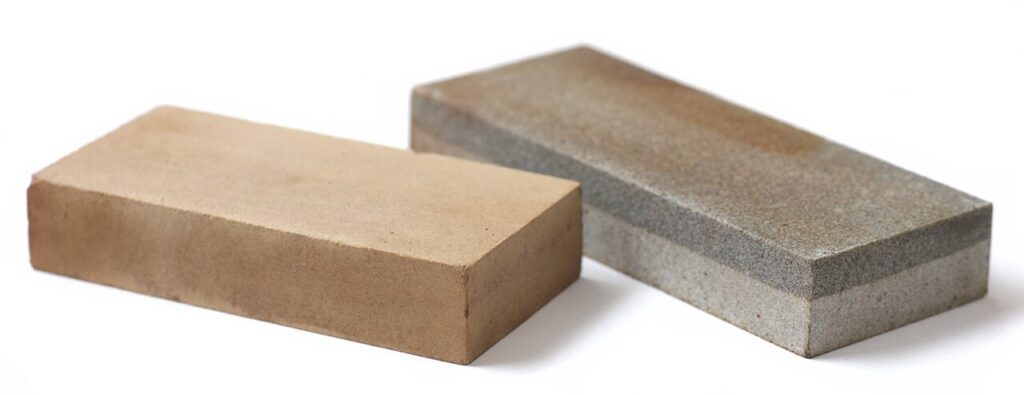
Most home kitchens need fewer whetstone grits than the catalogue suggests. A medium stone around 1000 grit is the working
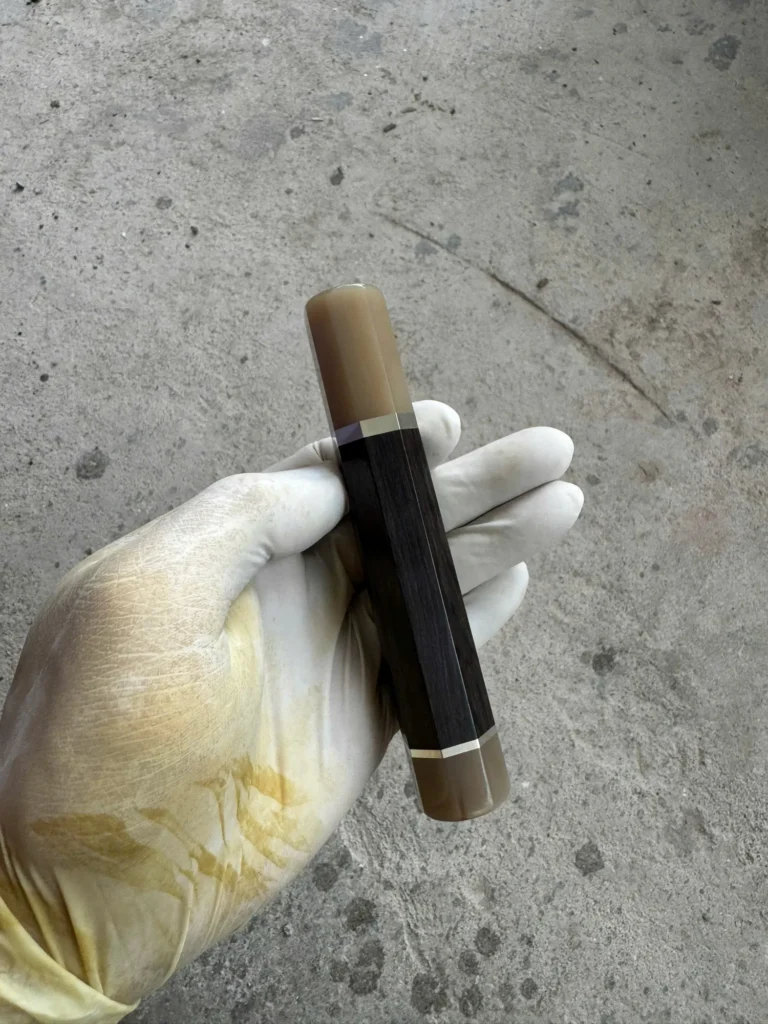
For a double-bevel Japanese knife, stay within the sensible range for its type—commonly the low-to-mid teens per side—and let its
The grind changes how a knife moves through food: whether it tracks straight or steers, how it wedges in dense
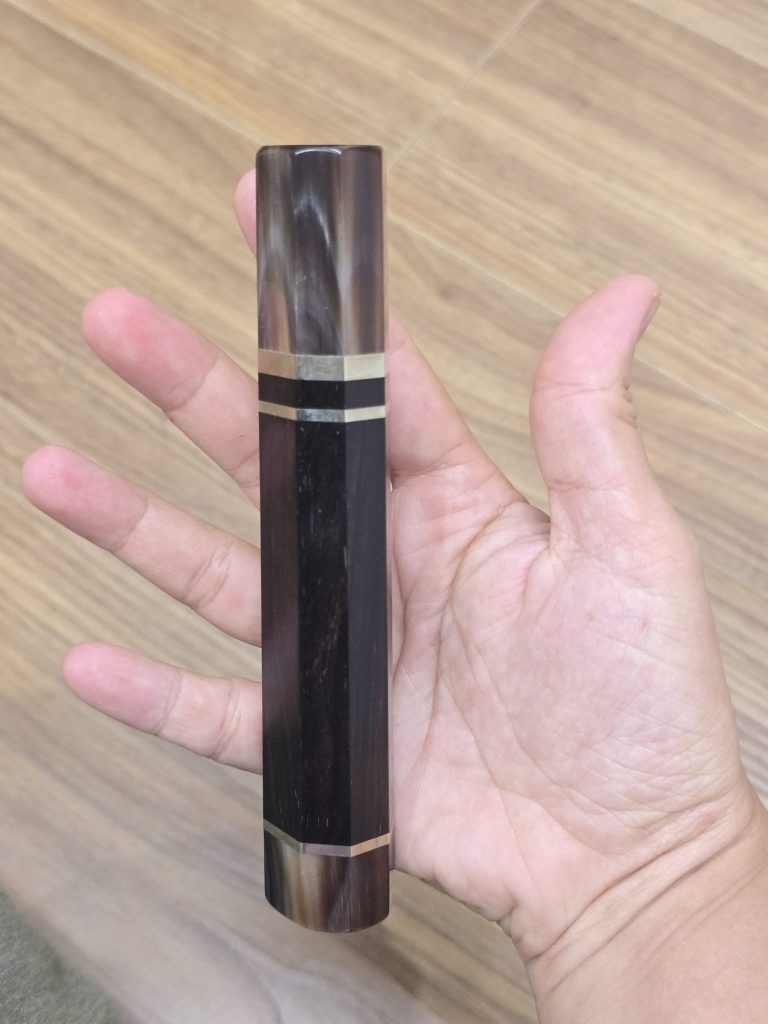
For a vegetable-heavy kitchen, choose based on what the knife must do besides vegetables. Santoku and nakiri look like siblings
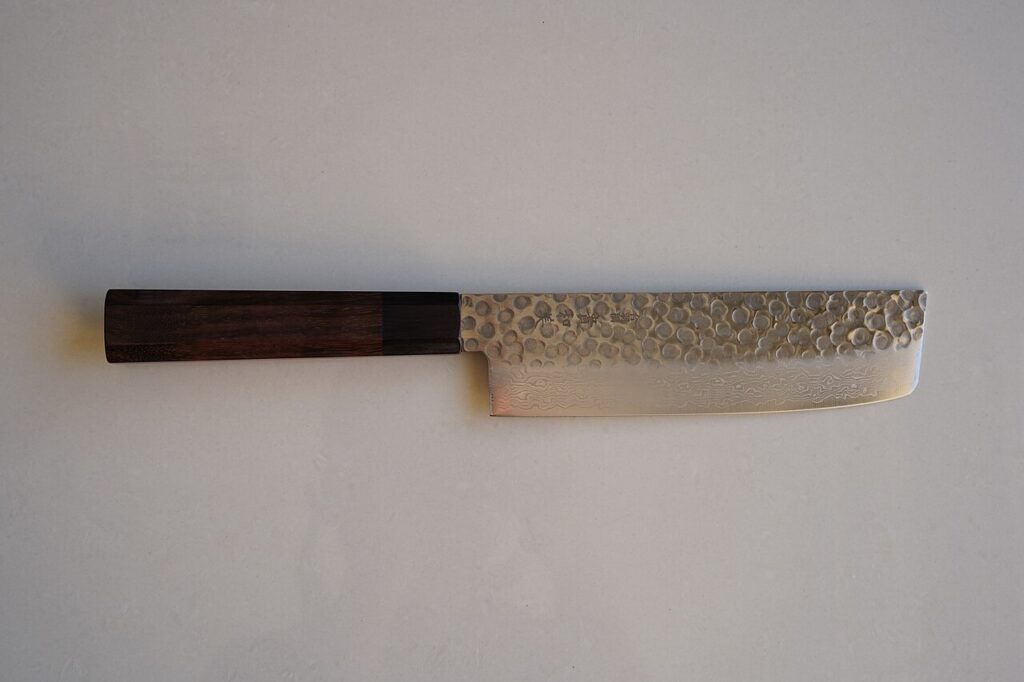
Most home cooks are better served by a nakiri for everyday vegetable preparation. An usuba is a single-bevel specialist for
What is a kiritsuke really: status symbol or usable knife? It can be either, because the name now covers two
The reliable split is simple. The marks you can decode with confidence are mostly steel names and a small set
Surface rust on a Japanese knife usually comes off at home with mild abrasion: use a rust eraser or baking-soda
Patina on a carbon-steel knife—force it, keep it, or remove it? The honest answer: it is the steel settling in,
We use cookies for analytics and to measure our ads, so we can see how the site is used. Nothing is stored until you choose. Privacy policy