To slice flank steak, find the grain first: the long, parallel lines of muscle fiber on the surface. After cooking, rest the steak for a few minutes, then cut thin slices across those lines, tilting the knife for wider bias slices. For a stir-fry, slice the raw steak the same way after firming it in the freezer. Slicing across the grain is what keeps fajita strips tender rather than chewy.
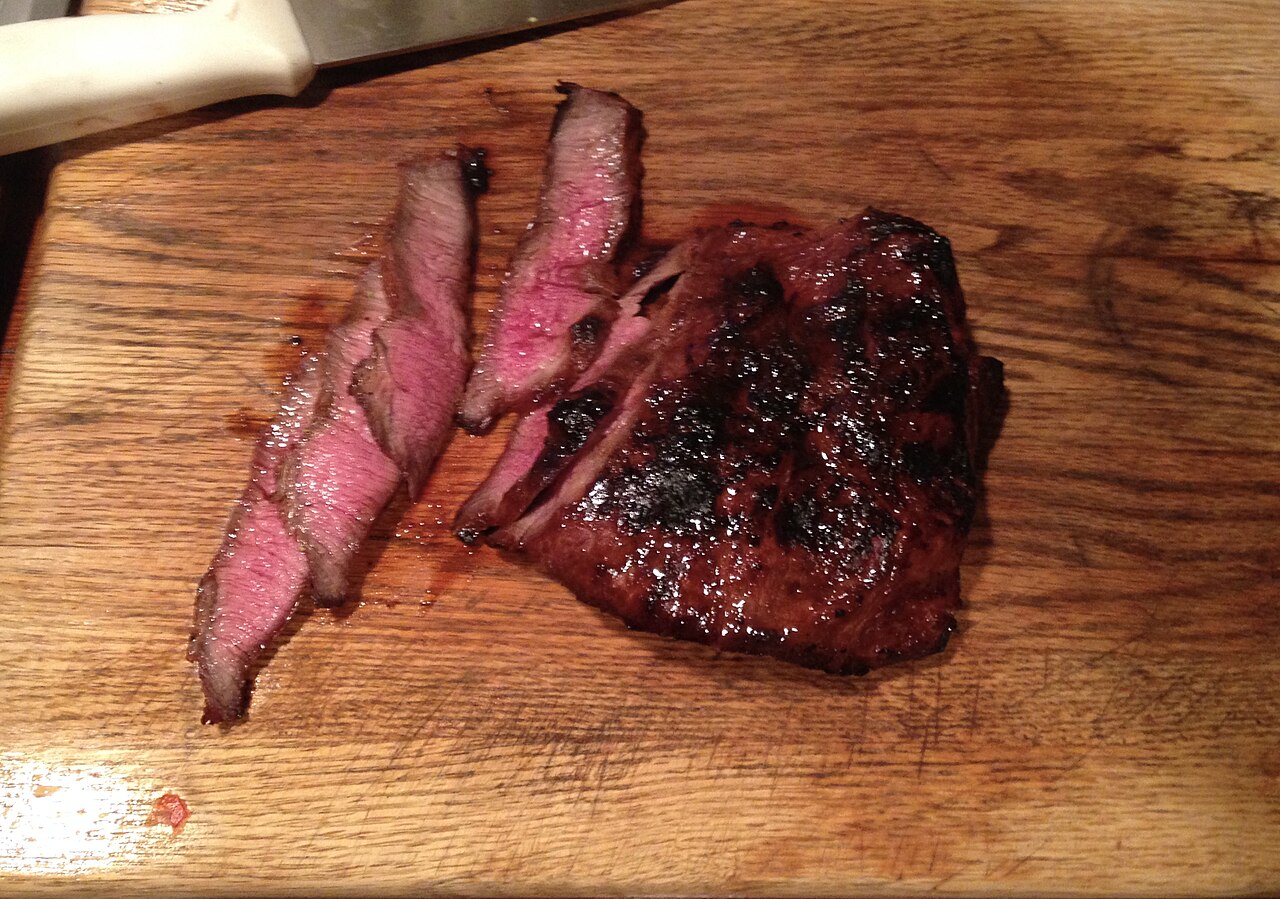
Find the grain before you cook
Tasting Table’s advice for tough steaks used in fajitas is to slice against the grain, and it notes that on these cuts the grain is pretty visible: thin, parallel lines like tiny indents, often with thin lines of fat running the same way. Flank shows it clearly while raw. A dark grilled crust can hide it later, so note which way the lines run before the steak goes on the heat.
The National Center for Home Food Preservation’s jerky guidance shows what the direction does. It slices with the grain for a chewy jerky and across the grain for a more tender one. For fajitas, tacos and stir-fries you want the tender result, so every slice crosses the lines.
Cooked flank for fajitas and tacos
Ohio State University Extension’s grilled flank steak tacos show the whole sequence. The steak is grilled to medium-rare, an internal temperature of 145°F, then rested on the board under foil for 5 minutes before slicing. The handout says resting lets the meat stay moist and tender. SDSU Extension lists the USDA safe minimum for beef steaks as 145°F with a 3-minute rest.
- Rest it. Leave the cooked steak on the board, loosely covered, for the few minutes the sources give.
- Shorten it if needed. If the steak is too long to slice comfortably, cut it into shorter pieces parallel to the grain first. Each piece then slices across the grain in short strokes.
- Turn it so the lines run left to right. Your knife then crosses them on every cut.
- Slice thin. The OSU recipe cuts thin slices, making sure it is slicing across the grain. Draw the knife through each slice from heel to tip instead of sawing.
- Tilt for bias slices. Angle the blade so it cuts down at a slant. The slices come out wider than the steak is thick, which suits fajitas.
If you marinated the steak, discard the used marinade. The OSU handout says it is not safe to consume after marinating raw meat.
Raw flank for stir-fry
Thin raw slices are easier when the meat is partly frozen; the jerky guidance says to partially freeze meat to make slicing easier. Put the steak in the freezer until it is firm but not hard through, then slice it across the grain as thinly as you can control, with long strokes. A soft steak pushes away from the edge; a firm one holds still.
Keep the raw slices and the board apart from anything that will not be cooked. USDA’s Food Safety and Inspection Service suggests a separate cutting board for raw meat and washing boards with hot, soapy water after each use; wash the knife and your hands when you finish too. For produce and other cuts, browse all our how-to-cut guides.
When the grain changes
Watch the face of each slice as you go. If it starts to show long strands, the grain has turned, so turn the steak to match. Some roasts do this more than a flat steak; our guides to slicing tri-tip and slicing brisket show how to turn the meat as you go.
Which knife
A long, narrow blade lets one stroke finish each slice. A sujihiki is made for boneless meat and draws through in long strokes; a chef’s knife works too. A straight edge leaves cleaner faces than a serrated one on cooked meat; see straight vs serrated steak knives. Flank has no bone, so a thin edge is fine here.
Sources: Ohio State University Extension, Grilled Flank Steak Tacos (145°F medium-rare, 5-minute rest under foil, thin slices across the grain, discard used marinade, resting keeps meat moist and tender); SDSU Extension, Is It Done Yet? (beef steaks 145°F plus a 3-minute rest, per USDA); National Center for Home Food Preservation, Jerky (partially freeze to slice, with the grain chewy, across the grain tender); Tasting Table, cutting steak for fajitas (slice against the grain, the grain is visible as parallel lines); USDA FSIS, Cutting Boards and Food Safety (separate board for raw meat, hot, soapy water after each use).