To cut a salmon fillet, keep it cold, lay it skin side down, pull the pin bones with tweezers, then cut straight down across the fillet into portions. To skin it, start at the tail end, slide the blade between flesh and skin, and pull the skin as you cut. For sashimi-style slices, draw a long knife through each piece in one pull. Serve salmon raw only if the seller confirms it was frozen for eating raw; otherwise cook the portions to 145°F.
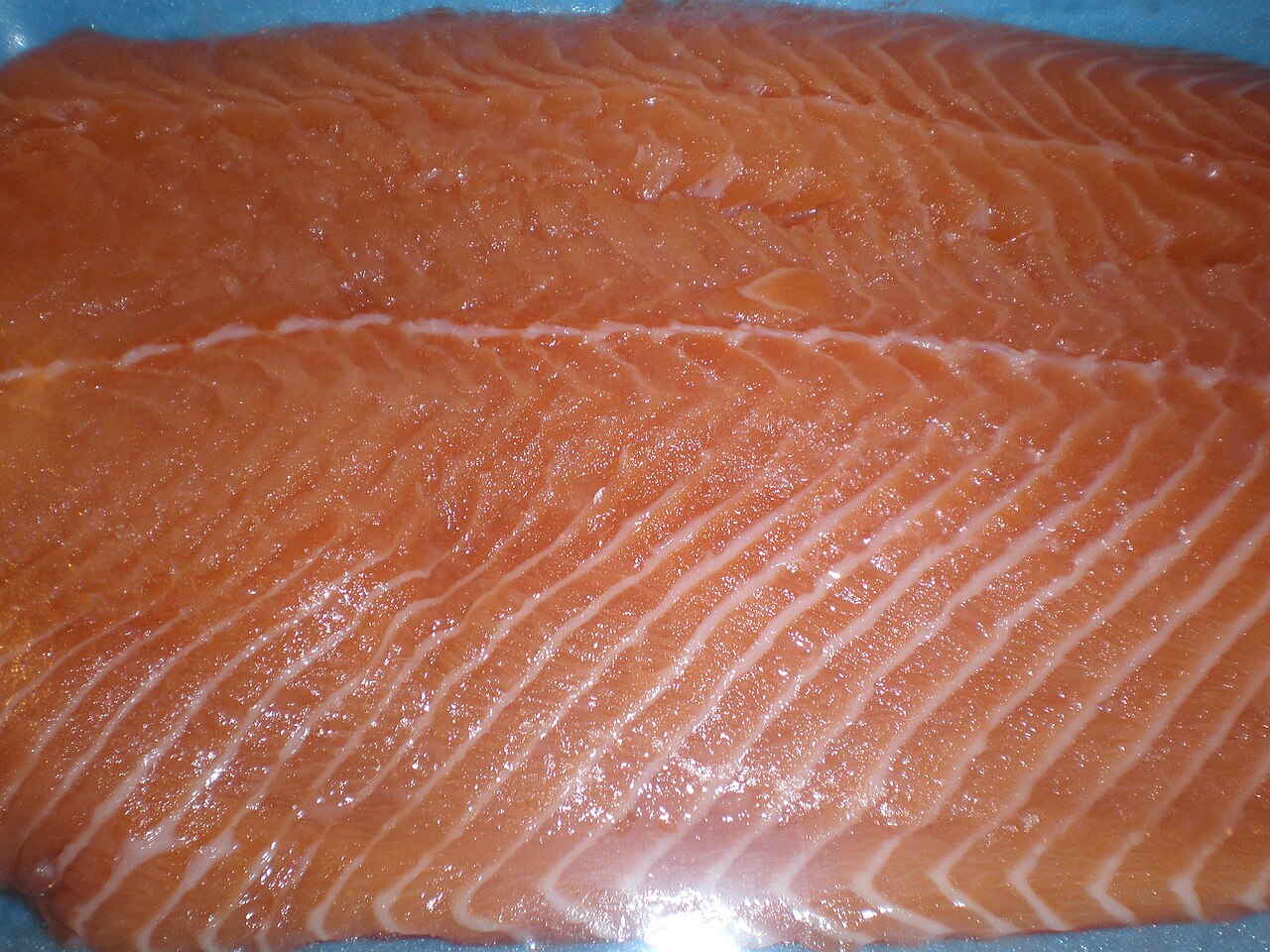
Buy it cold, keep it cold
The FDA’s advice is to buy fish that is refrigerated or displayed on a thick bed of fresh ice, and that smells fresh and mild, not fishy, sour or ammonia-like. If you will use it within two days, keep it in the refrigerator at 40°F or below; otherwise wrap it tightly and freeze it.
Work on a board kept for raw meat and seafood. The FDA says to wash your hands for at least 20 seconds after handling raw food and to wash cutting boards and utensils between raw seafood and ready-to-eat foods.
Take out the pin bones first
Copper River Salmon describes pin bones as small, flexible bones that run in a single line down the center of the fillet, and suggests removing them while the fish is cold, when the flesh is firmer and the bones come out cleaner.
- Find the row. Lay the fillet skin side down and run a fingertip along the center line to feel the tips.
- Grip one tip. Take hold of it with fish bone tweezers or pliers.
- Pull along the bone. Copper River pulls slowly and steadily in the direction the bone points, usually toward the head end.
- Check again. Sweep the fillet once more, and re-check each portion if you cut before boning.
Our guide to fish bone tweezers covers the tools. If a fillet still has bones you cannot reach, Copper River’s tip is simply to ask the fishmonger to pull them.
Cut even portions
Tassal, a salmon producer, pin-bones its fillets and then slices them into portions. Keep the skin on if you plan to cook skin-on.
- Set it square. Skin side down, with the long side facing you.
- Trim the edges. Take off any thin, ragged strip along the belly edge.
- Cut straight down. Cut across the fillet in one firm stroke through flesh and skin. The tail end is thinner, so make tail portions a little longer if you want them closer in size to the thick pieces.
Skin the fillet
Tassal’s method: hold the tail, place the knife just above the skin, and slice sideways while pulling the skin off at the same time.
- Start a flap. At the tail end, cut down to the skin, not through it, to make a small flap you can hold. A paper towel helps your grip.
- Angle the blade toward the skin. Keep it almost flat, edge tilted slightly down, so it rides on the skin rather than into the flesh.
- Pull the skin, not the knife. Hold the knife steady and work the skin back and forth under it as you pull, until the fillet comes free.
For the knife, our comparison of the boning knife vs fillet knife explains how the two blades differ.
Sashimi-style slices, and when not to serve it raw
The FDA says it is best to cook seafood thoroughly. If you choose to eat raw fish anyway, its rule of thumb is fish that has been previously frozen: some species carry parasites, and freezing kills any that are present. Freezing does not kill all harmful germs, though, which is why the FDA calls cooking the safest route. It lists raw fish such as sashimi among the foods that pregnant women, children, older adults and people with weakened immune systems should avoid. Ask the seller whether a fillet was frozen for eating raw. If you cannot confirm it, cook the portions to 145°F, the FDA’s figure for most seafood.
For slicing, cut a skinned, boned block of the thickest part. Set the heel of a long blade on the far edge and draw it toward you in one continuous pull, letting the length do the work. Sawing back and forth leaves a ragged face. Our piece on the yanagiba at the sushi counter explains why that single stroke matters. A fillet has no frame left, so a thin edge is fine here; keep it off any bone you missed. For other cuts, browse all our how-to-cut guides.
Sources: FDA, Selecting and Serving Fresh and Frozen Seafood Safely (buying on ice, smell, 40°F within two days, handwashing and board washing, previously frozen fish for raw eating, freezing kills parasites but not all germs, cooking the safest route, higher-risk groups and sashimi, 145°F); Copper River Salmon, How to Remove Pin Bones (single line down the center, work cold, pull in the bone’s direction, re-check portions, ask the fishmonger); Tassal, How to Fillet, Skin and Portion Salmon (pin-bone, portion, skinning by holding the tail and pulling the skin).