To cut lotus root (renkon), trim the ends, peel off the thin skin and rinse the peeled root in cold water. Then slice it into rounds, half-moons or bite-size chunks, and soak the cut pieces in cold water for 5 to 10 minutes so they stay pale. For a New Year dish, carve notches between the holes before slicing and every slice comes out shaped like a flower.
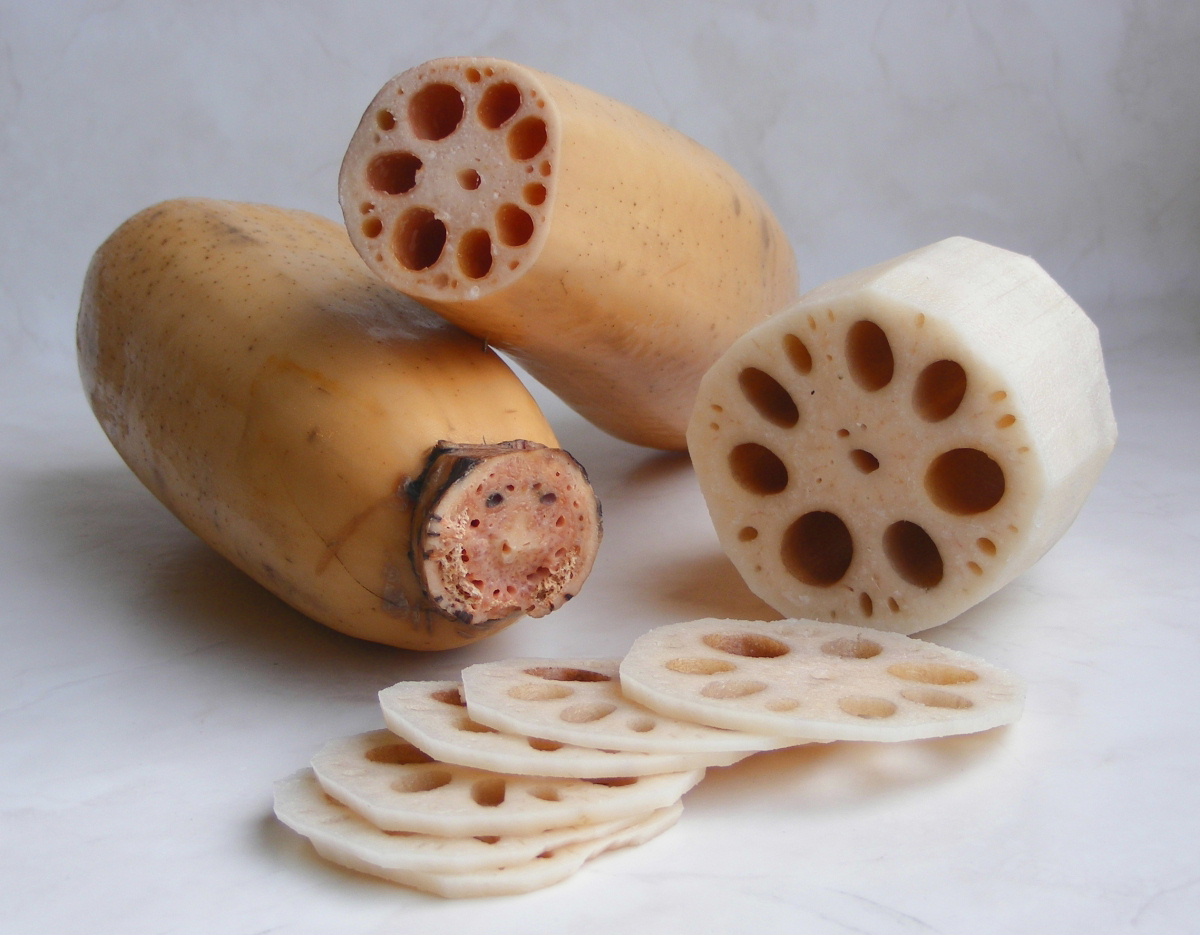
Wash, trim and peel
The FDA’s advice is to rinse produce before you peel it, so the knife does not carry dirt and bacteria onto the food, and to use a clean vegetable brush on firm produce. Scrub the root under running water, cut through any narrow joint between sections, and trim off the dry ends.
Peel with a vegetable peeler or a small knife; the skin is thin, so take as little flesh as you can. Kikkoman, the Japanese soy sauce maker whose cookbook covers basic cuts, notes that cut lotus root turns brown once it meets the air, so rinse the peeled root quickly under cold water and keep a bowl of cold water ready before you start slicing.
Rounds and half-moons
- Rounds. Kikkoman’s method is to peel the root, place it in water, then slice at consistent widths from end to end. Even widths matter more than the exact thickness, because pieces of one size cook at one speed.
- Half-moons. Kikkoman cuts the peeled root in half lengthwise, then slices each half cut side down. The flat face keeps the root from rolling under the blade.
In Japanese recipes these shapes are wagiri and hangetsugiri; our guide to Japanese vegetable cutting techniques explains the whole family of rounds, fractions and angled chunks.
Bite-size chunks for simmering
Chunks suit simmered dishes. For Kikkoman’s random cut, peel the root, cut it in half lengthwise (or in quarters if it is thick), then cut irregular bite-size pieces from the end. Turn the piece a little between cuts so each chunk gets several cut faces. Do the turning while the blade is out of the food; twisting a knife that is already partway into a dense root is a different action, and a risky one for a thin edge.
The flower cut (hana renkon)
Hana renkon is the decorative cut used in osechi, the Japanese New Year meal. Namiko Chen of Just One Cookbook explains that the holes of the lotus root are said to represent a clear and unobstructed future. Her method:
- Cut a short section. Start with a piece about 2 inches long so it is easy to hold.
- Notch between the holes. With a petty knife, carve a V-shaped notch lengthwise along the outside, between two holes. Repeat between each pair of holes all the way around, until the cross section looks like a flower.
- Slice. Cut the shaped section crosswise into slices about ¼ inch thick.
Make each V with two short, straight cuts that meet, and lift the strip out. Levering the tip sideways to pop a strip free is how small chips start; our guide to why Japanese knives chip explains what twisting does to a thin edge.
Soak to keep the slices pale
Kikkoman puts cut lotus root into cold water for 5 to 10 minutes. It adds that some recipes call for vinegared water, but regular cold water is sufficient. Just One Cookbook soaks its flower slices for 5 minutes in water with a little rice vinegar (1 teaspoon to 2 cups of water) to keep the color and remove the astringent taste. Either way, drain the slices before cooking.
Which knife and peeler
Lotus root is firm and crisp rather than hard, so most kitchen knives slice it cleanly. A nakiri or santoku suits rounds and half-moons, because a straight edge meets the board along its length and finishes each slice. A petty knife is easier to steer for the notches of the flower cut; see our guide to the petty knife. For peeling, our vegetable peeler guide compares the common styles. For other fruit and vegetables, browse all our how-to-cut guides.
Sources: Kikkoman, Renkon / lotus root (browning in air, rinse after peeling, cold-water soak of 5 to 10 minutes, plain water sufficient, rounds, half-circle slices and random cut); Just One Cookbook, How To Make Hana Renkon (osechi, symbolism of the holes, 2-inch section, V-shaped notches between the holes, ¼-inch slices, 5-minute vinegared-water soak); FDA, 7 Tips for Cleaning Fruits, Vegetables (rinse before peeling, brush firm produce).