A shamoji is a rice paddle: use its edge to separate cooked rice, then its broad face to lift and turn it. The aim is to loosen the rice and serve it with a light touch. Pressing downward or stirring vigorously does a different job: it compresses the grains instead of opening the rice up.
For a rice cooker, start with the paddle supplied by the maker. If you are replacing it, choose a shape you can move around the inner pot comfortably and a material the pot maker permits. A standing base or textured surface can be useful, but neither replaces gentle handling or cleaning.
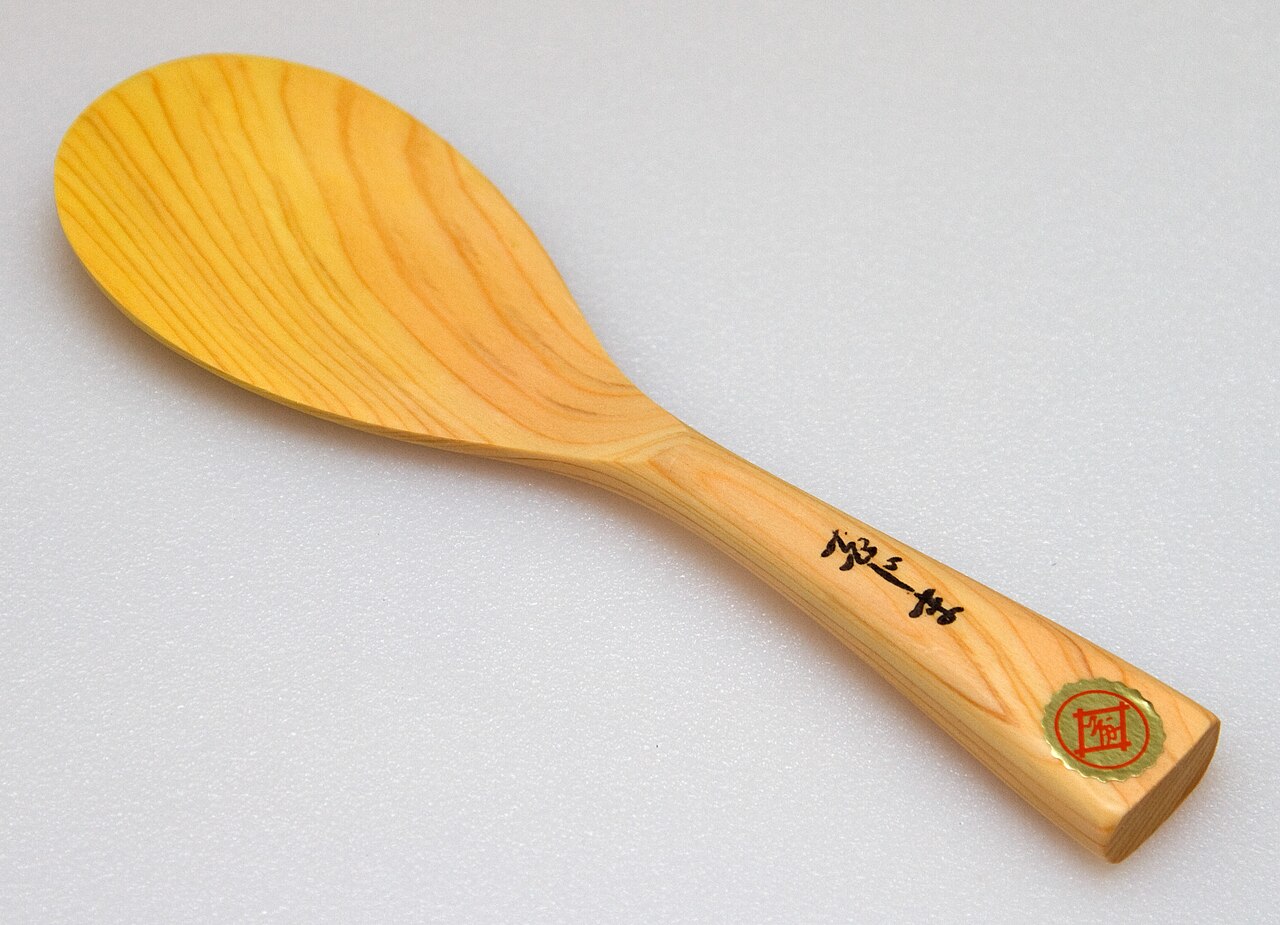
Fluff the rice before serving it
Follow your cooker’s completion instructions first. Zojirushi’s white-rice method distinguishes Micom and induction models, which are fluffed after cooking, from conventional cookers with a separate resting step. A rule such as “always wait another fifteen minutes” will not fit every machine.
When it is time to open the cooker, let the initial steam escape without leaning over it. Move the paddle through the rice with the narrow edge, easing apart the mass into manageable sections. Slide the broad face beneath a section and turn it over gently. Work around the pot so rice from underneath joins the rice on top, then stop once it is loosened. There is no need to stir continuously or scrape hard against the pot.
Think of lifting a soft layer, rather than scooping a deep hole and packing it back down. If a large amount is difficult to turn, work on a smaller section. You should be able to see the rice separate without repeatedly pressing it against the wall.
This folding action also helps distribute a small addition of seasoning. For example, Tiger’s onigiri recipe calls for a few folds with a plastic paddle after adding salt. It does not call for beating the rice into a uniform paste.
Serve with the face, separate with the edge
The paddle’s broad face supports a portion as you lift it from the pot. Its edge helps separate that portion from the rice beside it. Turning the paddle slightly as you release the rice into a bowl is easier than trying to shake off a tightly packed scoop.
Use the amount your bowl needs in a few light lifts. A heaped paddleful may look efficient, but it asks you to compress or scrape away the excess at the bowl’s rim. For plain rice, leave the mound loose. Forming onigiri is a separate shaping step with its own recipe.
A paddle will not correct rice that was cooked with the wrong amount of water. If the whole batch is wet or unusually firm, check the measuring cup, water line and cooking menu. If the rice itself is satisfactory but clings to the utensil, investigate the paddle’s surface and care instead.
Choose the paddle around the pot and your hand
Check three things before buying: the head must fit inside the pot, the handle must let you reach comfortably, and the utensil must suit the pot’s surface. A very broad paddle can be awkward in a small cooker even if it holds more rice. A long handle may suit a deeper vessel but take up more room beside a compact machine.
Use a permitted utensil in a coated inner pan. Zojirushi’s NS-WTC manual specifically warns against metal ladles and hitting the pan with utensils. A rice paddle is for moving food; it is not a scraper for stubborn residue.
Textured paddles are intended to release rice more readily. Marna describes the embossed face and thin edge of its K824 standing paddle in those terms. The standing base also gives you somewhere to put the tool between servings. These are useful features to compare, not evidence that every textured paddle performs identically.
For wood or bamboo, check the maker’s own washing and drying instructions. For a plastic replacement, check the actual dishwasher and heat instructions rather than assuming every plastic paddle has the same limits.
If rice starts sticking, clean before replacing
Look at the surface once the paddle is clean and dry. Rice can lodge in a textured face even when the large pieces have rinsed away. Cleaning the recesses matters as much as wiping the broad surface.
For its K824, Marna recommends gentle cleaning of the texture and wetting before use when rice becomes difficult to release. It warns against abrasive cleaning and prolonged storage inside a rice cooker. Follow the instructions for your particular paddle; adding oil or sanding a textured plastic face is not part of that remedy.
Dried rice is easier to remove after it softens. Zojirushi’s accessory-care guidance recommends briefly soaking its spatula in warm water for that purpose. Then wash and dry it as directed. Do not transfer this soaking advice automatically to an uncoated wooden utensil.
Mixing sushi rice is a related, separate job
A paddle can also distribute sushi seasoning through cooked rice. Use a cutting and turning motion, and work in a suitable separate vessel instead of mashing the rice. Kikkoman’s chirashizushi lesson demonstrates this approach.
The vessel changes that task: a broad hangiri gives room for mixing, while an ohitsu is intended for holding rice. Our hangiri and ohitsu guide explains the difference. For daily plain rice, a compatible paddle, a light folding action and a clean place to rest it are enough. The Japanese kitchen tools guide covers the other tools around that routine.