Choose a diamond sharpening plate if you want a rigid surface that avoids the routine dishing of a waterstone. Choose a waterstone if you want a bonded abrasive surface and are willing to maintain its flatness. Both can sharpen kitchen knives; neither fixes an inconsistent angle or a burr left on the edge. The useful choice is the surface you can use and maintain well.
This comparison concerns ordinary diamond-coated plates and bonded waterstones. A resin-bonded diamond stone is a different construction, so it should not inherit every claim made about a rigid coated plate.
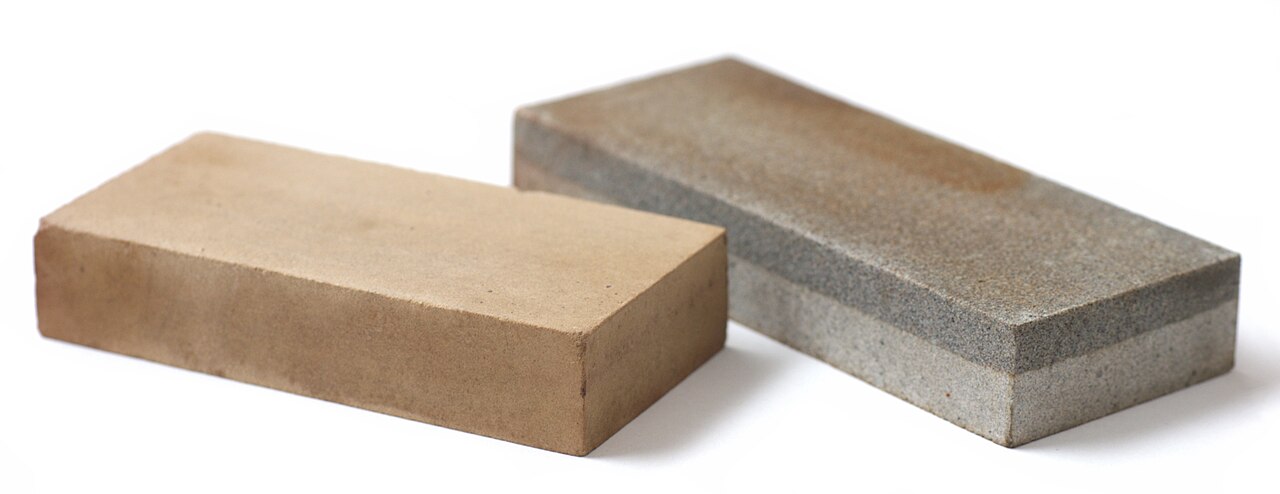
The abrasive is held in two different ways
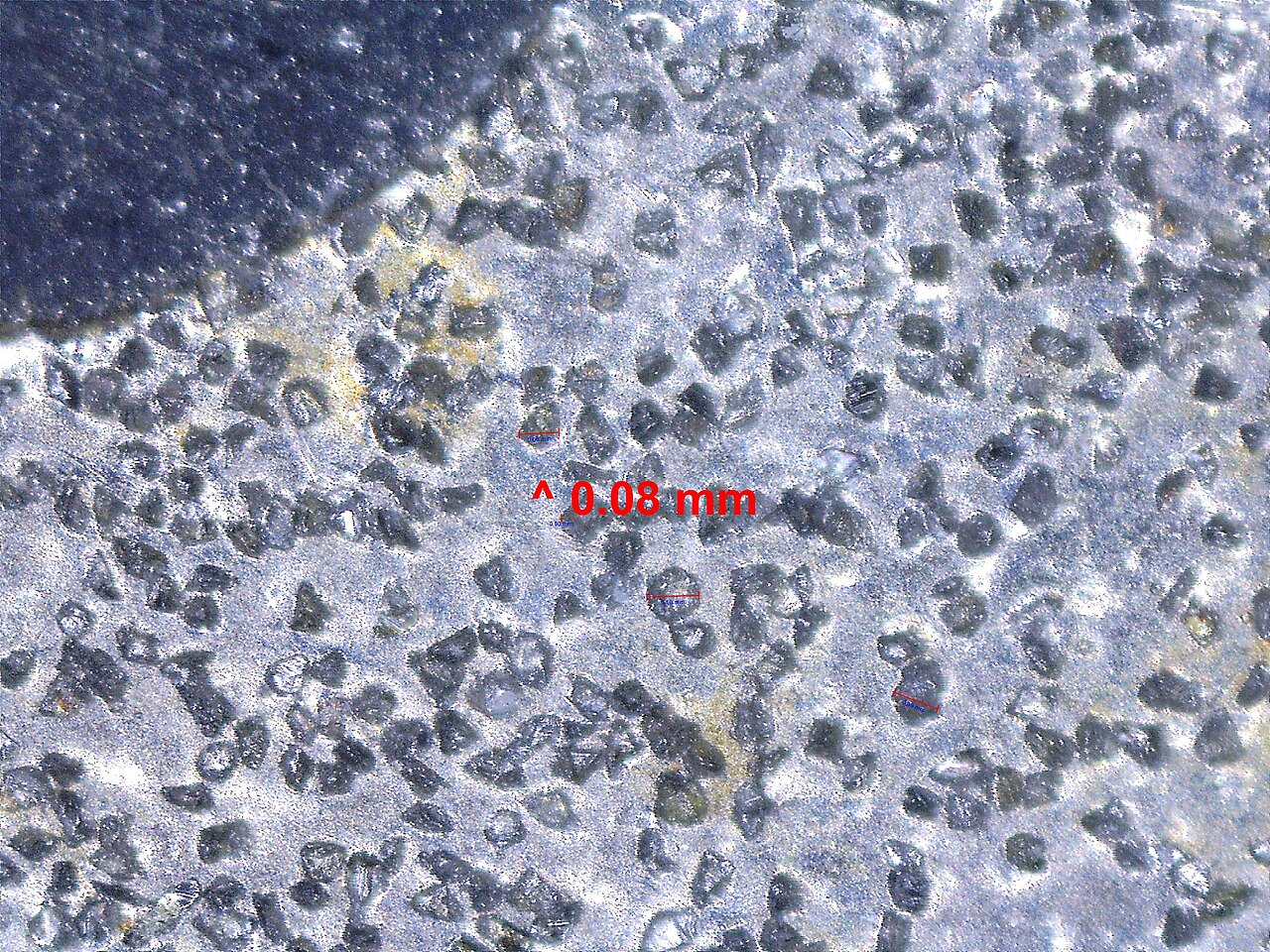
A typical diamond plate holds diamond particles on a rigid base. The blade meets that abrasive coating rather than a thick block intended to wear away. DMT’s DiaSharp line, for example, uses a continuous diamond surface on a steel plate; its other products include interrupted surfaces. The word “diamond” therefore does not describe one universal surface pattern. DMT’s construction and care FAQ.
A synthetic waterstone combines abrasive particles with a binder. Shapton identifies alumina and silicon carbide among the abrasives used in sharpening stones. The binder and abrasive system affect how the surface behaves, so two stones with similar grit labels need not feel alike. Shapton’s stone FAQ.
For the cook, this changes the maintenance job. A waterstone’s working face can wear unevenly where sharpening is concentrated. A coated plate avoids that same hollowing process, but its abrasive surface can still wear or become dirty. “Does not dish like a waterstone” does not mean “cannot wear out.”
Flatness and feedback are separate advantages
Flatness matters because it gives the blade a predictable contact surface. When a waterstone becomes hollow, keeping the intended bevel geometry becomes more difficult. A rigid plate reduces that recurring maintenance task; a waterstone needs a suitable lapping method when its face is no longer flat.
Feedback is what you feel and hear during a stroke: whether the bevel seems planted, whether pressure is concentrated near the tip, and whether contact changes along the edge. This is personal and product dependent. It is not established by counting grit alone, and a surface that feels pleasant can still produce an incomplete edge.
If you already get good results on a waterstone, switching to diamond solely because it sounds more advanced is unlikely to solve a problem you do not have. If maintaining a flat stone is the step you repeatedly avoid, a rigid plate may remove a real obstacle to regular sharpening.
Compare the whole sharpening session
Consider where water, slurry and drying fit into your kitchen. A waterstone does not automatically require a long soak: some are intended for soaking and others need only brief preparation. Follow the particular stone’s instructions. Shapton, for instance, says its stones normally do not need soaking, with a separate recommendation for their first use.
A diamond plate also needs its specified care. DMT recommends light pressure and explains that a new plate can feel more aggressive during its initial break-in. That early change in feel should not immediately be mistaken for failure. Use its prescribed cleaning and drying method rather than storing a wet plate because diamonds themselves do not rust. DMT’s use instructions.
Both surfaces need a stable support and enough room to move the blade without striking the sink or counter. Include the holder, cleanup and storage space in the choice. The first whetstone setup describes the surrounding station; changing the abrasive does not remove those requirements.
Match the grade to the work, then choose the material
A coarse diamond plate and a fine waterstone are poor representatives of their entire categories. The first is selected to remove more material; the second is selected to refine a surface. Their different results do not prove that all diamond plates are aggressive or all waterstones are slow.
For routine sharpening of an undamaged kitchen knife, begin with a useful medium sharpening stage. For damage or substantial geometry work, choose a surface and grade intended for that material removal. A finishing stone cannot make the earlier shaping work unnecessary. The whetstone grit guide explains the roles of coarse, medium and fine stages.
Read the manufacturer’s abrasive scale too. A mesh number, a Japanese grit label and a micron measurement should not be treated as interchangeable merely because the printed numbers look close. Compare their stated purpose and abrasive specifications, then judge the resulting edge on the work it must perform.
A sharpening plate is not automatically a flattening plate
This distinction matters when a plate is being bought to maintain waterstones. Grinding a knife edge and abrading the face of another abrasive stone are different uses.
DMT specifically offers Dia-Flat for lapping stones and distinguishes it from sharpeners designed for blades. Its FAQ notes that other DMT sharpeners have been used for flattening but were not designed for it, and excludes liability for wear from that use. That is a reason to buy by the exact product’s approved task, not by diamond material alone. DMT’s lapping guidance.
A product expressly approved for both jobs may suit a mixed setup. A knife-sharpening plate with no such approval should not be assumed to do double duty. For the actual maintenance process, use the waterstone flattening guide.
Three sensible ways to build the kit
For one regularly maintained kitchen knife, a suitable medium waterstone, stable holder and a way to keep the stone flat can form a complete starting system. Add a finer stage when you can describe what it improves for your cutting, rather than buying a ladder of stones in advance.
A suitable diamond plate can instead be the main sharpening surface when compact storage and less flatness maintenance matter most. It still requires controlled contact, pressure and deburring. Keep the knife’s existing geometry in mind; the angle guide is more useful here than adopting a generic angle supplied for an unrelated tool.
A mixed kit can also make sense: a coarse plate for an approved blade-shaping task, followed by a waterstone for the finish you prefer. Clean the knife, hands and work area between stages so coarse material does not travel onto the finer surface. Each item should have a distinct job. Two well-understood surfaces are usually a more useful purchase than several whose roles overlap.