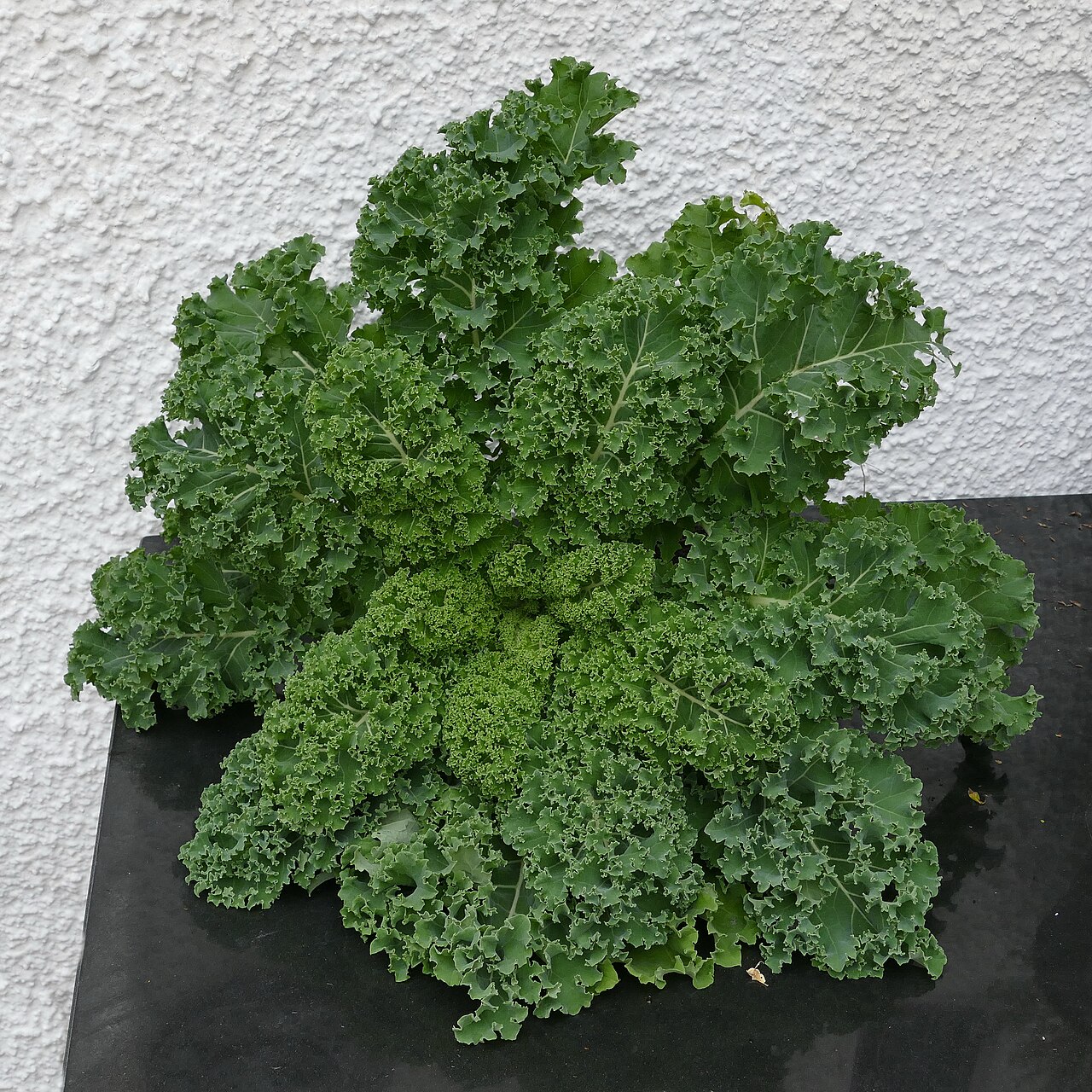
To cut kale, rinse and dry the leaves, then remove the thick center rib, either by stripping the leaf off it by hand or by cutting along it with a knife. For salads, stack and roll the leaves and slice across the roll for thin ribbons. For soups, sautés and kale chips, chop or tear the leaves into bite-sized pieces.
Rinse and dry first
Oregon State University Extension says to rinse kale under cool running water, then dry the leaves in a salad spinner or blot them with a paper towel. Illinois Extension shakes off the extra water before patting or spinning the leaves dry. Dry leaves stack and roll neatly; wet ones stick together and slide on the board.
If you are not cutting it yet, Food Hero, Oregon State’s healthy-eating program, suggests refrigerating kale in an open or perforated plastic bag for 5 to 7 days, and notes that its flavor becomes stronger and more bitter the longer it is stored.
Remove the rib
Food Hero’s advice for raw salads, like Oregon State’s kale chips recipe, is to cut or strip away the thick stems. Illinois Extension gives both options: tear the leaves from the stems, or fold each leaf in half and cut the leaf away from the stem with a knife. Use whichever suits the kale in front of you.
- Strip it by hand. This works well for curly kale. Hold the bottom of the stem in one hand, pinch the leaf just above it with the other, and pull firmly toward the tip so the leaf comes away from the rib.
- Fold and cut. Fold the leaf in half along the rib so the two sides meet, lay it flat with the rib along one edge, and cut along the rib from base to tip in one stroke.
- Cut it out flat. Flat-leaf kale such as lacinato (Tuscan) kale can lie open on the board. Cut along each side of the rib with the tip of a small knife and lift the rib out.
Illinois Extension’s salad recipe discards the stems.
Ribbons for salads
Illinois Extension rolls up the leaves “to consolidate them for easy chopping” and cuts them into thin ribbons. This is the same stack-and-roll chiffonade described in our guide to knife skills for beginners.
- Stack a few leaf halves. Lay them flat with the rib side all facing the same way.
- Roll them up. Roll the stack lengthwise into a firm cylinder and hold it with your fingertips curled back.
- Slice across the roll. Use a forward slicing stroke rather than pressing straight down, and move your guiding hand back after each cut. Closer cuts give finer ribbons.
For raw salads, Food Hero suggests chopping the leaves and massaging them to soften them and reduce the bitterness.
Chopped pieces for soups, sautés and chips
For a rough chop, cut the ribbons across at the width you want, or gather the de-ribbed leaves into a loose pile and chop through it, then turn the pile and chop again. Food Hero lists steaming and sautéing kale, and mixing chopped or torn leaves into sauces, soups, bean dishes and stir-fries.
For kale chips, Oregon State tears or cuts the leaves into bite-sized pieces after drying them. Keep the pieces about the same size so they bake evenly.
A note on Swiss chard
Chard leaves come off the rib the same way, but the stems are worth keeping. Illinois Extension says that when cooking older chard, the stems need longer cooking than the leaves, and its instructions separate stems from leaves. Slice the stems as you would celery, start them in the pan first, and add the leaves later. The thick stems of bok choy are handled in a similar way.
Which knife and board
For a pile of leafy greens, a nakiri’s flat edge meets the board along its whole length, so each cut goes all the way through; a santoku or gyuto also works well. Our guide to santoku vs nakiri compares them. A small petty or paring knife is easier for cutting ribs out of flat leaves. A bunch of kale takes up room before it is cut, so use a board large enough to hold the leaves and the finished pile apart. For other vegetables, browse all our how-to-cut guides.
Sources: Oregon State University Extension, Crunchy Baked Kale Chips (rinse under cool running water, cut or strip away the thick stem, dry in a salad spinner or blot, tear or cut into bite-sized pieces); Food Hero (Oregon State University Extension), Kale tip sheet (open or perforated bag for 5 to 7 days, flavor stronger and more bitter in storage, cut or strip thick stems for raw salads, chop and massage, uses in cooking); Illinois Extension, Fresh Kale and Vegetable Salad (shake off and pat or spin dry, tear from stems or fold and cut, discard stems, roll and cut into thin ribbon); Illinois Extension, Preparing Chard (separate stems from leaves, older chard stems need longer cooking).