To cut bok choy, trim the base, wash out any grit, then cut the green leaves away from the white stems. Slice the stems into short pieces and the leaves into wider strips, and keep them in two piles: the stems go into the pan first and the leaves at the very end. Small heads of baby bok choy are simpler still. Halve or quarter them lengthwise through the base so each piece holds together.
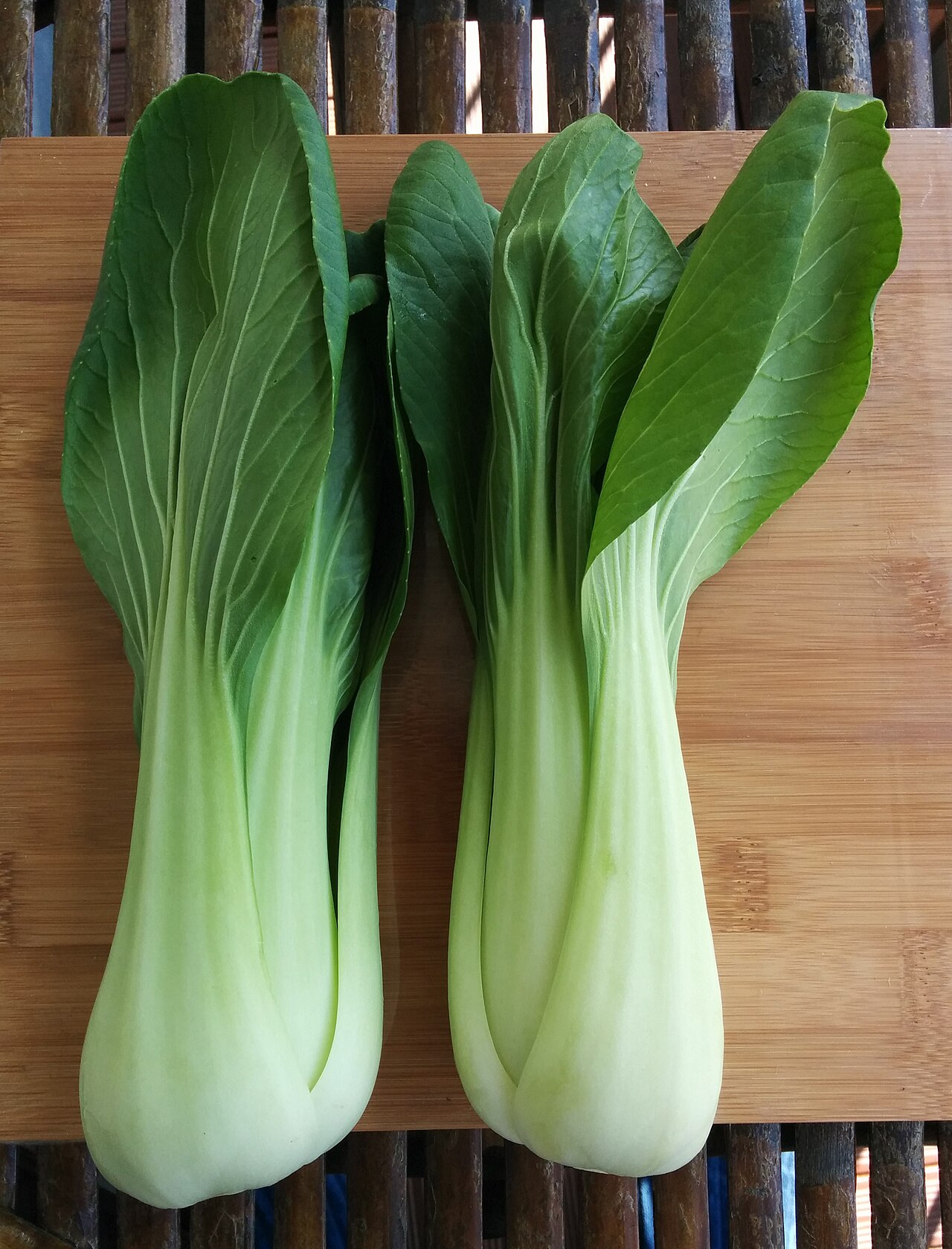
Bok choy, also sold as pak choi, grows as a loose head of thick, pale stems topped by broad green leaves. The two parts cook at different speeds, and that one fact shapes most of the cuts below.
First, decide which kind you have
Full-size heads have long, separate stalks that are easier to cut one at a time. Baby bok choy is small enough to cook in halves or quarters. America’s Test Kitchen writes its sautéed baby bok choy recipe for small heads of 1½ to 2 ounces each and quarters any head larger than 2 ounces instead of halving it.
Full-size heads: stems and leaves apart
- Trim the base. The stir-fry guide from America’s Test Kitchen trims the bottom inch from the head, so the stalks come apart.
- Wash the stalks. University of Wisconsin Extension’s fact sheet washes bok choy under cold water and scrubs off any remaining dirt with a vegetable brush until stems and leaves are clean. Dry them before cutting.
- Cut the leaves off. Lay a stalk flat and cut the leafy green part away from either side of the white stem, as the ATK guide does.
- Slice the stems. The ATK guide halves each stalk lengthwise and then cuts it crosswise into pieces about ¼ inch wide for stir-frying. The Wisconsin recipe cuts the stems into 1-inch pieces instead.
- Slice the leaves. Stack the leaves and slice across them: ½-inch strips in the ATK guide, wide ribbons in the Wisconsin recipe.
In the Wisconsin stir-fry, the stems cook for about 3 minutes until they start to turn tender, then the leaves go in for about a minute more. The ATK guide gives the same order: stems first, leaves at the very end.
Baby bok choy: halves and quarters
- Trim only the dry end. Shave a thin slice off the bottom of the base, but leave the base itself on; it is what holds each half together in the pan.
- Halve lengthwise. Lay the head on its side and cut lengthwise through the middle, from the leaf tips down through the base. America’s Test Kitchen halves baby bok choy this way partly because it opens up the areas where most of the dirt and grit hide.
- Quarter larger heads. Lay each half cut-side down and cut it through the base again.
- Wash and dry. Rinse the halves under running water, opening the layers near the base with your fingers, then shake or spin them dry. The ATK recipe spins them dry so that extra water does not go into the hot pan.
Soups, noodle bowls and hot pots
For liquid dishes, the same split still helps. Cut the stems of full-size heads into bite-size pieces and the leaves into wide strips, and add the stems a little before the leaves. Baby bok choy halves can go into the broth as they are; the base keeps each piece together in the bowl.
Washing and storing
The FDA’s produce advice is to rub produce under plain running water, with no soap or produce wash, and to dry it with a clean cloth or paper towel. The Wisconsin fact sheet says to choose firm stalks without brown spots and with fresh leaves, to keep bok choy in a plastic bag in the refrigerator crisper for up to a week, and to wash it just before serving rather than before storing it.
Which knife
Most of this job is straight cuts down to the board through crisp stems, which is the job a nakiri is built for: its flat edge meets the board along its whole length. A tall Chinese-style blade works well too, because its broad face carries the cut stems to the pan; what a chuka bocho is explains why a thin vegetable cleaver differs from a bone chopper. A santoku or gyuto does the same job in a kitchen with one main knife. For the larger, crinkled head sold as napa cabbage, see how to cut napa cabbage, and for every other ingredient, our how-to-cut guides.
Sources: University of Wisconsin-Extension St. Croix County, Pac Choi / Bok Choy fact sheet (selection, storage, washing with a vegetable brush, separating leaves from stems, 1-inch stems and wide ribbons, stems about 3 minutes before the leaves); America’s Test Kitchen, How to Cut Bok Choy for Stir-Fry (trim the bottom inch, leaves cut from the stalk, ¼-inch stems, ½-inch leaf strips, stems first); America’s Test Kitchen, Sautéed Baby Bok Choy with Miso Sauce (halving to reach grit, quartering heads over 2 ounces, spinning dry); FDA, 7 Tips for Cleaning Fruits, Vegetables (plain running water, drying).