Sharpening stones fall into four working types. Synthetic water stones cut quickly with water but wear and need flattening. Oil stones are harder, wear more slowly and use oil to carry away metal. Diamond plates hold diamond abrasive on a metal base and, by DMT’s instructions, are used dry or with water. Arkansas stones are natural novaculite, used mainly to refine and polish an edge. For a Japanese kitchen knife, the usual starting point is one medium-grit water stone.
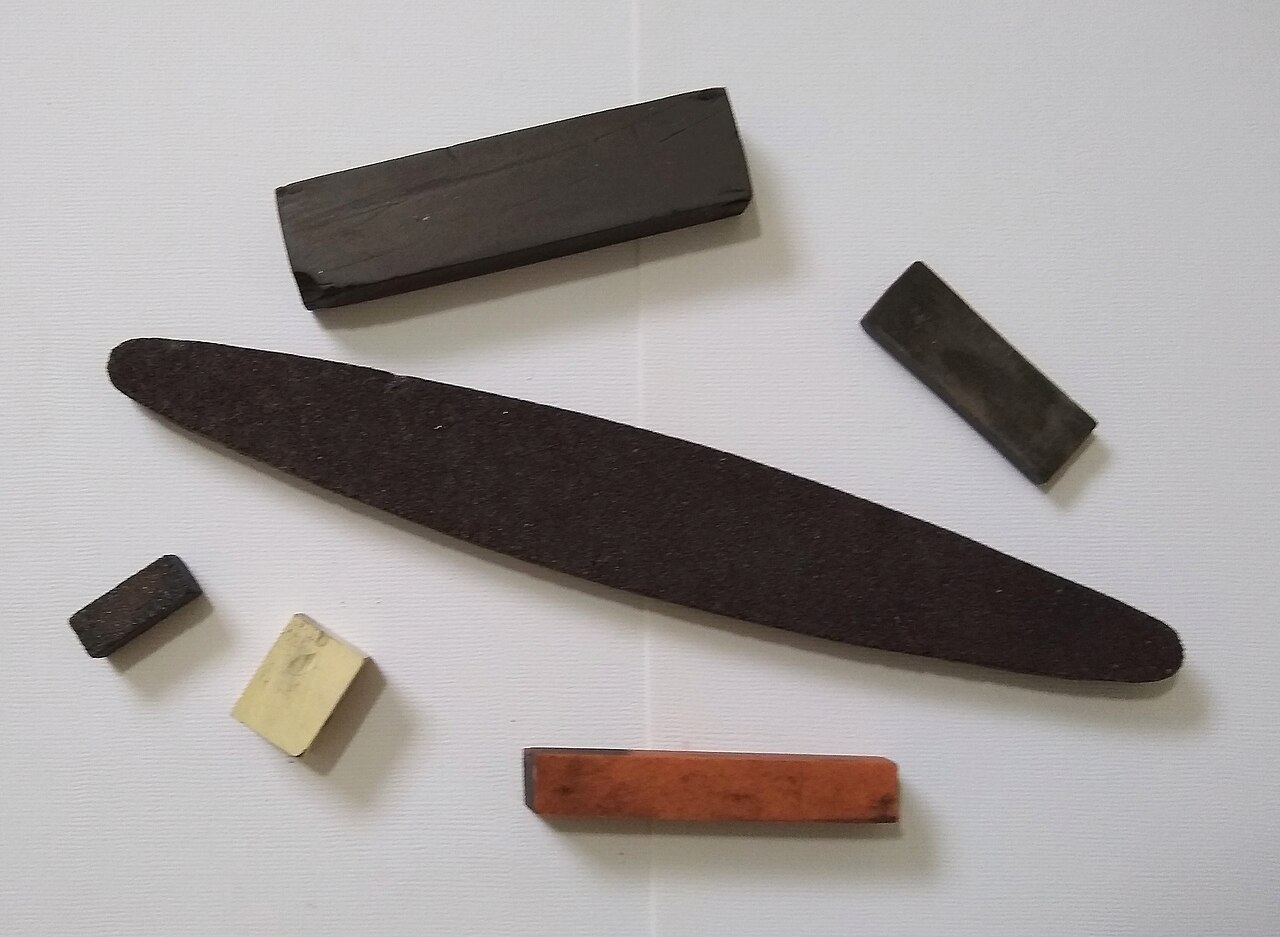
The four types side by side
| Type | Abrasive | Lubricant | How it behaves | Upkeep |
|---|---|---|---|---|
| Synthetic water stone | Often aluminium oxide (alumina) in a softer binder | Water | Fast cutting as worn abrasive breaks away; widest grit range | Flatten periodically |
| Oil stone (man-made) | Aluminium oxide or silicon carbide in a harder binder | Oil | Harder and slower-wearing than a water stone | Use oil to stop clogging |
| Arkansas (natural) | Novaculite, a fine-grained quartz rock | Oil (traditionally) | Polishes; cuts more slowly than man-made stones | Keep clean of swarf |
| Diamond plate | Industrial diamond bonded to metal | Dry or water (DMT) | Hardest abrasive; rigid surface | Wipe clean, store dry |
Water stones
Most water stones sold today are man-made. Sharpening Supplies explains that they often use the same aluminium oxide abrasive as some oil stones; the difference is a softer binder, which lets worn abrasive break away and expose fresh grit, so the stone cuts quickly. The trade-off is wear: the face hollows with use and must be flattened, which our guide on how to flatten a whetstone covers. Shapton lists several alumina types among its abrasives and says its stones do not need soaking after the first use; other water stones are soaked as their maker directs, as our page on soaking versus splash-and-go stones explains. A “glass stone” is one of these: Shapton describes its GlassStones as thin, light stones backed by layers of tempered glass, not a glass plate you sharpen on.
Oil stones
Oil stones are the traditional bench stones, sold commercially in the United States for decades. They are made from aluminium oxide (Norton’s India stones are a common example), silicon carbide, or natural novaculite, and they are harder than water stones. Oil carries away swarf, the fine metal filings from sharpening, and keeps the stone from clogging. Shapton’s rule is worth knowing even for water stones: once a stone has been used with oil, keep using oil on it.
Arkansas stones
The Arkansas Geological Survey describes novaculite as a dense rock made mostly of quartz crystals 1–5 microns across, mined for abrasives mainly in Garland and Hot Spring Counties. The abrasives industry divides it into extremely fine-grained, waxy “Arkansas” stone and more porous “Washita” stone, and Arkansas novaculite is used worldwide for whetstones and oilstones. Finished stones are sold in grades such as Soft, Hard, Hard Black and Hard Translucent; Sharpening Supplies notes that they produce a polished edge but cut more slowly than man-made stones.
Diamond plates
Diamond plates carry industrial diamonds, the hardest sharpening abrasive, on a metal surface, either continuous or interrupted by holes that catch swarf. DMT recommends using its plates dry or with water only: mineral oil will not harm them but can impede sharpening if used in excess. It also says its ordinary plates are not for flattening water stones unless designated for that job. For a fuller comparison, see diamond plates versus waterstones.
Which type for a Japanese kitchen knife?
Start with one medium water stone. Our whetstone grit guide explains why a stone around 1000 grit covers most home sharpening, and how to sharpen with a whetstone takes you through the steps. Natural Japanese stones are a separate world, covered in Japanese natural whetstones.
What this means for your handle
Every stone in this guide is used wet with water or oil, and a wooden handle should not sit in either. Wipe the handle dry after a session and let the knife dry before storing it; our wa handle care guide explains why wood and standing water do not mix. If years of sharpening have left the old handle loose or cracked, re-handling may cost less than replacing the knife.
Sources: Sharpening Supplies, “Difference in Sharpening Stone Materials” (water, oil, Arkansas and diamond stones; binders; flattening; grades); Arkansas Geological Survey, Novaculite (composition, mining counties, Arkansas and Washita stone); DMT FAQ (dry or water use; oil; flattening); Shapton FAQ (soaking, oil use, alumina types, GlassStones).