Fish bone tweezers help you grip the exposed tips of pin bones in a fillet. For salmon, locate the bones by lightly running your fingertips across the flesh, hold the fillet steady, grip one tip and pull slowly in the direction the bone lies. Work along the row, then check the fillet again.
The angle matters more than pulling hard. A bone lying diagonally through the flesh should slide out along that route. Pulling it straight upward can drag flesh with it. Choose tweezers whose tips meet cleanly and whose grip you can control, then use a deliberate one-bone-at-a-time motion.
Pin-boning is a separate step from filleting
A fillet can still contain pin bones after the larger frame and ribs have been removed. That is why the final check is useful even when you bought fillets rather than a whole fish. Wild Alaskan Company describes pin-bone removal as a separate part of its processing and advises a check before cooking in its removal guide.
This tool does not cut through a backbone or replace a filleting knife. The deba guide covers a different part of fish preparation. With tweezers, the task is to remove an individual small bone from flesh you want to keep intact.
The method here focuses on salmon fillets. Other fish can behave differently. Sitka Seafood Market specifically notes that raw sablefish pin bones are difficult to remove and describes other approaches. Do not keep applying more force simply because a salmon method is not working on another species.
Find the row before you begin pulling
Work with a clean board and tools, good light and somewhere to put the removed bones. Lay a skin-on salmon fillet skin-side down. Lightly sweep your fingertips over the surface to locate the small projecting tips; looking alone may miss a bone that is easier to feel.
Sitka’s salmon demonstration shows this feel-grip-pull sequence. Start at a point where you can identify a tip clearly, then work methodically along the fillet. Moving in order is easier to keep track of than jumping between whichever bones catch the light.
Keep the fish cold while preparing it. Copper River Salmon’s guide recommends working cold and doing a final tactile check, including checking individual portions after cutting. You do not need to warm or soften a fillet to make the tool work.
Grip the bone, support the flesh and follow its angle
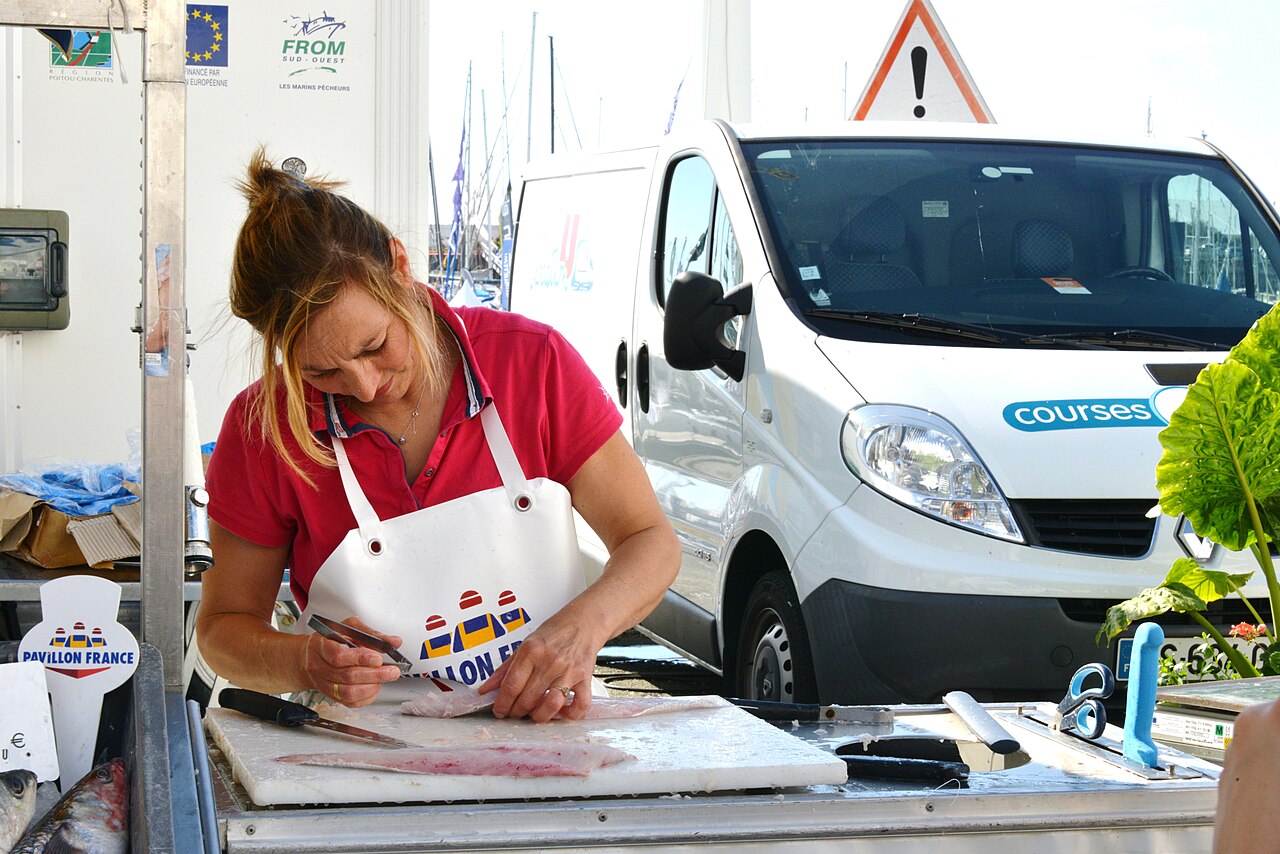
Place the tweezer tips around the exposed bone rather than a broad pinch of flesh. Hold the fillet steady with the other hand nearby. Close the tips enough to maintain the grip and draw the bone out slowly along its direction.
Wild Alaskan Company explicitly advises pulling with the way the bone lies, rather than upward or against that direction. If a large piece of flesh begins lifting with it, pause and reconsider the angle and grip. More force is not necessarily the answer.
Release each removed bone into the discard container before moving on. Check that the tips are clear so the next grip closes properly. Keep following the row, then sweep the fillet again by touch. The completed first pass is a reason to check, not proof that every bone is gone.
If you cannot identify an exposed end, avoid digging into the fillet blindly with the tweezer points. Ask the fishmonger to finish the removal or explain the right approach for that fish. It is a routine preparation request, as Copper River Salmon notes.
Choose for tip contact and comfortable pressure
A product photograph should show the working ends clearly. Look for tips that meet evenly and give you a clear view of the bone, with arms you can close comfortably. A large handle does not compensate for ends that pass each other or leave a gap.
Consider the pressure your hand must maintain while pulling. The useful size is the one you can control repeatedly, not necessarily the longest pair. For scale, Victorinox’s 7.6120 is listed at 120 mm, while ZWILLING’s Pro model is 140 mm. Those dimensions identify two examples, not a ranking of their performance.
A simple jointless form also makes the cleaning surfaces easy to inspect. ZWILLING describes that construction for its model; other designs may have hinges or additional parts to clean. Check the actual design, material and care directions together.
Pin-bone tweezers and plier-style removers
“Fish-bone remover” can mean a tweezers-style tool; the name alone does not tell you how it fits your hand. Small pinch-grip models use narrow tips to catch an individual exposed bone. Shun describes tapered, flat tips. This is one example of a compact tool for a thumb-and-index-finger pinch.
Purpose-built plier-style designs use other grips and tip shapes. Asahi calls its professional full-hand model both “Fish Bone Tweezers III” and a fish-bone remover; its curved, flat tips and disassemblable parts are specific to that product. The maker says the full-hand grip is intended to reduce strain during repeated removal. WÜSTHOF’s fishbone pliers are another model-specific design, with an inner spring and serrated gripping surface. These features describe those products, not every tool sold as a remover or pliers.
For an occasional fillet, choose the tool whose tips you can see and close comfortably. If repeated pin-boning makes a small pinch tool tiring, a full-hand design may be worth considering; check whether its overlapping parts come apart and follow that model’s cleaning directions. Neither shape changes the method: grip an identified bone and draw it out along its direction. Do not assume the word “plier” means every bone or fish will be easier to remove.
For occasional cooking, asking the fishmonger to remove pin bones may save you buying another tool. If you prepare fillets often, dedicated kitchen tweezers keep the right implement at hand and let you finish the check yourself.
Troubleshoot slipping without damaging the fillet
The tips keep slipping off. Check that you have the bone itself between the working faces, clear away any residue on the tips, and re-grip with an unobstructed view. If the ends do not meet properly when clean, consider replacing the tool rather than squeezing harder.
The flesh tears. Reduce the size of the pinch and reassess the direction of pull. The tool should hold the exposed bone, while the other hand steadies the fish. A forceful upward tug works against the diagonal route described in the salmon guidance.
A bone breaks or becomes hard to locate. Stop working that spot blindly. Recheck by touch and seek help if you cannot remove the remaining part confidently. Do not describe the portion as bone-free simply because the visible tip has disappeared.
After use, wash the tool according to its maker and inspect the working ends before putting it away. Victorinox rates its model dishwasher-safe; follow the rating for your actual pair. A clean, aligned tip and a controlled pull do more for this task than a promise of effortless deboning. Our Japanese kitchen tools guide places it among the other useful preparation tools.