This guide starts with the knife’s real fit requirements, then compares the handle choice as a working part of the build. A good comparison is practical: it should tell you what changes in grip, balance, upkeep, and visual style. Use it to compare fit, balance, maintenance, and the kind of kitchen work the handle will actually see.
Both options can be valid, so the better choice depends on the knife and the way it is used. Horn and Grain handles are visual pieces, but the useful standard is whether the build makes the knife easier to trust. A handle should give clear orientation, sit cleanly at the blade, and be simple enough to care for after repeated prep sessions.
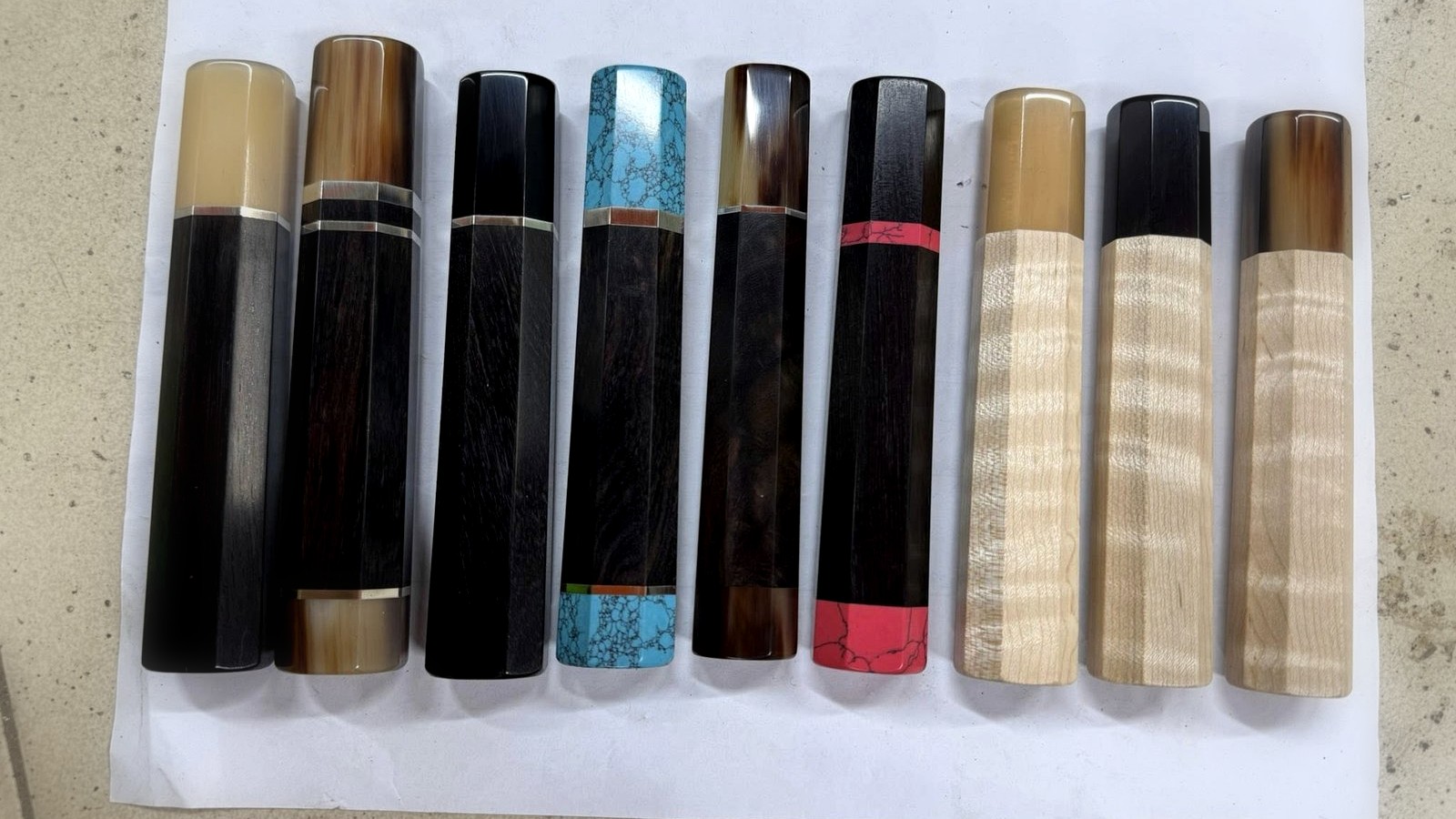
Quick answer
If you want the short version, treat padauk vs cherry wa handle weight and as a fit decision first and a visual decision second. Choose it only when the handle supports the blade’s balance, the grip style, and the maintenance routine. A beautiful wood, horn ferrule, or end cap is a bonus only after the fit questions are settled.
Use the tradeoffs below to pick a direction before worrying about small cosmetic details. For most buyers, the right next step is to confirm the knife measurements, compare one or two realistic material choices, and avoid vague upgrade language. Specific notes about tang size, blade type, and preferred shape lead to a better custom result than a request for the most premium-looking option.
Decision framework
| Decision point | What to check | Buyer note |
|---|---|---|
| Fit | Blade length, tang size, and current balance | Use exact measurements before ordering. |
| Feel | Facets, oval rounding, palm contact, and grip orientation | Comfort matters more than a dramatic material choice. |
| Care | Water exposure, drying habits, oiling, and heat risk | Choose a handle you can maintain consistently. |
| Visual match | Wood figure, horn color, end-cap style, and blade finish | Keep contrast intentional instead of chasing every upgrade. |
Make this choice fit your knife
Use the configurator to compare this handle direction against blade length, tang size, balance, and daily prep style before choosing the final material direction.
Good fit when
- The handle solves a clear balance, grip, or maintenance problem.
- The blade length, tang size, and current balance are known before ordering.
- The material and ferrule choice match the way the knife will be cleaned, dried, and stored.
Think twice when
- The choice is based only on dramatic grain, unusual horn color, or a larger handle.
- The current handle problem has not been measured, photographed, or described clearly.
- A heavier or larger handle would make the knife slower for its main kitchen job.
What to check before ordering
- Blade type, blade length, tang height, tang width, and current handle length.
- Preferred shape, grip style, and whether the knife should feel lighter, neutral, or more planted.
- Photos from the side, top, ferrule, and handle end so fit details can be checked before the build.
- Any balance issue you want the new handle to solve.
Quick recommendation
A useful comparison for padauk vs cherry wa handle weight and should end in a decision, not a list of attractive traits. Start with the question: does this choice improve daily use?
If both options look good, let weight, balance, care, and blade use decide. Visual figure is the tie-breaker, not the foundation of the recommendation.
Weight and balance
For weight and balance, compare how each option changes the knife after a month of prep. Ask: what tradeoff matters most for this knife?
Dense dark woods can calm a forward blade, while lighter or warmer woods may preserve nimbleness. A showpiece material is only useful when it still supports the blade’s daily work.
Color and figure
Color and figure is where the tradeoff should become explicit. Ask: what detail should be verified before ordering?
Choose the option with the easier maintenance routine if the knife sees wet prep, heavy service, or shared kitchen use. Choose the more expressive option when the owner values figure and is willing to care for it.
Care and stability
For care and stability, make the handle decision concrete: name the blade type, current handle problem, and the one feel change the new build should create.
For care and stability, let measurements carry the decision when options are close. Blade length, tang size, balance point, and grip orientation should matter more than a rare-looking material.
Which buyer should choose each option
For which buyer should choose each option, compare how each option changes the knife after a month of prep. Ask: what tradeoff matters most for this knife?
For which buyer should choose each option, explain what the handle changes in daily use: control, comfort, care, durability, or visual harmony with the blade.
Fit and measurement notes
Before ordering, record the blade type, blade length, current handle length, tang width, tang height, and any balance issue you are trying to solve. A maker can work with approximate photos, but exact measurements reduce the chance of a handle that looks right and feels wrong. If the knife has a hidden tang, note whether the current handle is burned in, epoxied, or already loose.
Do not assume that a heavier handle is automatically better. Extra mass can make a blade feel calmer, but it can also pull the balance too far back on a knife that was designed to be nimble. For lighter prep knives, a modest handle can preserve control. For larger blades, a little more presence may help if the blade feels too forward-heavy.
Care and durability
Care should match the material and the kitchen. Wipe the handle after washing, avoid soaking, keep it away from direct heat, and refresh dry wood with a food-safe oil when the surface starts to look thirsty. Horn ferrules should be treated gently around heat and standing water because the joint area is where moisture problems often start.
If you notice movement, gaps, swelling, or a sour odor, pause before adding more oil or adhesive. Those signs can mean water has entered the handle or the tang fit has changed. Small issues are usually easier to correct early, while aggressive home repairs can make a clean refit harder.
Bottom line
The best choice for padauk vs cherry wa handle weight and is the one that balances fit, feel, care, and visual restraint. Start with the knife’s real requirements, then choose the wood, horn, and shape details that support those requirements. That approach creates a handle that still feels right after the first impression wears off.