Black Horn creates the quieter, more continuous transition; White Horn creates a lighter visual boundary. White Horn (the older/search term is “blonde horn”) is a natural range from cream to pale grey, not a promise of pure white. Either color may show natural variation, and its appearance can shift with lighting, polish and the surrounding wood.
Black or White Horn on the same wood
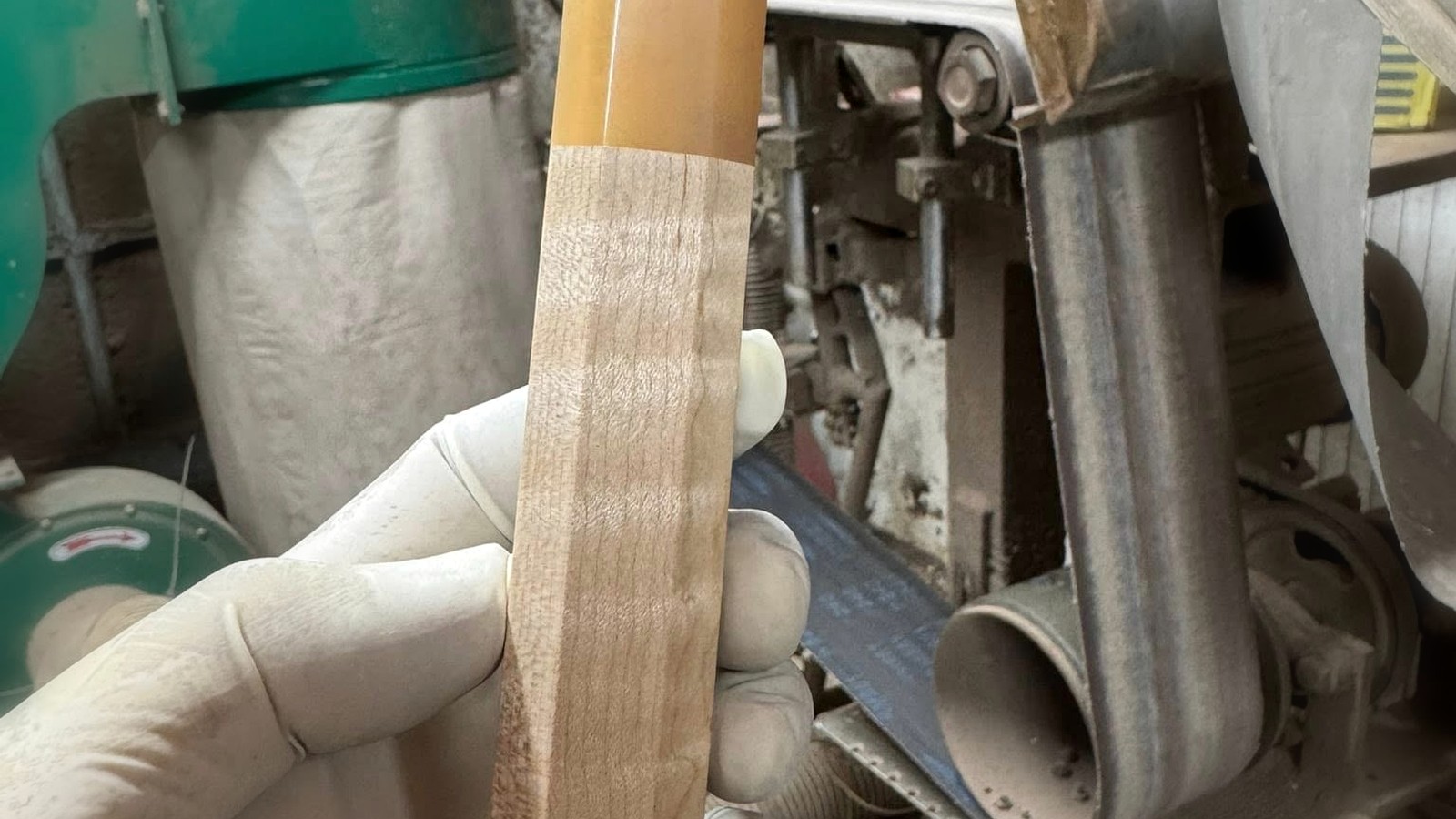
Holding the wood constant makes the difference easiest to see. On the same rosewood body, Black Horn usually blends into the darker grain and lets the handle read as one long, restrained form. White Horn interrupts that continuity with a pale band at the blade end, making the ferrule and the handle’s front geometry more obvious.
Neither treatment is inherently better. Choose Black Horn when you want less separation between a dark or medium-dark wood and the ferrule. Choose White Horn when you want a clear boundary or want to bring forward cream, grey or pale streaks already present in the wood. The result depends on the particular rosewood and horn pieces, so compare actual examples whenever an exact match matters.
Match contrast to the wood and blade
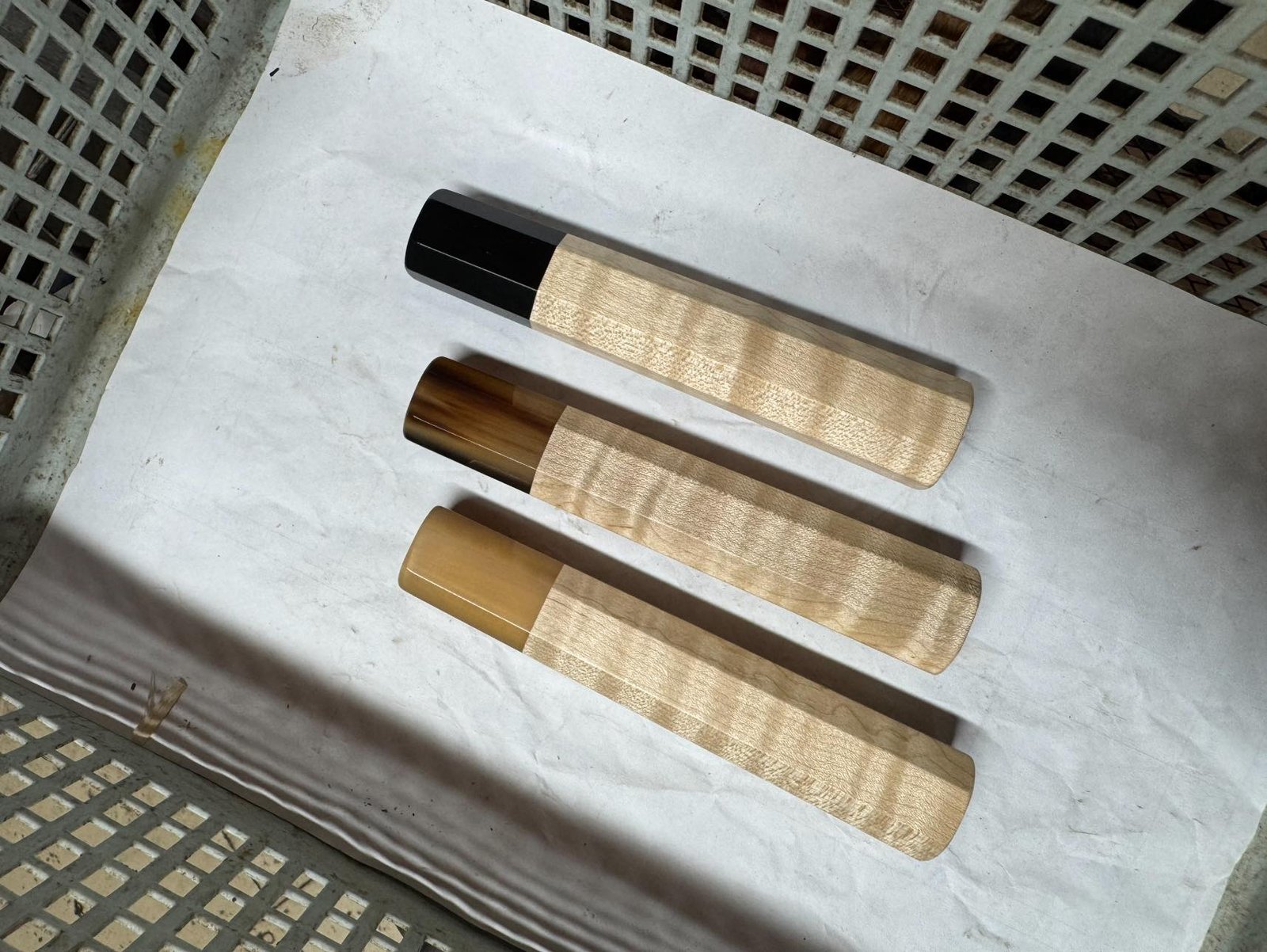
Start with the wood’s overall value and grain activity. Dark, fairly uniform wood often gives Black Horn a continuous look and White Horn a pronounced break. Against pale wood, the relationship reverses: Black Horn becomes the stronger boundary, while pale natural horn may feel softer. Busy figure already supplies visual movement, so a quiet ferrule can keep the composition from becoming crowded.
Then include the blade in the comparison. A dark blade can visually connect with Black Horn, while White Horn separates it sharply from a dark handle. A bright blade beside White Horn can form a lighter transition into the wood; beside Black Horn, it produces a crisp dark edge. Reflections and exposure can exaggerate these effects in photographs, so use the configurator as a comparison aid rather than a color guarantee.
For more examples of deliberate blending and contrast, see choosing ferrule and end-cap colors and the wa handle woods guide.
Expect natural variation
Horn is not a manufactured color chip. White Horn can vary from cream through pale grey, sometimes with warmer or darker movement. Black Horn may also contain subtle lighter lines. Korin likewise notes that natural water-buffalo horn color varies in traditional knife handles (Korin knife catalog), while Hitohira/Taihei describes wood and horn as individual solid parts worked piece by piece (Hitohira/Taihei handles).
When tone or pattern placement is important, approve the actual available piece. A sample photograph can establish the general relationship, but it cannot promise identical color, markings or face-to-face pattern.
Keep color separate from construction
Horn color does not establish strength, waterproofing, fit or service life. Those depend on the actual material, the bore and surrounding walls, installation and workmanship. Inspect the transition for alignment, a smooth surface and a clean joint; do not interpret a pale or dark color as evidence that those details are better.
For construction details, read the ferrule materials and colors guide. The shorter explanation of what buffalo horn ferrules do also separates the ferrule’s role from claims that color alone cannot support.
Leave a secure handle installed rather than removing it merely to measure. Consult the current ordering guide for the evidence needed for a particular order. If the tang is already exposed and dimensions are requested, record exactly three primary measurements in millimetres: usable length from the shoulder or seating line to the tip, height near the shoulder, and face-to-face thickness at that same station.
Care is the same for either color: wipe and dry the handle promptly, avoid soaking and dishwashers, keep it away from direct heat, and follow the maker’s finish instructions. A new gap, crack or movement is a condition to inspect, not a reason to add oil or adhesive to the tang opening.
Choose the visual relationship you want
Choose Black Horn for continuity or a dark boundary; choose White Horn for a pale boundary and more visible separation. Compare current combinations in the custom handle configurator, then review actual pieces in the handle collection. The decisive question is simple: should the ferrule recede into the wood, or clearly mark where blade and handle meet?