Once the blade has moved relative to the handle, the next step depends on more than tightening the visible joint. A refit is appropriate only when the tang, handle body, ferrule and socket form a sound, compatible assembly. Damage to any of those components may instead call for repair assessment or replacement.
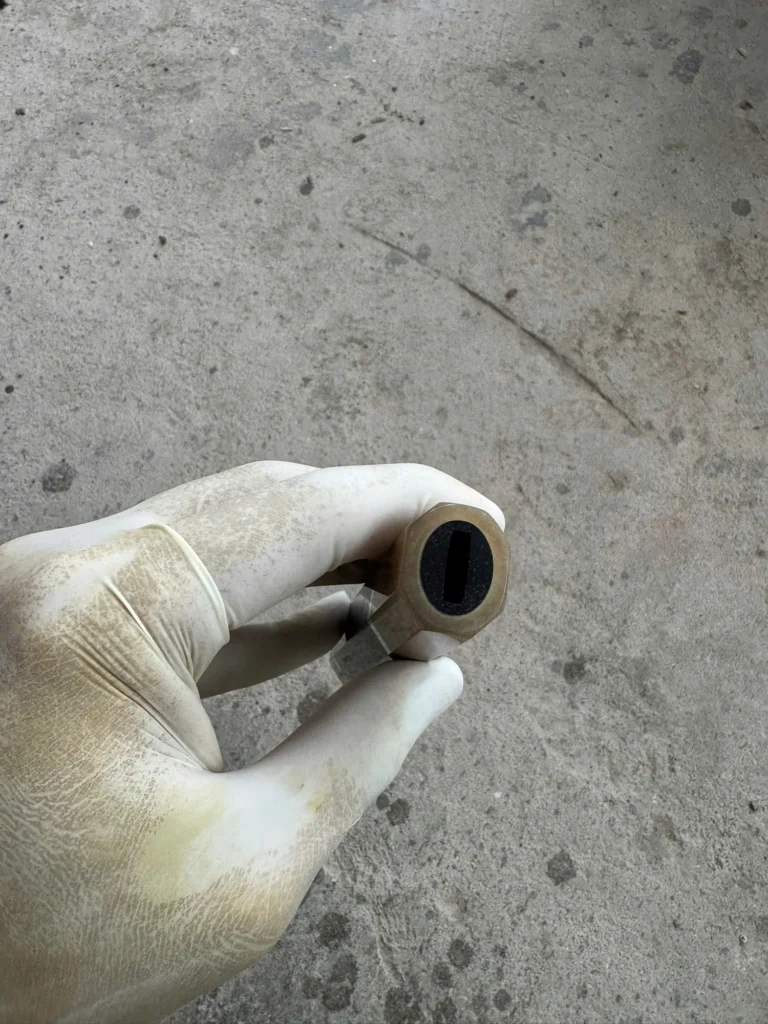
Match the route to the condition
- Refit: The attachment has failed, but inspection finds no crack, detached ferrule, missing material, tang damage or incompatible socket. The installer can then determine how the existing parts should be seated without assuming a universal method.
- Component assessment: A crack, loose ferrule, distorted opening or suspected tang corrosion changes the job. Sakai Ichimonji’s handle-replacement guidance notes that cracks or ferrule damage can admit moisture around the tang and that corrosion may affect repairability. These conditions should be evaluated before anyone conceals them with adhesive, a shim or a forced refit.
- Replacement or professional rehandling: This becomes relevant when the handle is no longer sound, preservation is impractical or the existing fit cannot be restored reliably. Professional rehandling is an established service category, as reflected in the Japanese Knife Imports services FAQ, but availability, cost and outcome depend on the individual knife.
A replacement handle is not automatically a drop-in match. KAI’s official replacement-handle listing cautions that tangs and handle openings vary, adjustment may be necessary, and even a listed match is not guaranteed. A damaged tang can also prevent replacement.
What the installer needs to see
Provide clear photographs of the whole knife, every side of the handle, the front junction and any crack, gap, ferrule movement, discoloration or visible corrosion. Add when the movement began and any relevant water, heat, impact or previous-work history.
Do not pull apart an otherwise secure handle merely to obtain hidden dimensions. If the tang is already exposed, record exactly three primary measurements in millimetres: usable length from the shoulder or seating line to the tip, height near the shoulder, and face-to-face thickness at that same station. The tang-measurement guide explains that record; the broader reshafting guide covers the replacement route without turning this diagnosis into a fitting recipe.
After the assembly is sound again, use the wa-handle care guide for routine material-compatible care.