Choose a rice-washing bowl for the amount of uncooked rice you normally prepare and the way you prefer to drain it. A bottom drain avoids repeatedly tipping a filled bowl; side holes let one vessel act as both bowl and strainer. If your existing bowl and fine colander already make rinsing easy, a dedicated rice bowl is optional.
The useful improvement is a smoother rinse-and-drain routine. A special bowl does not give permission to scrub the grains harder, and its total volume is not necessarily the amount of rice it can comfortably wash.
Start with the rice cup, not the bowl’s litre figure
Japanese rice capacities are often given in go, a measure corresponding to about 180 mL of uncooked rice. That is the familiar rice-cooker cup, which differs from an ordinary kitchen measuring cup. Japan’s Ministry of Agriculture, Forestry and Fisheries explains why using the supplied rice cup matters when matching rice to the cooker’s water marks.
Count your largest normal batch in that measure before shopping. If you usually cook two rice cups but sometimes four, compare bowls intended to wash four rather than buying the largest bowl you can find. For regular five-cup batches, a four-go maximum is already a reason to exclude a model.
Keep three quantities separate: dry rice, room for rinsing water and the bowl’s overall size. A bowl may publish all three, or only one. A litre capacity without a rice rating does not answer the same question as “washes up to five go.”
Choose the draining motion that suits you
Consider what is awkward in your current routine. Is it lifting a heavy bowl, keeping grains back while pouring, moving rice between vessels, or washing another piece of equipment afterward? The drainage design should address that specific inconvenience.
| Example bowl | Stated rice capacity | Drainage distinction |
|---|---|---|
| Akebono Komekore | Up to 4 go | Press the center to release water through the bottom. |
| Nakaya K657-1 | Up to 5 go | The maker describes an easy-draining bowl for rice and vegetables. |
| Fujii 3-Way stainless rinsing bowl | No go rating published | Tilt toward the holes in the side. |
Akebono’s Komekore is useful to consider if tipping is the step you want to avoid. Its stated footprint is 223 × 223 mm and height 118 mm. The maker describes slots designed to reduce escaping or trapped grains; that is a product claim, not our test result.
Nakaya’s bowl measures 248 × 208 × 115 mm. Its five-go washing rating is the useful rice figure. The separate 950 mL capacity field should not be treated as an instruction to put that volume of dry rice into it.
Fujii’s stainless bowl has a 210 mm inside diameter and a 232 mm outside diameter. It can hold water upright and drain through the side when tilted. The maker notes that it does not stand by itself in that tilted position when empty, so do not assume it is a hands-free drain rack. Its lack of a published rice rating is a reason to confirm batch fit, not to invent an equivalent capacity.
Rinse polished rice gently
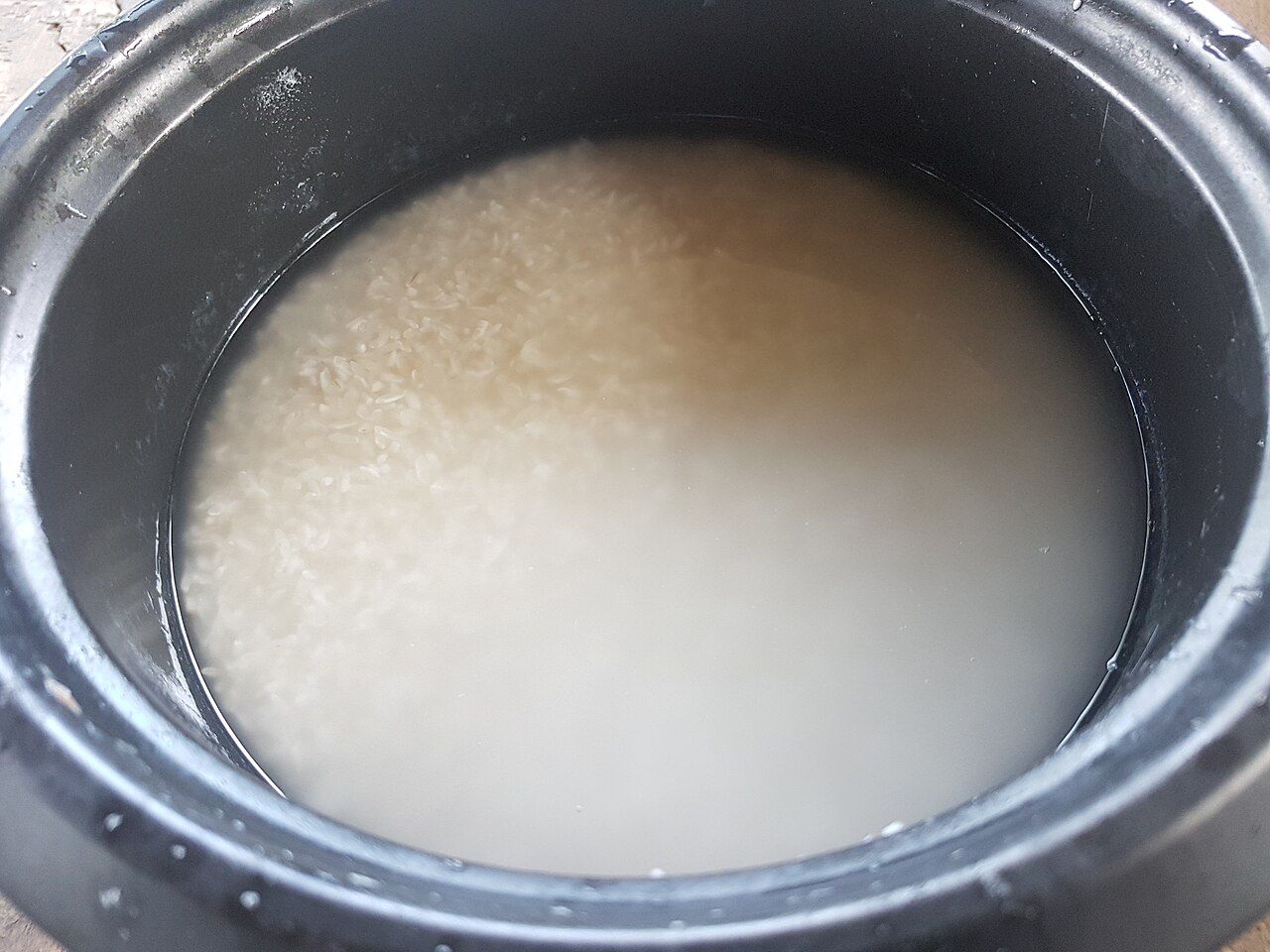
For modern polished rice, MAFF recommends washing by stirring briefly in plenty of water and changing the water three or four times, rather than rubbing the grains against each other. Its comparison found more broken grains with rubbing, without a significant overall taste advantage.
A practical sequence is:
- Measure the dry rice with the cup or weight specified for your cooker or recipe.
- Put it in the bowl and add plenty of water, leaving room to move the rice.
- Stir promptly and gently rather than grinding the rice against the bowl.
- Drain through the bowl’s intended outlet, or through a fine colander that retains the grains.
- Refill and repeat the washing sequence, then transfer the rice for the recipe’s soaking and cooking stages.
Drainage is where the dedicated bowl earns its place: it makes repeated water changes less awkward. It should not change the task into prolonged scrubbing. For no-wash rice, which is processed to be cooked without washing, follow the package and cooker directions instead.
Check the whole route from sink to cooker
Before choosing a bowl, measure the space beneath the tap and the place where you will tip or press it. The outside dimensions matter here, especially in a small sink. Picture the bowl full of rice and water, not just sitting empty on a shelf.
Also check the final transfer. A bowl that rinses neatly but is cumbersome to empty into your cooker may only move the awkward step. A separate colander can still be a good arrangement when it is easy to lift, retains your rice and fits the receiving pot.
If grains escape, inspect the opening or strainer you are using and slow the pour. If water drains poorly, check for grains caught in the outlet. If the batch leaves no room to stir, divide it or use a larger suitable bowl rather than pressing it down to make space.
Clean the outlets as well as the bowl
After transferring the rice, remove grains from slots, holes and any drain mechanism. Those are the parts worth inspecting when the bowl seems clean at a glance. Follow the product’s disassembly directions if it has a removable seal or base.
Heat and dishwasher permissions are product-specific. Fujii lists its stainless bowl as dishwasher-safe; Akebono says not to use boiling water in its Komekore. The material name alone is not enough to transfer one product’s instruction to another.
A well-chosen bowl is one you can rinse, drain, empty and clean comfortably at your normal batch size. That practical fit matters more than adding another specialized object to the cupboard; our kitchen tools guide applies the same approach to equipment more broadly.