An otoshibuta is a lid that sits directly on simmering ingredients, inside the pot. Choose one small enough to reach the food rather than resting on the rim. If a recipe calls for a drop lid and you do not own one, a fitted piece of cooking parchment or aluminum foil can often do the job. The important feature is where it sits, not whether it is a traditional wooden utensil.
A regular pot lid covers the opening above the food. An otoshibuta works much closer to the ingredients. Understanding that difference makes an unfamiliar instruction in a Japanese recipe much easier to follow.
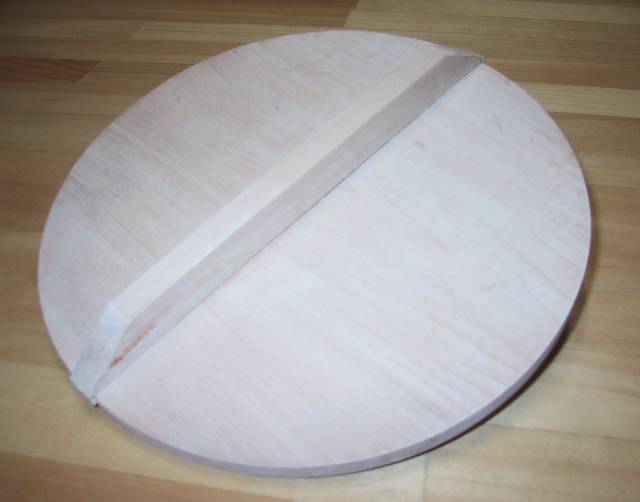
What the drop lid changes
During simmering, food can move in the liquid, and the exposed upper pieces may not receive the same contact as those below. A drop lid rests across the food rather than enclosing the whole space above it. Kikkoman’s explanation describes how this affects the circulation of the broth and helps keep ingredients from breaking apart.
That makes it useful in dishes where the pieces should stay recognizable while cooking in seasoned liquid. It is a practical part of a simmering method, not a reason to press every stew flat. Do not add weight or force the lid down to make it seal. Its job is to rest on the ingredients.
The recipe still determines the pot, liquid and heat. Adding a drop lid does not turn an arbitrary amount of broth into the correct amount, nor does it establish that food is cooked through.
Fit it to the food level, not just the top opening
Check the inside of the pot where the food will sit. A lid may pass through a wide rim yet become wedged higher up in a pot whose sides narrow toward the base. Try a reusable lid in the empty, cold pot first; it should reach the intended position and be removable without levering it against the sides.
The fit should leave it inside the pot, above the ingredients, with room to lift it. There is no need for an airtight rim seal. If the only lid you have is the pot’s full-size cover, it belongs on the rim and is doing a different job.
For a first attempt, a paper or foil lid can be easier to fit than purchasing a rigid diameter on guesswork. Prepare it before the pan is hot. This is also a useful way to find out whether drop-lid cooking is something you do regularly enough to justify another utensil.
Make a parchment or foil substitute
Use cooking parchment within its stated heat limits, or kitchen foil suitable for your recipe. Wax paper is not the same material: Kikkoman’s parchment guide specifically distinguishes their heat resistance.
- Cut a piece that fits inside the pot and can lie over the food without hanging over the rim.
- Make an opening in the center. Kikkoman’s drop-lid cooking example uses this opening to help prevent a paper or foil lid from floating.
- Place it directly on the ingredients at the stage specified in the recipe. Keep the edges within the pot and clear of the heat source.
The sheet should cover the food rather than being tucked tightly around the outside of the pan. Think of a light cover resting inside a vessel, not a sealed packet. If it is too large and bunches against the walls, trim it while it is still dry and easy to handle.
Paper is convenient for an occasional dish. A reusable lid becomes attractive when it already fits the pot you use most often and is straightforward to wash, dry and store.
Use it as part of the simmering sequence
Prepare the ingredients and liquid first. When the recipe calls for the drop lid, lower it gently onto the food, then continue at the specified simmer. Keep an eye on the liquid and the state of the ingredients rather than treating the lid as a signal that the pan can be forgotten.
An actual example helps: Kikkoman’s simmered flounder recipe brings seasoned stock to a boil, adds the fish and vegetables, then uses an otoshibuta while simmering. It also calls for occasionally spooning stock over the ingredients. The lid is one part of that method; it does not eliminate the cook’s other steps.
Use that recipe’s quantities and timing only when making that dish. A pot of root vegetables or a different size of fish needs its own instructions. The transferable lesson is the sequence: arrange the food, position the drop lid, manage the simmer, and check the result.
What to check when it does not sit properly
It rests on the pot rim. It is too large for this placement. Use a smaller suitable lid or a fitted disposable one.
A paper lid floats above the food. Check its size, central opening and position. Do not solve the problem by pushing your fingers into the hot liquid.
The food moves vigorously. Check that the heat matches the recipe’s simmering instruction. A drop lid does not make a rolling boil equivalent to a gentle simmer.
The broth is reducing more than expected. Check the heat, liquid quantity and elapsed cooking time. Do not assume the lid prevents evaporation completely.
Remove the lid with an appropriate utensil or its intended handle, keeping clear of hot liquid and steam. Wash and dry a reusable lid according to its material and maker. Wood, silicone and metal need not share one care routine.
The useful purchase is a lid that fits a recurring cooking task. For an occasional recipe, a carefully fitted substitute may be enough—a principle shared by our kitchen tools guide.