A miso strainer holds miso paste in warm broth while you work it through the mesh with a spoon, chopsticks or a small spatula. It helps you dissolve the paste without chasing lumps around a pot of tofu and vegetables. Cook those ingredients first, then add the miso according to your recipe, usually with the heat lowered or turned off.
You do not need a dedicated strainer to make smooth miso soup. A ladle or small bowl also lets you mix the paste with a little broth before returning it to the pot. Choose the method that is easiest to control with the amount you normally make.
What the mesh does
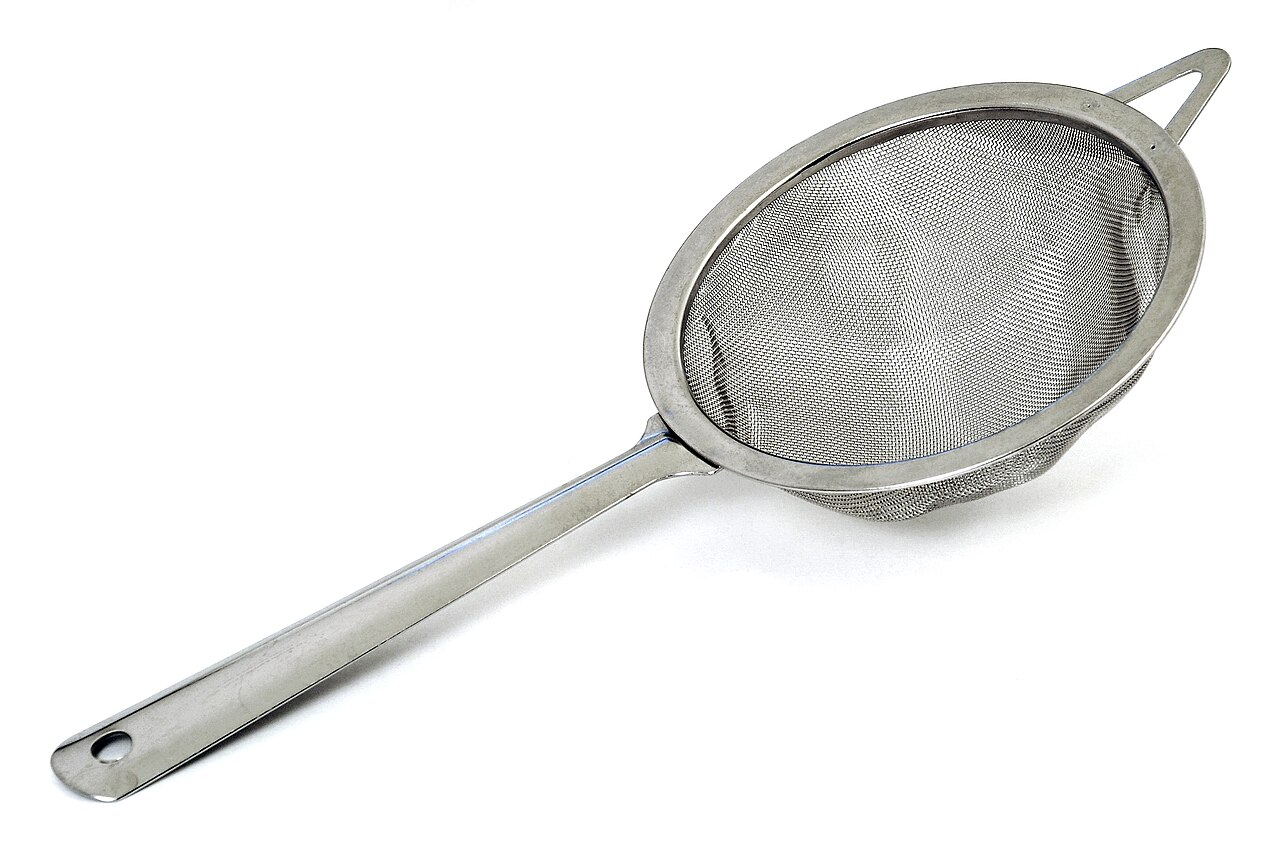
Miso paste is concentrated seasoning. Dropping a spoonful straight into the pot leaves you with a small, dense mass to break apart among everything else. Holding it in a strainer creates a separate place to work: broth enters, the paste loosens, and the dispersed miso joins the soup.
That is different from filtering finished stock. A dashi strainer catches stock-making ingredients as broth is poured through it into another vessel. With a miso strainer, you are adding the seasoning to the liquid already in the pot.
This distinction helps when shopping. You need a basket you can hold partly in the broth and reach into with your mixing tool. A large sieve designed to sit over a bowl may be awkward for that job, even though both tools use fine mesh. For draining larger batches or choosing a general-purpose strainer, see this colander and strainer task guide.
Dissolve the paste before adjusting the flavour
Have your soup ingredients cooked as the recipe directs before adding miso. Put the recipe’s initial amount of paste in the strainer, lower the mesh into the broth and hold it steady. Use the back of a spoon or a suitable spatula to loosen the paste against the mesh. Let broth mix with it rather than trying to force a dry lump through.
Keep the basket clear of delicate ingredients so the mixing happens inside the strainer. Work until the paste is dispersed, lift the basket out, and gently mix the soup before tasting. Add more miso in a small amount if needed, dissolving it in the same way.
Hikari Miso’s tomato-and-tofu recipe uses this sequence after turning off the heat. It also notes that rice koji may remain in the mesh; adding those pieces to the soup or leaving them out is a texture preference. Residue does not automatically mean you failed to dissolve the paste.
If the soup becomes too strongly seasoned, more stirring will not reduce the concentration. That recipe suggests dilution with dashi or water. Adjust gradually, remembering that dilution also changes the amount of soup and the balance of the other ingredients.
Two easy methods without a strainer
A ladle gives you a small mixing vessel inside the pot. Place a little miso in it, admit some warm broth, and work the two together with chopsticks or a small spoon. Release the loosened mixture into the soup, then repeat if necessary. Keep the ladle steady rather than tipping the original lump straight out.
A separate bowl offers more room. Take some broth from the pot, whisk or stir it into the miso until the mixture is smooth, and return it to the soup. Hikari Miso’s chickpea-miso soup recipe uses this method. It is a useful choice if your pot is small or crowded with ingredients. For other kitchen tasks, see this whisk-shape guide.
The trade-off is simple: a strainer lets you dissolve the paste over the pot, a ladle uses a tool you probably already own, and a bowl gives your hand more working space. Try the latter two before buying another utensil solely to remove occasional lumps.
Liquid miso is another case. Hikari’s M1nute Miso instructions call for stirring the product into liquid. A paste-dissolving basket adds little to that particular preparation.
Choose a basket and mixing tool together
The strainer should fit the pot you use for soup, with enough handle length for a comfortable grip. Check whether its basket can reach the broth without forcing your hand close to the pot rim. Overall product dimensions include the handle; they do not tell you the basket diameter on their own.
A spoon that is too large for the basket is frustrating even when the strainer itself fits. The mixing tool should reach the curved bottom without catching on the frame. Some sets pair the two deliberately: KAI’s SELECT100 DH3008 includes a silicone spatula shaped to follow its mesh. KAI also specifies a stainless mesh and a mesh-to-frame construction intended to simplify washing.
For a frequent miso-soup routine, that matched fit may matter more than decorative handles or a large stated capacity. For occasional use, the comfortable small sieve you already own may be sufficient if it can be held securely in the pot.
Clean the mesh while the task is still small
Remove the remaining paste or koji, then wash the basket as its maker directs, paying attention to the mesh and frame. A quick look through the clean mesh helps you spot lodged food. Keep the basket’s shape intact rather than pressing it against the sink to force residue out.
Dishwasher approval is model-specific. KAI rates both the DH3008 strainer and its accompanying spatula for a dishwasher; that is not a promise about every miso strainer with a similar appearance.
After dissolving the miso, gently heat or serve as your recipe directs. Avoid prolonged boiling when preserving its aroma is the aim. The useful habit is to finish the soup, dissolve the seasoning separately, and taste before adding more. Our Japanese kitchen tools guide puts this small specialist tool alongside the everyday equipment it complements.