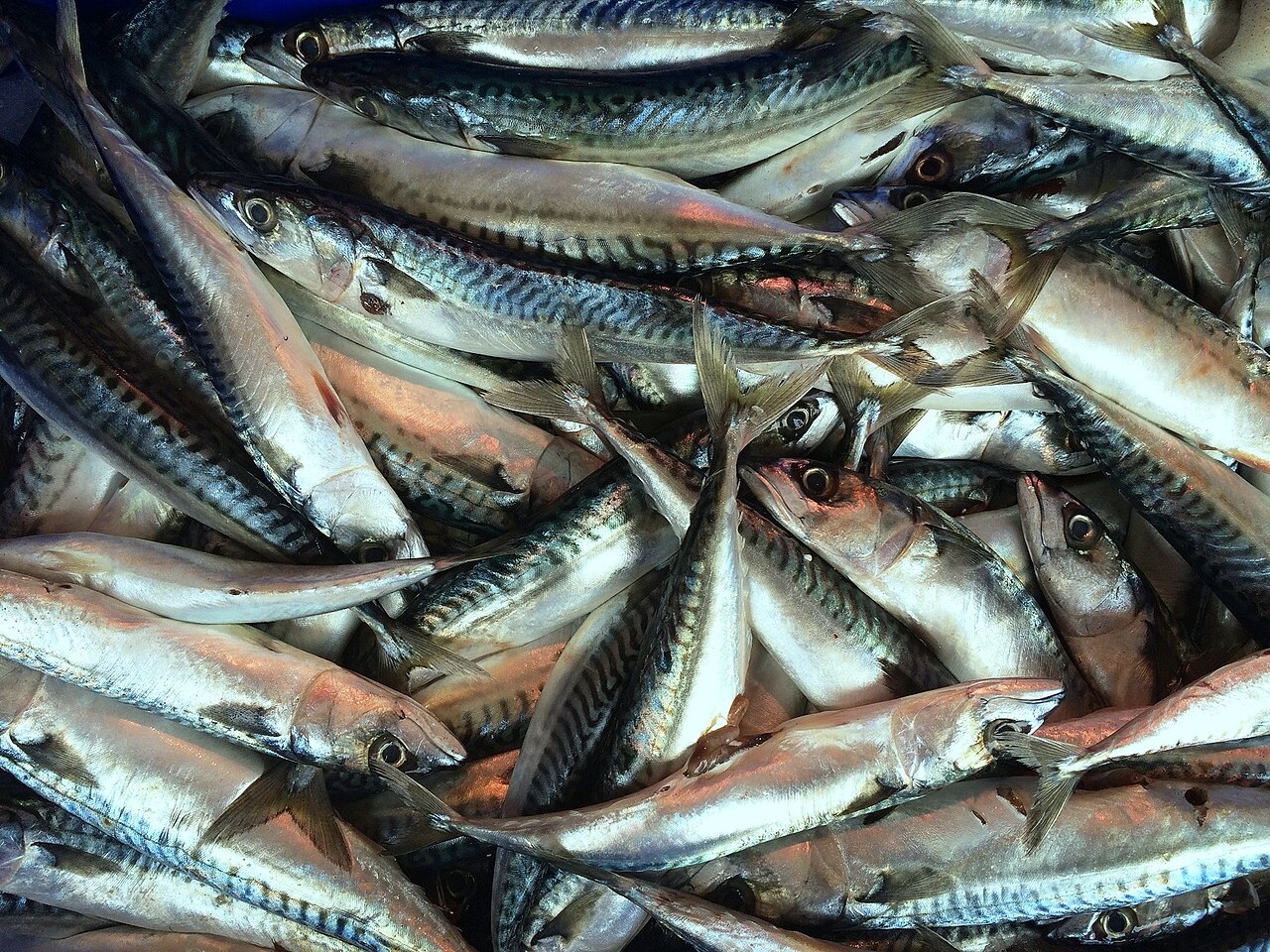
To fillet a whole round fish such as a mackerel or sea bass, scale it, take off the head, open the belly and clean it out, then run the knife along the backbone from both edges until each fillet comes free. Japanese cooks call this three-piece filleting, sanmai oroshi: two fillets and the frame. Finish by slicing away the belly bones, pulling the pin bones with tweezers and, if you want, taking off the skin. Keep the fish cold from shop to board.
Choose and keep the fish
The FDA’s signs of a fresh whole fish are firm flesh that springs back when pressed, red gills with no odor, and eyes that are clear and shiny. It should smell fresh and mild, not fishy, sour or ammonia-like. Put it on ice or in the refrigerator soon after buying it, and do not leave it out for more than 2 hours, or 1 hour when it is above 90°F.
Work on a board kept for raw meat and seafood, as USDA’s Food Safety and Inspection Service suggests; our guide to the cutting board for raw meat covers that setup. Have paper towels and a bowl or bag for the scraps ready before you start.
Scale, take off the head, gut
- Scale. Leiths puts the fish head first into a large plastic bag to catch the scales, then pushes the back of a knife from tail toward head so the scales flip off. Nippon.com’s horse mackerel guide holds the knife perpendicular to the side and scrapes. Do both sides.
- Trim the fins. Kitchen scissors cut off the fins neatly. Leiths leaves the dorsal fin on.
- Take off the head. Set the edge just behind the pectoral fin and gills, angle the blade, and cut down through the backbone to take the head off, as the Nippon.com guide does. On a small fish a deba does this with its weight, set in place and pressed, not swung like a cleaver.
- Gut. Put the knife tip into the vent and make a shallow cut along the belly toward the head, then pull out the innards.
- Clear the blood line. Leiths breaks the dark blood line under the backbone with the handle of a teaspoon and scrapes it out.
- Rinse and dry. Rinse the fish and the belly under cold running water to wash away scales and blood, then pat it dry.
Three-piece filleting along the backbone
Sushi Walker describes sanmai oroshi as the most basic way to prepare fish in Japanese cooking: the body is divided into a right fillet, a left fillet and the central bone. When only one side has come off, the fish is in two pieces, nimai oroshi.
- Belly side. Lay the fish on its side. Cut along the belly, going in until the blade reaches the backbone.
- Back side. Turn the fish around and cut along the back the same way, down to the backbone.
- Free the fillet. Following the Nippon.com guide, cut along the backbone toward the tail, then turn the knife and slide it along the bone toward the head. Escoffier’s guide keeps the knife flush against the backbone and makes long, smooth cuts.
- Second side. Turn the fish over and repeat. You now have two fillets and the frame.
- Belly bones. Slide the knife under the belly bones on each fillet and slice them away in one thin piece.
Let the edge follow the bone. With a single-bevel knife, do not twist or pry to lift a fillet; if it resists, return to the cut and run the blade along the bone again.
Pin bones and skin
A fillet can still hold a row of pin bones down the middle. Find the tips by running a fingertip along the flesh, grip each one with fish bone tweezers and pull it out slowly in the direction it lies, not straight up. Sweep the fillet again by touch when you finish the row.
To skin a fillet, lay it skin side down, cut a small notch between the flesh and the skin at the tail end, and hold the skin. Escoffier’s guide holds the knife in the notch at about a 15 degree angle and slowly pulls the skin toward you.
Deba or fillet knife
The two knives approach the job from opposite ends. A deba is thick, stiff and single-bevel: its weight takes off the head and passes through small bones, and its stiffness follows the frame. It is not a cleaver, so keep it away from thick bones and frozen fish. A Western fillet knife is thin and flexible and bends to ride close to the frame, which suits long fillets and skinning; it should not be pushed through the backbone. Our boning knife vs fillet knife comparison covers the Western side.
Clean up
Wash your hands for at least 20 seconds with soap and warm water after handling raw fish, and wash the board, knife and counter with soap and hot water before you prepare cooked or ready-to-eat food, as the FDA advises. Cook the fillets to an internal temperature of 145°F, the FDA’s figure for most seafood. A wooden knife handle needs gentler care than the board; see how to clean a wa handle after fish prep. For other ingredients, browse all our how-to-cut guides.
Sources: FDA, Selecting and Serving Fresh and Frozen Seafood Safely (signs of a fresh whole fish, ice or refrigeration, the 2-hour limit, handwashing, washing boards, 145°F); USDA FSIS, Cutting Boards and Food Safety (separate board for raw meat, poultry and seafood); Leiths, How to Descale and Gut a Round Fish (bag, back of the knife, fins, blood line); Nippon.com, How to Fillet a Horse Mackerel (scaling, head, gutting, cuts to the backbone, belly bones); Sushi Walker, Sanmai Oroshi (three pieces, nimai oroshi); Escoffier, How to Fillet a Round Fish (knife flush to the backbone, long cuts, skinning).