To cut strawberries, rinse them with the green caps still on, pat them dry, then take the caps off with a twist or with the point of a small knife. Leave them whole, or set each berry on its flat top and cut it into halves, quarters or slices. For a fan, make thin cuts that stop short of the top and spread the slices open.
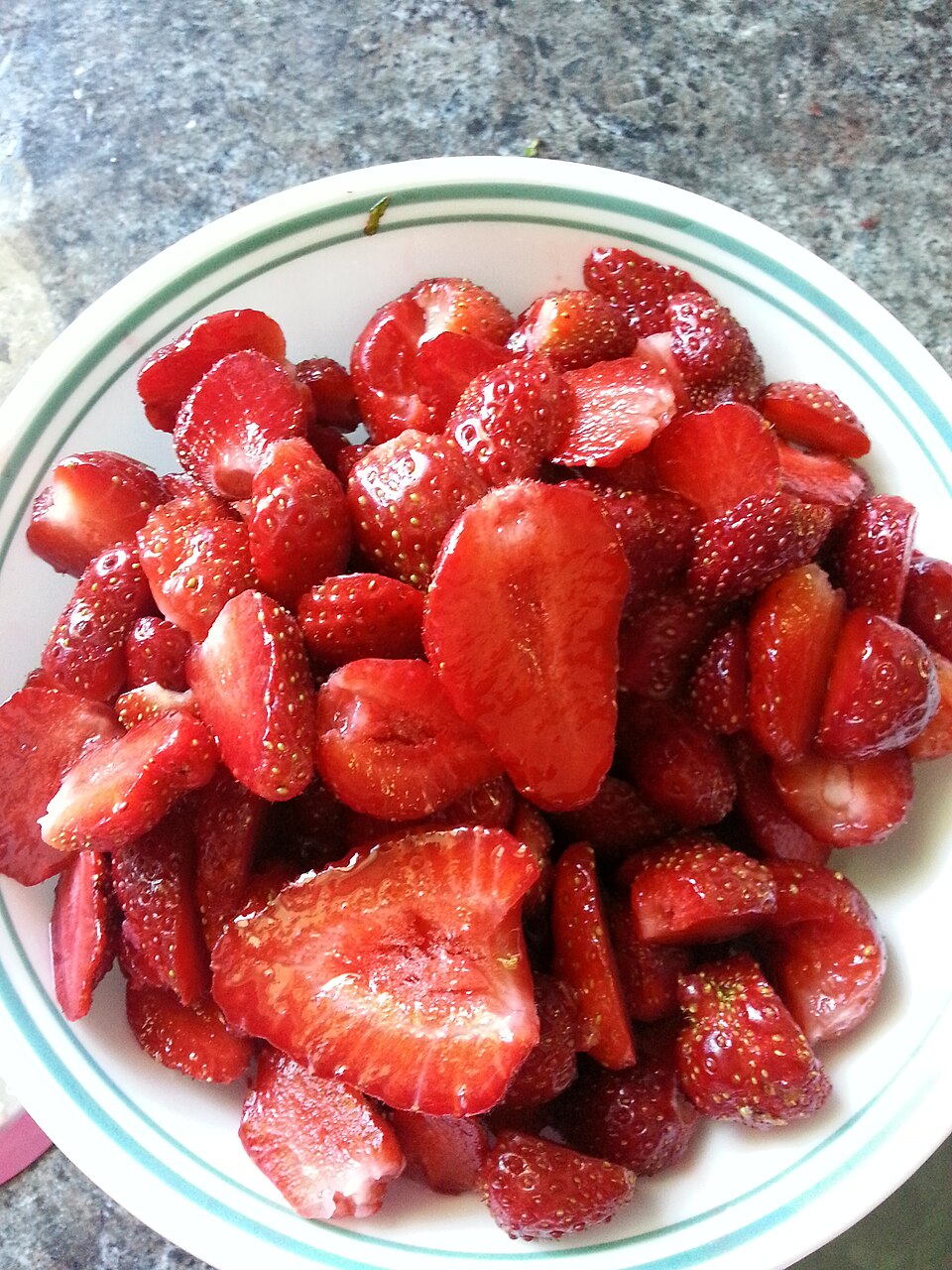
Wash just before you use them
The California Strawberry Commission says strawberries should be refrigerated and kept dry until just before serving, so wash only the berries you are about to eat or cook. Its advice is to rinse them under cool, running water with the green stems still attached, then gently blot them dry. Berries should not be scrubbed, it adds, and it does not recommend soaking them in salt water.
The FDA’s general advice for produce is the same in outline: rub it gently under plain running water, skip soap and produce washes, and dry it with a clean cloth or paper towel. Wash your hands before and after.
Hull them: three ways
The California Strawberry Commission describes removing the caps “with a light twist or with the point of a knife,” or slicing the stem off the top of the berry. Which one suits depends on the berry and what you are making.
- Slice off the top. Hold the berry on the board and cut straight across just below the leaves. It is the quickest way and leaves a flat base for cutting, at the cost of a thin slice of fruit.
- Cut out the cap with the tip. Push the point of a paring knife in at an angle beside the stem, then turn the berry against the blade so the knife cuts a small cone around the white core under the cap. Lift the cone out. This keeps the shoulders of the berry, which matters when it will be served whole or dipped.
- Twist. On a ripe berry the cap may come away with a light twist. If it tears the flesh, go back to the knife.
Cut away any bruised or damaged spots at the same time; the Commission advises trimming those areas before preparing or eating produce.
Halves and quarters
- Stand it on its cut top. The flat end from hulling keeps the berry from rolling.
- Halve it. Cut down through the point. Each half now has a flat face to rest on.
- Quarter it. Lay each half flat and cut it again from top to point. Very large berries can go into sixths the same way.
Slices for cereal, salads and shortcake
The Commission suggests sliced strawberries for cereals and salads. For even slices, lay a halved berry cut side down and slice from the point back toward the top, keeping the slices about the same thickness so they look tidy in a bowl or on a cake. For rounds, lay a whole hulled berry on its side and slice across it. Wipe the board between batches, because the juice makes the berries slide.
Fans for a plate or dessert
- Keep the cap on. The leafy top holds the slices together, so wash and dry the berry but do not hull it.
- Cut thin slices that stop short. Lay the berry on its side and make four or five lengthwise cuts from the point toward the cap, stopping just before the leaves.
- Spread them. Press gently on the slices with a fingertip so they open into a fan.
Store and serve
Keep uncut berries in the refrigerator, in their original clamshell or in an airtight container lined with a paper towel, as the Commission suggests, and wash them only when you need them. It also notes that strawberries taste best served at room temperature, so take them out a little while before you serve them.
Pieces for a young child
The CDC lists uncut grapes, berries, cherries and melon balls among potential choking hazards for young children, and says cutting food into smaller pieces and mashing foods can help prevent choking. The NHS advises cutting small round fruits, naming strawberries among them, into quarters (4 small pieces), and always supervising babies and young children while they eat.
Which knife and board
Hulling is close, small work, and a paring knife suits it; a petty knife handles the slicing and fanning with a slightly longer stroke. Our guides to paring vs utility knives and the petty knife explain where each fits. A small board is enough for a basket of berries; see the cutting board size guide. If you are new to a knife, our knife skills for beginners guide covers the claw grip for the guiding hand. For other fruit and vegetables, browse all our how-to-cut guides.
Sources: California Strawberry Commission, Select and Store Strawberries (rinse with stems on, blot dry, remove caps with a light twist or the point of a knife, keep dry until just before serving, sliced for cereals and salads); California Strawberry Commission, FAQ (rinse under cool running water before preparing, do not scrub, no salt-water soak, slice stem off the top, cut away damaged areas, refrigerate in the clamshell or a lined container, best at room temperature); FDA, 7 Tips for Cleaning Fruits, Vegetables (wash hands, plain running water, no soap or produce wash, dry); CDC, Choking Hazards (uncut berries, cutting and mashing); NHS, Preparing food safely for babies (quarter small round fruits including strawberries, supervise).