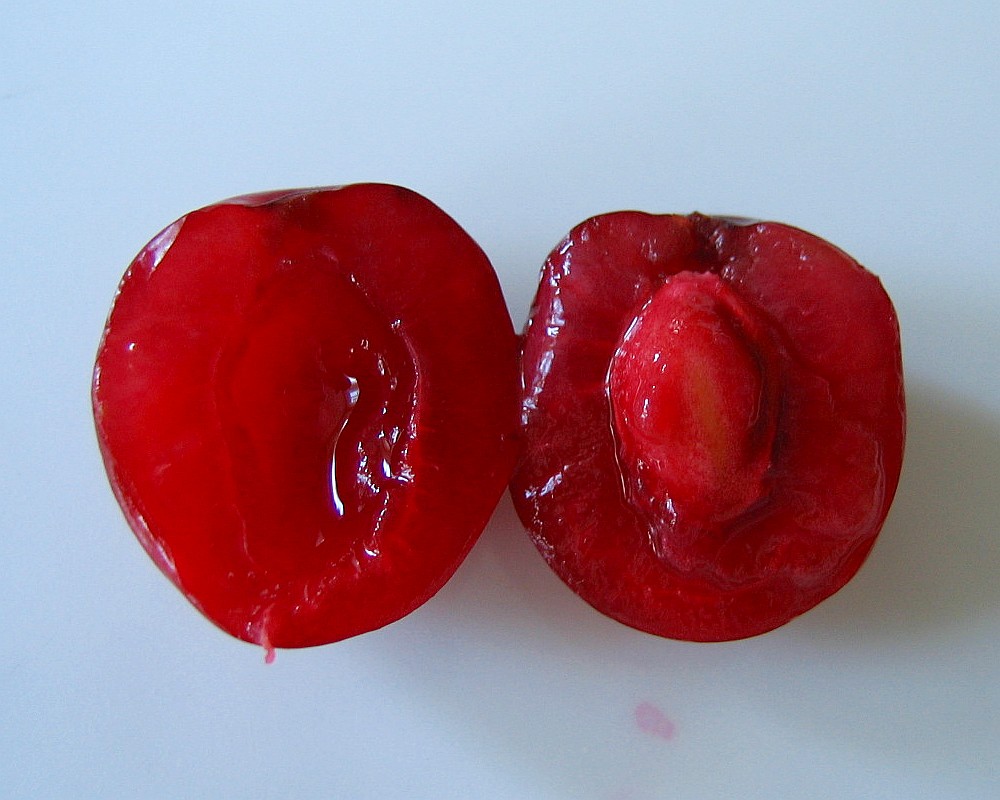
To pit cherries with a knife, pull off the stem, cut down to the pit and run the knife all the way around it, twist the two halves apart, then lift the pit out with the tip of the knife. You end up with pitted halves. If you want the cherries whole, use a cherry pitter, or push the pit out with a straw over the neck of a bottle.
Choose, store and wash them
Washington State University Extension advises choosing firm, dense cherries with vibrant color and a shiny look, and avoiding wrinkled or soft fruit, dull skins and dried stems, which indicate overripe fruit. It recommends refrigerating cherries as soon as possible in a plastic bag or container, and washing them and removing the stems just before eating.
When you are ready, rinse them under running water. The FDA’s general advice for produce is to rub it gently under plain running water, with no soap or produce wash, and dry it with a clean cloth or paper towel. Colorado State University Extension’s cherry instructions follow the same order: stem, sort and wash the cherries, dry them with a clean paper towel, then remove the pits.
Pit them with a paring knife
This method needs nothing but a small knife and a board, and it is the one to use when the recipe wants halves anyway.
- Stem it. Pull off the stem so the stem end shows a small dimple.
- Cut around the pit. Hold the cherry on the board with your fingertips and set the knife at the dimple. Cut down until you feel the pit, then turn the cherry against the blade so the edge travels all the way around it, keeping contact with the pit.
- Twist it open. Hold one half in each hand and twist in opposite directions. One half comes away clean; the pit stays in the other.
- Lift out the pit. Work the knife tip under the pit and flick it out, or pinch it out with your fingers if it is loose.
Firm cherries hold their shape best. If a soft one tears, pull the pit out with your fingers over a bowl rather than squeezing it on the board.
Halves, quarters and chopped cherries
For salads and yogurt, halves are usually enough. To quarter, lay each pitted half cut side down and cut it again from stem end to tip. For chopped cherries in a batter or a relish, line up several halves cut side down and slice across them.
Light-colored cherries such as Rainiers can brown once they are cut; WSU mentions an anti-darkening agent as an option when preserving light cherries. For fresh use, pit them close to serving.
Use a pitter when you need whole cherries
Cook’s Illustrated describes a cherry pitter as making the job “quick and simple,” and it is the tool to reach for when the cherries must stay whole, as in a clafoutis, or when there are a lot of them. A hand pitter holds the cherry in a small cup and pushes a plunger through it, taking the pit out of the other side.
Without one, the Cook’s Illustrated test kitchen tried a chopstick over a wine bottle, a bent paper clip and an upturned funnel, and found a straw over the mouth of a wine bottle worked best. The straw’s hollow end grips the pit, the bottle neck holds the cherry steady (they note a beer bottle works too), and the bottle catches the pits and juice.
Keep the juice under control
Cherry juice is dark and runs as soon as the fruit is opened. Pit over a bowl or on a board you are happy to wash straight away, and keep a damp cloth nearby for your hands and the knife handle.
Pieces for a young child
The CDC lists uncut grapes, berries, cherries and melon balls among potential choking hazards for young children, and says cutting food into smaller pieces and mashing foods can help prevent choking. The NHS advises always removing hard pips or stones from fruit, cutting small round fruits such as cherries into quarters (4 small pieces), and always supervising babies and young children while they eat.
Which knife and board
A paring knife suits cutting around a pit, where the blade works close to a small, round piece of fruit; our guide to paring vs utility knives explains why a short blade is easier to control there. A petty knife is useful for slicing and chopping the pitted halves; see what a petty knife is for. A small board is plenty; see the cutting board size guide. For other fruit and vegetables, browse all our how-to-cut guides.
Sources: Washington State University Skagit County Extension, Cherries (selection, refrigerate promptly, wash and stem just before eating, anti-darkening agent for light cherries); Colorado State University Extension, PreserveSmart: Cherries (stem, sort, wash, dry, pit); Cook’s Illustrated, Pitting Cherries Without a Pitter (pitter, wine bottle and straw); FDA, 7 Tips for Cleaning Fruits, Vegetables (plain running water, no soap, dry); CDC, Choking Hazards (uncut cherries, cutting and mashing); NHS, Preparing food safely for babies (remove stones, quarter small round fruits, supervise).