To cut radishes, scrub them, trim off the leafy top and the thin root tail, and leave the skin on. Then cut for the dish: thin rounds for salads and tacos, halves or quarters for a vegetable tray or the roasting pan, or matchsticks for slaws and garnishes. Halve a radish before you slice it whenever you can, so it sits on a flat face instead of rolling.
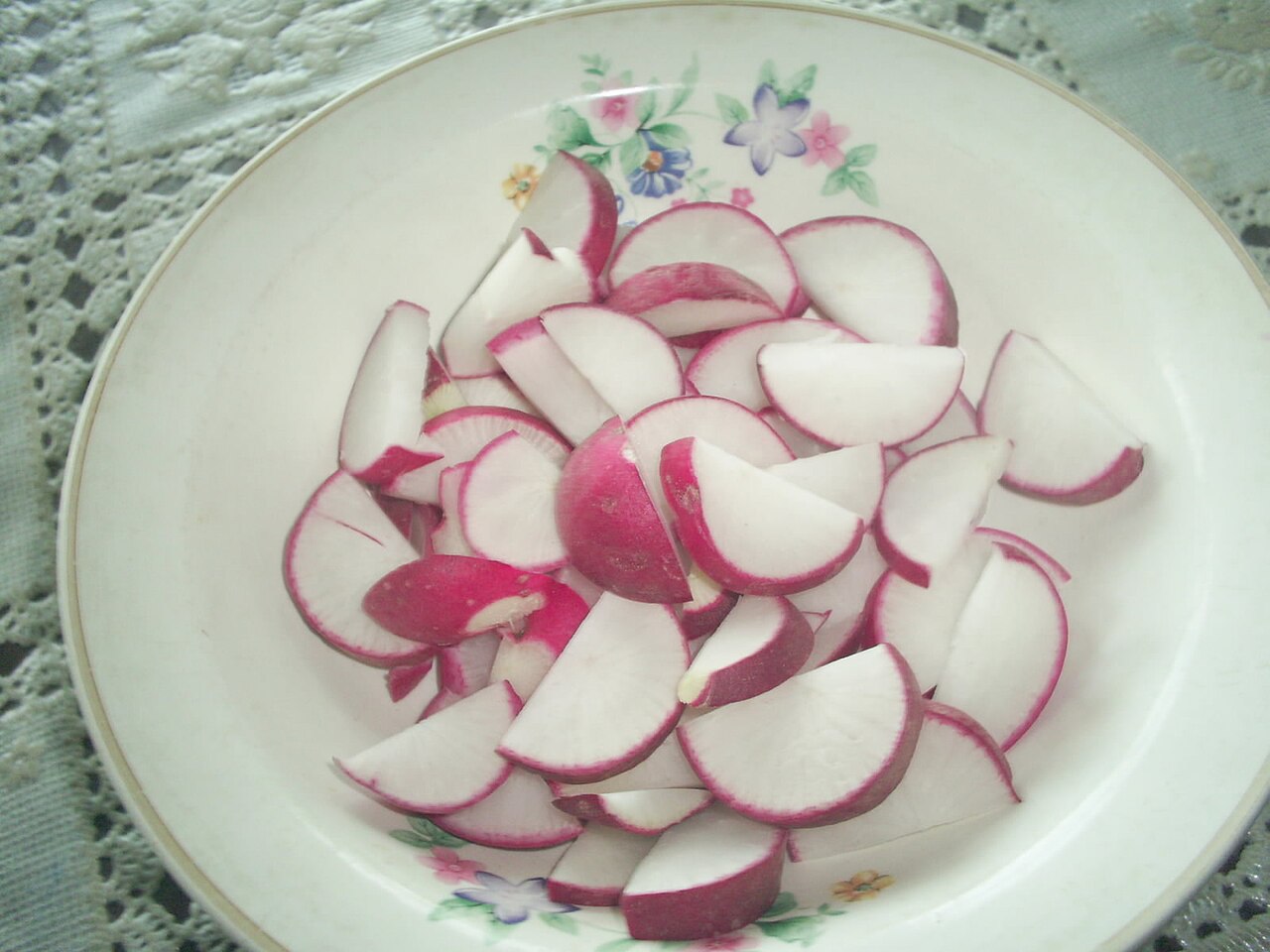
This guide is for the small round radishes sold in bunches, such as red globe radishes. Daikon is a long winter radish that is peeled and cut in sections; it has its own guide, how to cut daikon.
Wash, top and tail
- Take off the greens. The Capital Area Food Bank’s produce guide says to remove the leaves from the roots and store them separately, and notes that the greens are edible and taste peppery. Illinois Extension also suggests eating them.
- Scrub. Illinois Extension scrubs radishes under cold running water with a stiff vegetable brush. Soil collects around the base of the leaves, so give that end an extra pass.
- Trim both ends. Cut a thin slice off the stem end and cut off the root tail. Illinois Extension’s order is to pare away the top and root end, then slice, dice, shred, or serve whole.
- Leave the skin on. Illinois Extension says not to peel summer or black radishes. The food bank guide calls peeling optional and notes that the skin carries most of the flavor.
Make a flat face first
A whole radish is small, round and slippery, which is the shape most likely to roll under a knife. Mississippi State University Extension’s knife basics give the general fix for round foods: cut them in half first, lay the flat side down, then keep cutting. With a radish, halve it from the stem end to the root end, set both halves cut side down, and work from there. Tuck the fingers of your holding hand toward your palm, as the same advice says, because there is very little radish between them and the edge.
Cut for the dish
- Thin rounds. For salads, sandwiches, tacos and soups such as pozole, slice a whole radish straight across into thin coins. If it rocks, shave a thin strip off one side and rest it on that face. Hold it by the stem end and stop when the last piece is too small to hold; slice that stub flat side down, or eat it. The food bank guide suggests adding sliced raw radishes to salads and sandwiches.
- Half-moons. Slice the flat-side-down halves across for half-moons. They stay put on the board, so this is the quicker way to slice a whole bunch.
- Halves and quarters. For a vegetable tray, a charcuterie board or dipping, leave small radishes whole or halved and cut larger ones into quarters through the root end so each piece keeps some of the red skin. The same quarters work for roasting; Illinois Extension suggests roasting radishes if you do not like their spicy raw taste. Cut them to a similar size so they cook evenly.
- Matchsticks. Cut thin slices from the length of a halved radish, stack two or three, and cut them into thin sticks. The plank, stack and slice sequence is the same one shown in our guide to julienning carrots; a radish is short, so keep the stacks low.
- Diced. Cut the matchsticks across into small dice for salsas and grain salads.
Radish roses and other carved garnishes are a separate craft and are not covered here.
Paper-thin slices
For very thin, even rounds, a sharp knife and a slow stroke will do, but a mandoline is quicker. Radishes are small, so the last third of each one is where fingers get close to the blade; read our guide to using a mandoline slicer before you start, and finish the stub with a knife.
Storing radishes and greens
The Capital Area Food Bank guide keeps radishes in the refrigerator for up to 2 weeks, with the greens removed and stored separately. Illinois Extension says summer radishes do not freeze well because of their high water content, so buy what you will use fresh.
Which knife
A small knife suits a handful of radishes. Our guide to the petty knife lists slicing a few radishes among the small jobs it handles. For a large bunch, a nakiri or santoku lets you slice several halves lined up in a row. Radishes are crisp but not hard, so there is no need for force; let the edge slice rather than pressing straight down. For other vegetables, browse all our how-to-cut guides.
Sources: Illinois Extension, Preparing Radishes (eat the greens, scrub with a stiff brush under cold running water, do not peel summer or black radishes, pare away the top and root end then slice, dice, shred or serve whole, roasting for sweetness, summer radishes do not freeze well, always peel daikon); Capital Area Food Bank, Radishes produce guide (remove the greens and store separately, peppery greens, refrigerate up to 2 weeks, remove the tip and stem end, peeling optional, sliced raw radishes in salads and sandwiches); Mississippi State University Extension, Kitchen Knife Basics (halve round foods and lay the flat side down, tuck the fingers in).