To cut fresh figs, rinse them gently just before you use them, trim off the hard stem, then cut each fig from the stem end down to the base into halves or quarters, or lay it on its side for thin rounds. The skin, seeds and flesh are all edible, so there is nothing to peel or core. Ripe figs are soft, so the work is mostly about a sharp knife and a light touch.
Pick figs that are ready
California Figs advises choosing plump, fragrant figs that have a little give when touched: soft and yielding, but not mushy. If a fig smells slightly sour, it has already begun to ferment, and figs past their prime start to collapse inward and lose their round shape. California Figs gives May to November as the season for fresh figs.
Ohio State University Extension notes that fresh figs tend to be rare in stores because they are so delicate and perishable. The skin is fragile and often scarred by leaves rubbing against the fruit as it grows; those marks do not hurt the flesh inside.
Store, then wash just before eating
California Figs says fresh figs should be kept refrigerated, ideally at 32 to 36°F, where they typically last 5 to 7 days. Store them in a shallow container so they are not piled on each other, and wash them just before eating rather than before storing. Ohio State Extension’s advice is simpler still: use fresh figs as soon as possible.
To wash, follow the FDA: rub each fig gently under plain running water, with no soap or produce wash, then pat it dry with a clean cloth or paper towel. With figs, gently is the important word.
Trim the stem
California Figs’ instruction is to trim off the stem and eat the rest. The stem is digestible, they add, but they recommend removing it because of its hard, chewy texture. Lay the fig on its side and cut the stem off where it meets the fruit, taking as little of the fig with it as you can. If the base has a dry spot, trim that off too.
Halves and quarters
- Stand it up. Set the trimmed fig on its base, stem end up.
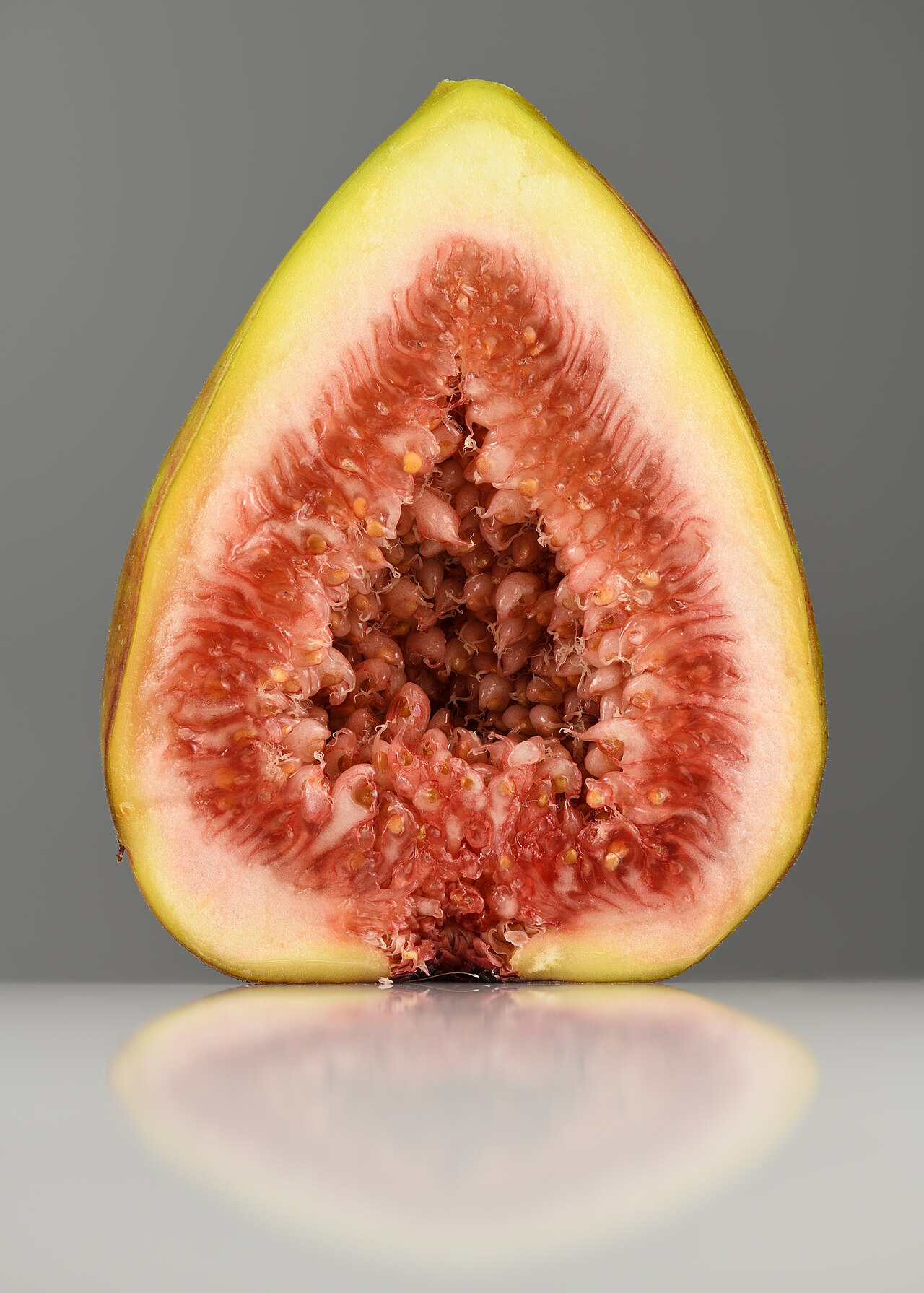
- Halve it. Cut straight down through the center, from the stem end to the base, with one slicing stroke rather than pressing down. Halves show off the pink or red center, as in the photo above.
- Quarter it. Lay each half cut side down and cut it in half again lengthwise.
Halves suit stuffing and baking; quarters suit salads and cheese boards. Ohio State Extension suggests eating figs raw or paired with a sharp cheese, or stuffing them with a sharp hard cheese such as Manchego and baking them. California Figs suggests eating figs whole, or slicing or quartering them for salads.
Thin rounds
Lay the trimmed fig on its side and slice across it from the stem end, using the length of the blade in a long, light stroke. Thin rounds suit salads and toast. Very ripe figs may tear when sliced thin; cut them into halves or quarters instead.
Handle them gently
A ripe fig dents under a fingertip, so hold it lightly with your fingertips curled and keep the cut face on the board after the first cut. Move cut pieces with the flat of the knife or a small spatula rather than pinching them. If you are cutting figs for a cheese board alongside other fruit, our guide to cutting a pear covers slices and wedges that hold up next to them.
Ohio State Extension also suggests stewing figs or adding them to a salad, which suits figs that are too soft for neat slices.
Freezing figs you will not eat in time
California Figs says individually quick-frozen fresh figs keep 3 to 6 months. Wash them, set aside any very soft ones to eat right away, and arrange whole ripe figs on a wax paper-lined baking sheet so they are not touching. Once they are frozen solid, move them to resealable plastic bags. Freezing changes the texture, and thawed figs are much softer; California Figs suggests simmering them in a sweet or savory liquid to serve.
Which knife and board
A petty knife suits halving, quartering and slicing figs, and a paring knife suits trimming stems; our guides to the petty knife and paring vs utility knives explain the difference. A sharp edge matters more than size here, because a dull one crushes soft fruit instead of cutting it. A small board is enough; see the cutting board size guide. For other fruit and vegetables, browse all our how-to-cut guides.
Sources: California Figs, FAQ (May to November season, refrigeration at 32 to 36°F for 5 to 7 days, ripeness signs, shallow container, wash just before eating, trim the stem, skin and seeds edible, whole, sliced or quartered, freezing); Ohio State University Extension, Here Figgy, Figgy (delicate and perishable, fragile scarred skin, use as soon as possible, raw with sharp cheese, stewed, salads, stuffed and baked); FDA, 7 Tips for Cleaning Fruits, Vegetables (rinse under running water, no soap, dry).