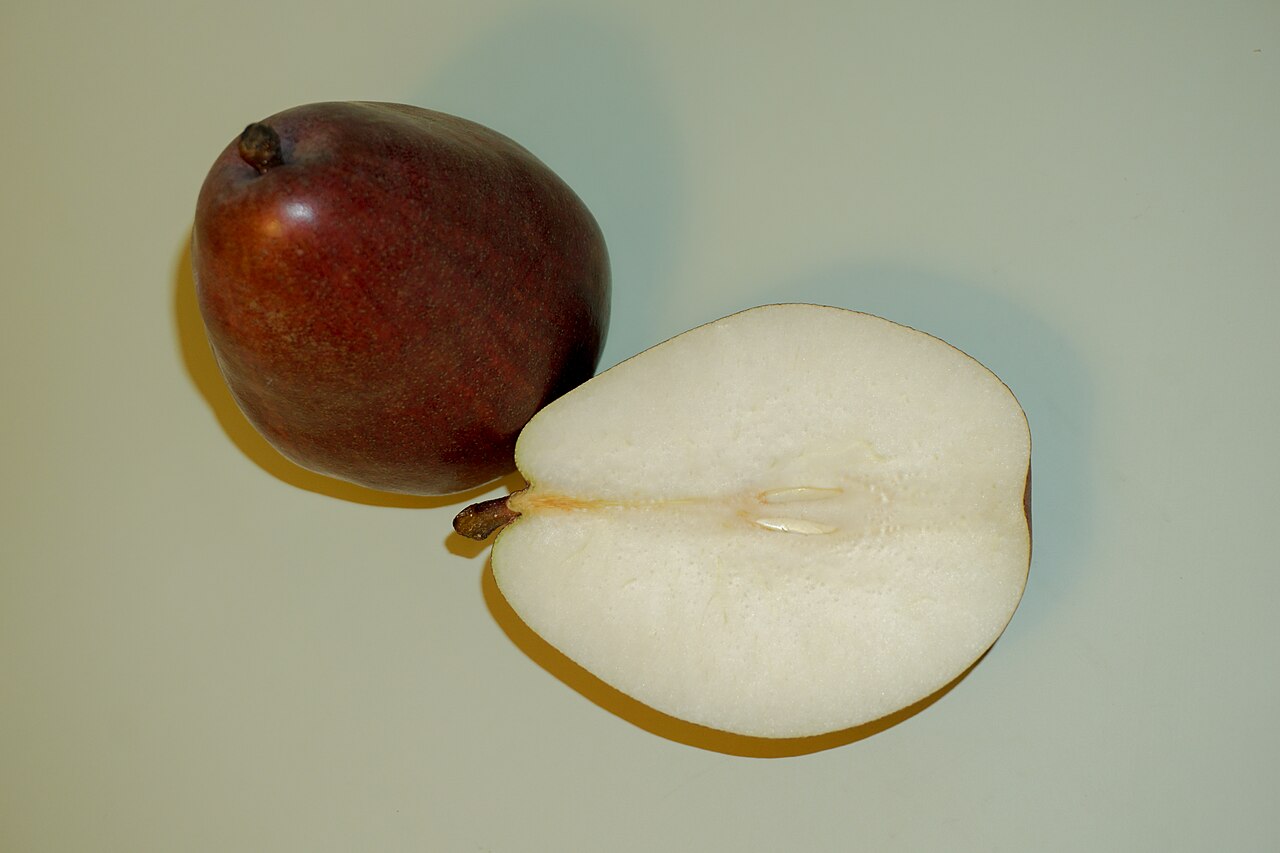
To cut a pear, halve it from stem to base, scoop out the seed core with a melon baller or a small spoon, and trim away the stem and the dry blossom end. Then lay each half flat and cut it into slices, wedges or cubes, or leave the halves whole for poaching and baking. A ripe pear is soft and slippery, so work from a flat cut face.
Check that it is ripe, at the neck
European pears are picked before they ripen, as Iowa State University Extension explains. USA Pears, the growers’ marketing group, says pears ripen from the inside out, so the place to test is the neck: press gently near the stem with your thumb, and if it gives a little, the pear is ready. If you wait until it is soft around the middle, they add, it will be overripe. Once ripe, they suggest keeping pears in the refrigerator, where they generally last 3 to 5 days.
For poaching, baking and grilling, USA Pears points to firmer varieties such as Bosc, Anjou or Concorde.
Wash, then halve and core
The FDA’s advice is to rinse produce before you peel it, so the knife does not carry dirt and bacteria onto the fruit. Rub the pear under running water with no soap, then pat it dry.
- Halve it. Cut down through the stem and the center of the base so each half shows the core.
- Scoop the core. A pear’s core is narrow up in the neck and wider in the round lower half. Scoop out the seed pocket with a melon baller, as USA Pears does for its baked stuffed pears, or with the tip of a teaspoon.
- Trim the ends. Cut a small V around the stem and another around the dry blossom end at the base. If a thin, fibrous line runs from the seed pocket up to the stem, take it out with the same shallow V cut.
The quarter-and-trim method in our guide to cutting an apple works on a firm pear too, but a ripe one tends to slide when cut in small pieces.
Slices and wedges for salads and cheese boards
- Set the half flat. Lay a cored half cut side down so it cannot roll.
- Cut wedges. Slice from the neck to the base, fanning the cuts slightly so each wedge is thicker at the bottom where the pear is wider. Three or four wedges per half suit a cheese board.
- Cut thin slices. For a salad, slice the same way but thinner. Leave the skin on if you like; USA Pears notes that russeted pears do not need peeling.
Cubes
Cut a cored half into lengthwise planks, lay the planks flat, cut them into strips, then cut across the strips. Keep the stack low, because ripe pear flesh slides.
Halves for poaching and baking
USA Pears’ sweet vermouth poached pears start with the fruit peeled, halved and cored. Peel the whole pear first, while it is still easy to hold, following the curve from the neck down. Then halve and scoop the core as above. If you are baking stuffed halves, USA Pears widens the scooped hollow to about 1½ inches so it holds the filling.
Stop cut pears from browning
Cut pear browns as the flesh meets the air. USA Pears suggests brushing or dipping the cut surfaces in a mild mix of half lemon juice and half water to slow it, and notes that lightly poaching pears also slows browning. For a cheese board, cut the pear last.
Asian pears
Iowa State University Extension says they ripen on the tree, need no ripening time and should be crisp and crunchy when eaten. Their firm flesh cuts more like an apple: quarter them and slice the core out of each quarter, or cut wedges around the core.
Pieces for a young child
The CDC’s choking advice for young children is general rather than about pears. It lists pieces of hard raw fruit, such as raw apples, among potential choking hazards, and says cutting food into smaller pieces and mashing foods can help prevent choking. It also advises preparing food in the right shape, size and texture for your child’s development.
Which knife and board
A petty knife suits halving and slicing a pear on the board, and a paring knife suits the small V cuts at the ends; our guides to the petty knife and paring vs utility knives explain the difference. A small board is enough; see the cutting board size guide. For peeling before you poach, see our vegetable peeler guide. For other fruit and vegetables, browse all our how-to-cut guides.
Sources: USA Pears, General Questions (ripen from the inside out, check the neck, soft around the middle means overripe, refrigerator 3 to 5 days, firmer varieties for heat, russeted skin, lemon-juice solution, poaching slows browning); USA Pears, Baked Stuffed Pears (cut lengthwise, scoop the core with a melon baller, widen to about 1½ inches); USA Pears, Sweet Vermouth Poached Pears (peel, halve and core); Iowa State University Extension, Harvesting and Ripening Pears (European pears picked unripe, Asian pears ripen on the tree and are eaten crisp); CDC, Choking Hazards (hard raw fruit, cutting and mashing, size and texture); FDA, 7 Tips for Cleaning Fruits, Vegetables (rinse before peeling, no soap, dry).