To cut asparagus, rinse the spears and remove the woody base: snap thin spears where they break on their own, or trim about an inch off thicker spears and peel the lower part of the stalk. Then leave the spears whole for roasting, grilling or steaming, or cut them into even lengths, thin coins or long bias pieces for stir-fries, pasta and salads.
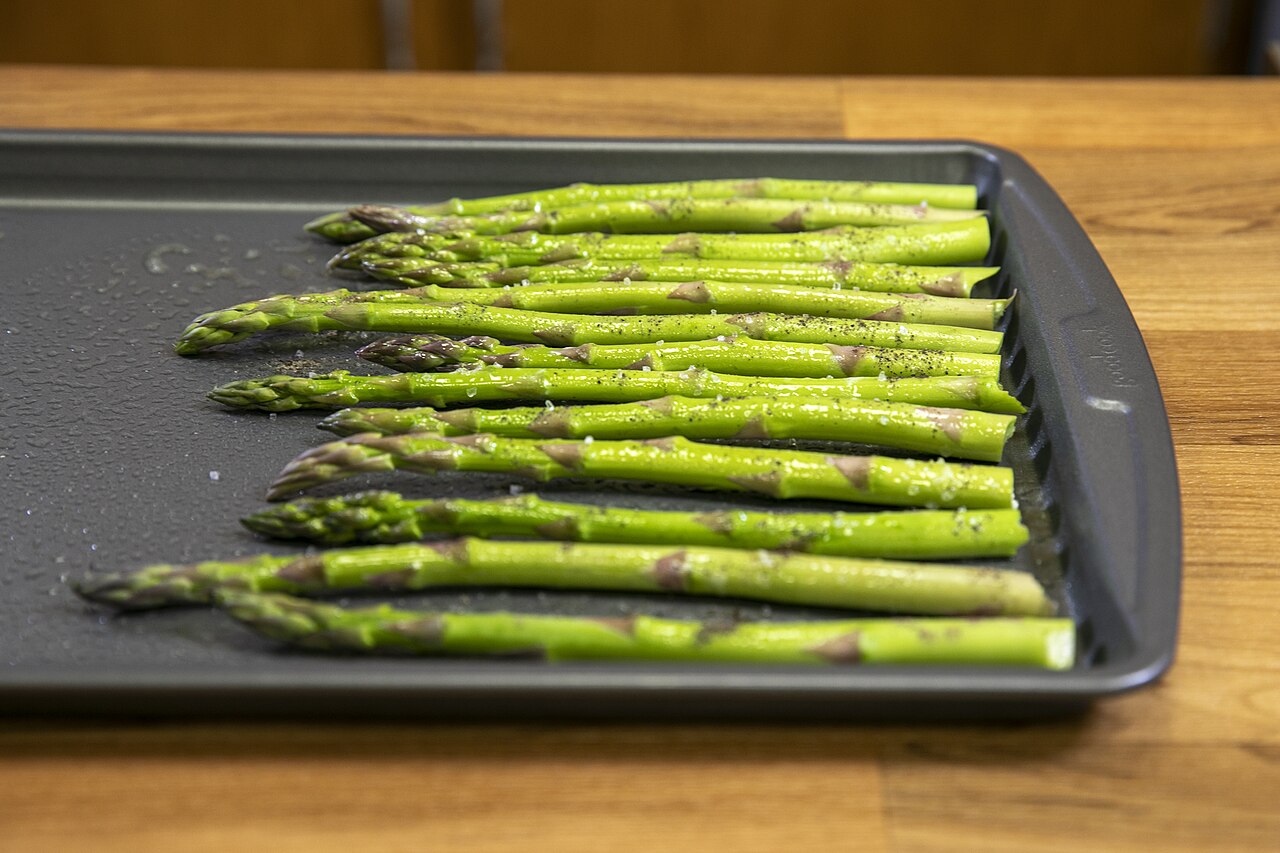
Rinse and sort the spears
Illinois Extension’s advice is to wash asparagus under cool running water before you trim it. A bunch often mixes thin and thick spears. Illinois Extension sorts spears into like sizes before freezing them; doing the same before you cook lets you snap the thin ones and trim and peel the thick ones.
Snap or trim the woody ends
Both methods are in common use, and the better one depends on the thickness of the spear.
- Snap thin spears. Hold the top half of a spear in one hand and the base in the other, and bend it until it breaks. Illinois Extension and Utah State University Extension both say it breaks where the tender part meets the woody end. Illinois notes that this produces a lot of waste, and suggests saving the tough bottoms for soup or stock.
- Trim and peel thick spears. America’s Test Kitchen trims 1 inch off the base of each spear and peels the lower half of the stalk. In their comparison, snapped spears lost an average of half their weight, while trimmed and peeled spears lost less than 30 percent, and the difference grew with thicker spears. Utah State says larger stalks may need the bottom third peeled to remove tough skin.
- Trim a whole bunch at once. Snap one spear to find where it turns woody. Line the rest up beside it on the board with the tips level, then cut straight across the whole row at that point.
Very thin spears, America’s Test Kitchen adds, tend to be tender and do not need peeling.
Peel thick stalks on the board
Lay the spear flat on the board and hold it by the tip. Run a vegetable peeler from the middle of the stalk down to the cut end, then roll the spear a little and repeat until the tough skin is gone all the way around. Supporting the spear on the board keeps it from snapping under the peeler. Illinois Extension suggests peeling an inch or two off the bottom end, and notes that the peelings can go into the cooking water.
Cut for the dish
- Whole spears. Leave trimmed spears whole for roasting, grilling or steaming. On a grill, lay them across the grate so they cannot fall through.
- Even lengths. For soups, frittatas and pasta, line up several trimmed spears and cut straight across into pieces of a similar length so they cook at the same rate.
- Bias pieces. For stir-fries, angle the knife across the spears instead of cutting straight across. The pieces come out longer, with more cut surface, the same diagonal cut used in our guide to cutting green onions. Utah State lists stir-fries, casseroles and salads among the dishes asparagus goes into.
- Thin coins. Slice across a trimmed spear into thin rounds for a salad. Utah State lists eating asparagus raw in salads alongside cooking it.
- Tips. Some recipes keep the tips whole or add them to the pan later. Cut each one off where the bud meets the stalk and keep the tips apart from the stalk pieces.
- Ribbons. Lay a thick, trimmed spear flat, hold it by the tip and draw a peeler along its length to shave long, thin strips for a raw salad.
Keep it fresh until you cut
Utah State says asparagus is best used the day you buy it, and that fresh asparagus should be used within two to three days. To store it for those few days, its lesson wraps the cut ends in a damp paper towel inside a plastic bag or plastic wrap.
Which knife, peeler and board
A gyuto or santoku handles a lined-up row of spears in one cut, and a petty knife is enough for trimming a few spears or cutting off tips; see our guide to the petty knife. For peeling thick stalks or shaving ribbons, see our vegetable peeler guide. Whole spears are long, so check the board fits them with room to work; the cutting board size guide explains how to measure. For other vegetables, browse all our how-to-cut guides.
Sources: Illinois Extension, Preparing Asparagus (wash under cool running water, trim an inch, peel an inch or two, bend until it snaps where tender meets tough, waste and saving bottoms for stock, peelings in the cooking water, sort into like sizes); Utah State University Extension, How to Nourish With Asparagus (snap where the woody part ends, peel the bottom third of larger stalks, stir-fries, casseroles and salads, raw in salads, use within two to three days, damp paper towel storage); America’s Test Kitchen, Prepping Asparagus (trim 1 inch and peel the lower half, half the weight lost by snapping versus under 30 percent, thicker spears, very thin spears need no peeling).