To cut winter squash, scrub and dry it, cut a thin slice off so it cannot roll, then halve it through the stem end with a large, sharp chef’s knife and scoop out the seeds with a spoon. Cut the halves into wedges or half-moons, or roast them as halves. Utah State University Extension notes that most winter squash are prepared in a similar way; what changes is the shape. Acorn squash is cut from a flat stem end, spaghetti squash is easier after a few minutes in the microwave, and kabocha follows the general method. For butternut, see our butternut squash guide.
Set up before the first cut
Scrub the squash under cool running water and dry it; Utah State Extension says not to use soap or dish detergent, and the FDA recommends a clean vegetable brush for firm produce and rinsing before you peel, so dirt is not carried from the knife into the flesh. Work on a dry board that does not slide; our guide to cutting board feet and non-slip grips covers how to stop it moving. Mississippi State Extension’s method starts by cutting a thin piece off the bottom or side so the squash cannot roll, and warns to keep the knife from slipping toward your hand.
By type
| Squash | How to open it | Then |
|---|---|---|
| Acorn | Cut about 1 inch off the stem end, stand it on that flat end and cut it in half (Utah State Extension) | Scrape out the seeds and slice each half into ½–1-inch half-moons. The skin is edible, so peeling is optional. |
| Spaghetti | Prick the skin all over with a fork, microwave 5 minutes to soften, trim both ends, then halve lengthwise (Utah State Extension) | Scrape out the seeds; the halves are ready to bake. |
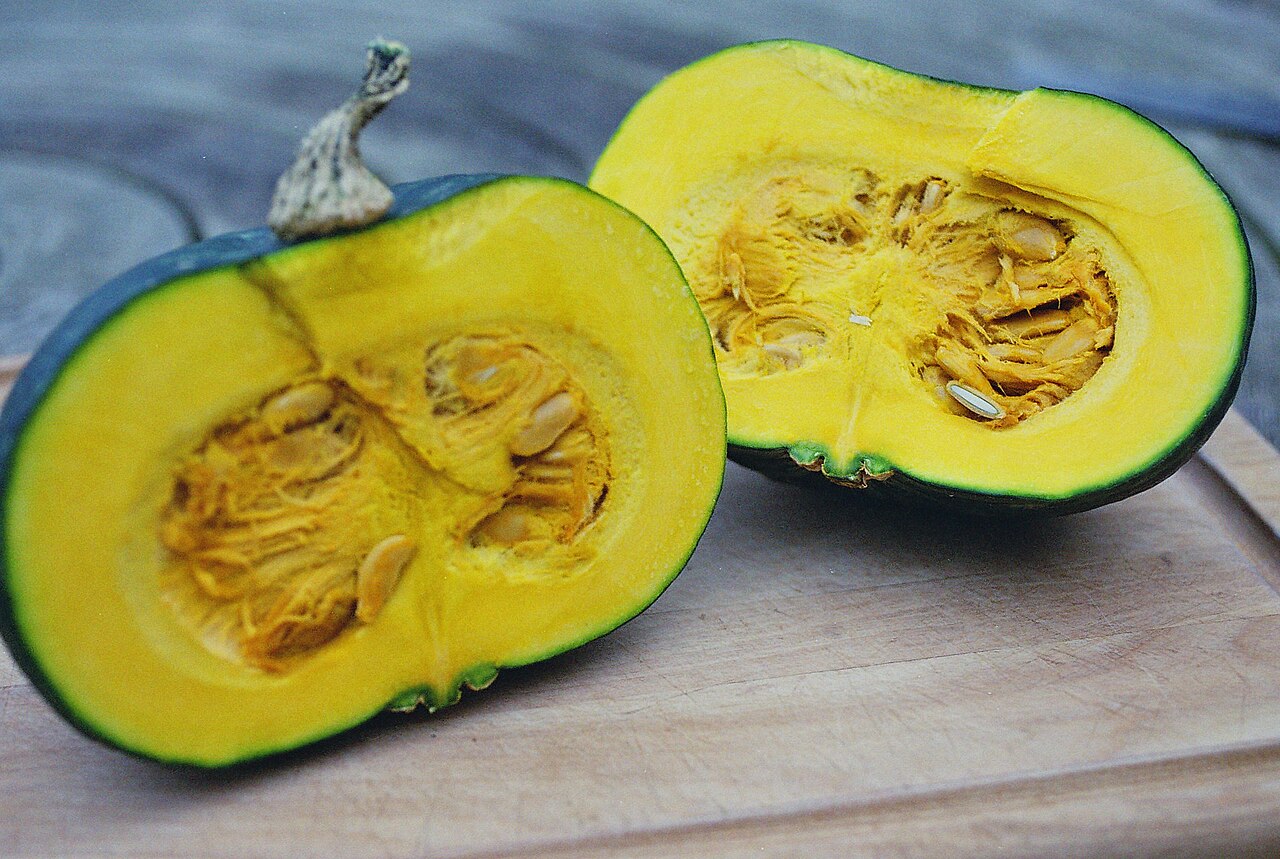
| Kabocha | Trim a flat base, then halve it through the stem end (the general method above) | Scoop the seeds and cut the halves into wedges, laying each wedge on a flat side before cutting it smaller. |
Kabocha is a Japanese variety of winter squash, sometimes sold as Japanese pumpkin. None of the extension sources we use gives it a separate cutting method. Like any round squash, give it a flat base before the first cut.
Step by step
- Make it stable. Trim a thin slice from the stem end or one side and set the squash on that flat face.
- Halve it. Set the knife on the middle of the squash and push straight down, keeping your guiding hand on the side of the squash and away from the blade path. Do not brace the squash against your palm, and if the blade is buried, do not rock or twist it.
- Scoop. Use a spoon to scrape out the seeds and stringy centre.
- Cut down. Lay each half cut-side down, then cut wedges, half-moons or slices. To cube, peel the wedges and cut them into sticks, then across. Mississippi State Extension peels in thin strips with a knife when a recipe calls for peeled squash.
When the knife stops
A dense squash can close around a blade. If it binds, stop, keep your fingers clear and work the knife back out along its entry path; then cut a smaller section or reset the squash on a wider flat face. Do not force it or lever the blade sideways. If a squash is too hard to cut safely, cook it larger: Utah State Extension pierces a small whole squash several times and microwaves it, or bakes halves cut-side down in a little water until tender.
The knife for this job
Mississippi State Extension calls for a large, sharp chef’s knife. A long gyuto gives you edge to finish the halving cut in one push; our gyuto size guide names large squash as one place a 240mm earns its length. Be honest about thin, hard Japanese edges, though: a squash that binds and invites twisting is exactly how they chip, as why Japanese knives chip explains, and a sturdier Western chef’s knife is the better tool for the hardest ones. Keep the guiding hand curled when you slice the halves; see how to hold a Japanese knife. A 196–255mm gyuto takes our Chef handle size in the wa handle size guide.
Store whole winter squash in a cool, dry place; Utah State Extension gives 50–55°F and up to 3 months, and says to wrap cut squash and refrigerate it.
Sources: Utah State University Extension, Winter Squash (washing without soap, acorn and spaghetti methods, microwaving, storage); Mississippi State University Extension, How to Prepare Winter Squash for Cooking (large chef’s knife, flat base, peeling in strips, slipping); FDA, 7 Tips for Cleaning Fruits, Vegetables (brush firm produce, rinse before peeling); Wikipedia, Kabocha (term).