To cut a butternut squash, wash and dry it, trim a thin slice from the bottom, then keep the squash lying on its side while you cut crosswise where the neck meets the bulb. Once separated, stand each shorter section on a fresh flat end if it sits securely. If it rocks, lay it on a broad flat side before peeling or cutting it smaller. The neck makes rounds or cubes, while the bulb needs to be halved lengthwise so you can scoop out the seeds. If the squash rocks or the knife stops, pause and reset it before continuing.
Before you start
Use a large, sharp chef’s knife, a dry board that does not slide, a vegetable peeler, and a spoon. Wash the squash under running water and dry it so the skin is easier to grip. A whole squash is awkward and hard-skinned, so keep it lying on its side for the first crosscut. Illinois Extension’s cubing method begins by trimming both ends and separating the neck from the bulb; Mississippi State Extension also advises making a flat surface so squash will not roll.
- Trim a thin base. Lay the squash on its side. Slice a thin piece from the bottom end, just enough to give it a flat resting face. If it rocks, reset it on a broader flat face rather than pressing harder.
- Separate the sections. Keep the squash horizontal and cut crosswise at the narrow waist where the neck meets the bulb. Set each section down on a newly cut face before continuing.
- Peel only the portion you need. Set the neck or bulb on a flat face and draw a vegetable peeler down its curve, turning the piece as needed. Keep the section supported by the board as you peel.
Cut the neck into slices or cubes
For rounds, place the peeled neck on its side and slice crosswise to the thickness your recipe calls for. To make half-moons, split the neck lengthwise, place the cut face down, then slice across. For cubes, cut the neck lengthwise into planks, cut the planks into sticks, then turn the sticks and crosscut into cubes. Use the recipe’s size as your guide.
Open and cut the bulb
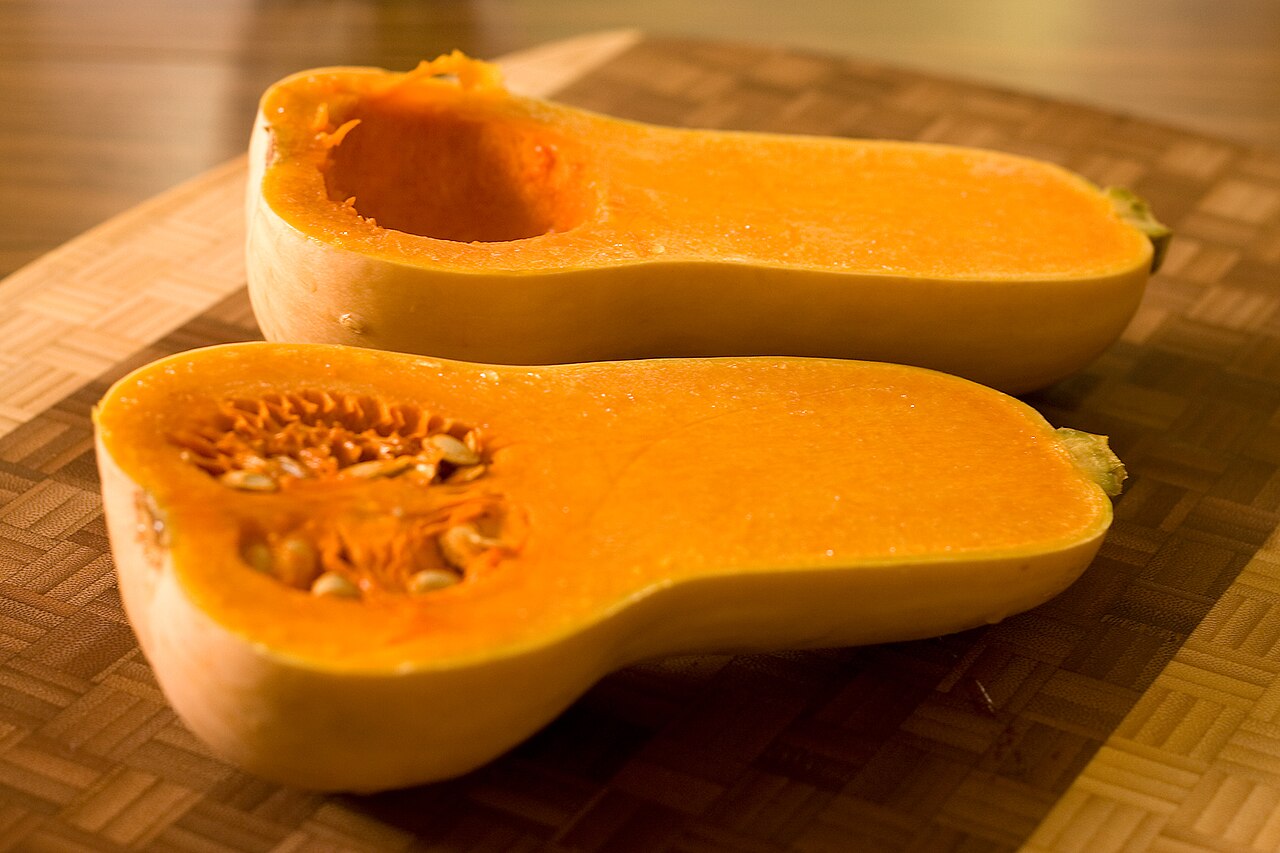
Stand the bulb on a fresh flat cut end and halve it lengthwise. Set each half cut-side up and scoop the seeds and stringy center with a spoon; Utah State University Extension describes this spoon-and-half approach for winter squash. Lay a half cut-side down before slicing it into crescents. To cube it, make lengthwise cuts into planks, cut the planks into sticks, then crosscut the sticks. The bulb pieces may vary slightly around the cavity; keep them stable rather than forcing exact uniformity.
If the squash feels difficult
Do not brace a slippery squash against your palm or force or twist a blade that has stopped. If you cannot cut it safely, choose a preparation method that cooks it in larger sections or use pre-cut squash; there is no need to cube it for every recipe.
Move cut pieces with a scraper or the broad side of the knife, keeping the edge turned away from your fingers. Refrigerate cut squash promptly and follow your recipe for cooking and storage. For everyday shape names such as strips, wedges and angled chunks, see our guide to vegetable cuts for named Japanese recipe shapes.