A knife that cuts to one side is not automatically bent or defective. The drift can come from the knife’s grind, the way it is held, the board or ingredient, or visible blade damage. Check the easy variables first, and keep your hands away from the edge while you do. For a squash-specific sequence that starts with a stable base, see our butternut squash cutting guide.
If you are unsure whether drift comes from the grind, setup or damage, use the Knife Problem Finder to choose a practical first check.
Check the setup
Set the board on a stable, level surface. Place a firm, flat piece of food on the board and keep it from rocking. Aim for one cut without twisting your wrist or pushing sideways. A slanted or rounded piece of food can make a straight knife path look crooked.
Repeat with a similar piece, changing only your grip or cut motion. If the drift changes with your movement, technique is likely contributing. Do not test with a loose or slippery piece, and do not hold food in your palm while cutting.
Check whether the knife is meant to steer
A single-bevel knife has its main grind on one side. Its asymmetric cross-section can steer the cut, and handedness affects whether that direction feels natural. The single-bevel and double-bevel guide explains that difference; the left-handed knife guide covers why a single-bevel knife may not suit every user.
Look at the blade faces and bevel from a safe distance, with the knife resting flat and the edge pointed away. Do not trace the edge with a finger or test it against a fingernail. If you do not know the grind, compare it with the manufacturer’s description or ask a qualified sharpener.
Look for visible damage, without trying to repair it
Stop using the knife if the blade is visibly bent, has a deep chip or crack, or moves at the handle. A damaged blade can behave unpredictably. Do not push it straight, pry with it, or sharpen across a large chip before someone has assessed it.
An otherwise intact knife that drifts only with one kind of cut may reflect its intended grind or the way the cut is being guided. A knife that suddenly starts steering, has visible damage, or cannot be safely controlled should be inspected by a professional.
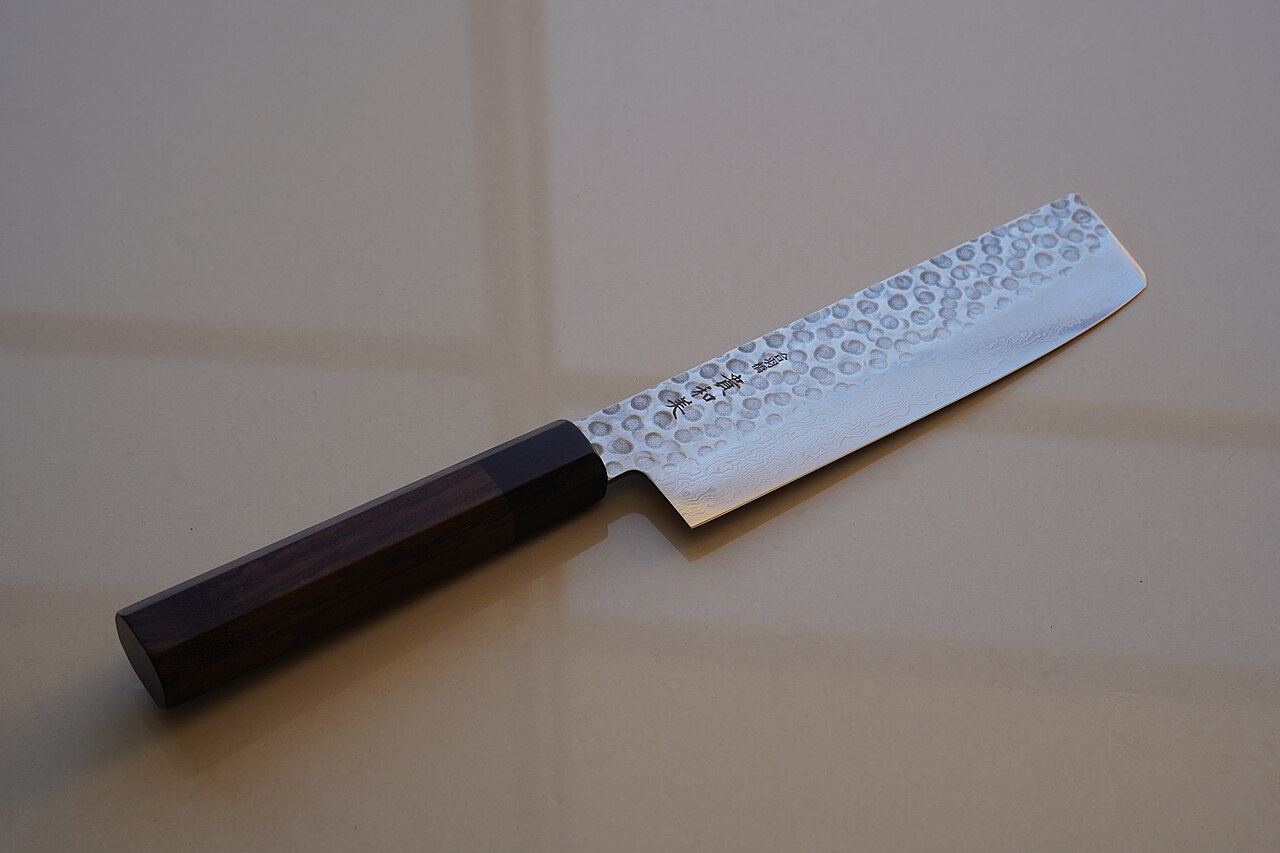
Japanese kitchen-knife research has documented different deformation patterns from nakiri and usuba cuts, consistent with the fact that blade cross-section affects how food moves during a cut (Okamura, 1975). That paper does not diagnose an individual knife. The useful next step is to describe the grind, direction of drift, and any visible damage to a qualified sharpener.
For a short reference to blade faces and cross-sections, see the knife anatomy guide.