To use a bamboo steamer, support it securely over boiling water, keep the food above the water, and leave a route for steam through the basket. Use a liner for sticky foods or a shallow heatproof dish for food with sauce. Close the lid, maintain the steam, check the food as your recipe directs, then clean and dry the basket and lid separately. For a focused comparison, see compare a bamboo steamer with a folding metal basket.
The equipment setup matters more than owning a special pot. Once you understand where the basket sits and how steam reaches the food, the same routine becomes useful for vegetables, dumplings and other dishes with their own cooking instructions.
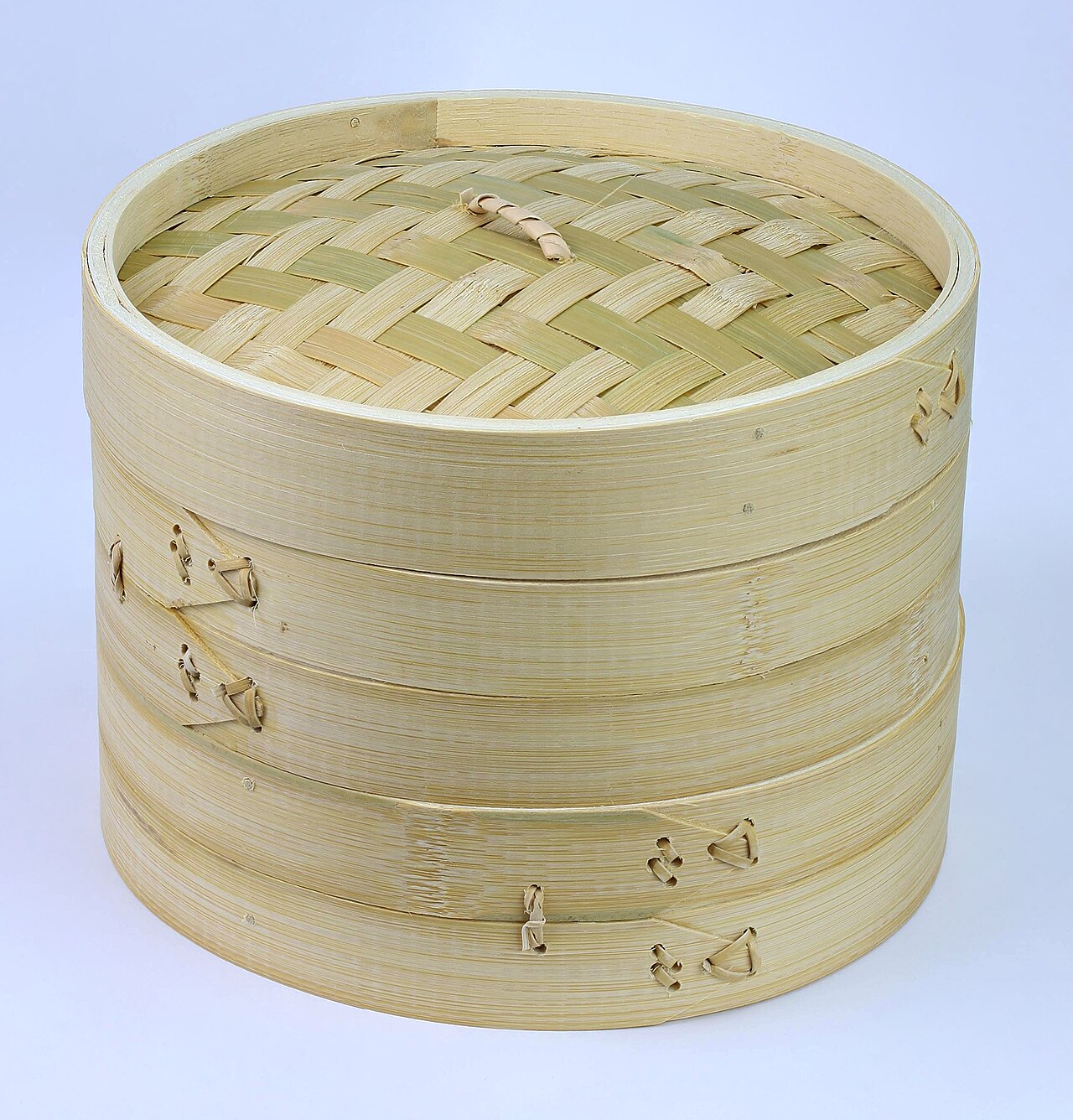
Fit the basket before heating the water
There are two common arrangements, and their water levels are different.
In an over-pot setup, the basket rests on a compatible pot rim or a steaming plate or ring. The support holds it above the water. Helen’s Asian Kitchen describes this arrangement: steam rises through the slats and is contained by the lid. A plate or ring helps when the basket and pot do not naturally fit together.
In a wok or wide-pan setup, some baskets are designed for their lower rim to sit in the water. The Joyce Chen user guide specifies this for its bamboo steamers, while keeping the boiling water from reaching the food. That is different from immersing the basket floor.
Assemble your chosen arrangement while everything is cold. Check that the basket is supported, the lid fits, and you can lift the basket without catching a handle or neighboring pan. Use the arrangement approved for your steamer; a basket balanced precariously over an ill-fitting saucepan is not ready to heat. There is no single water depth that works for both setups and every pot.
Choose a liner or a dish for the food
A liner prevents food from sticking to the slats. Parchment with openings, a suitable steaming cloth or cabbage leaves can serve this purpose. Keep paper within the basket so it cannot reach a flame. Use parchment intended for cooking; Kikkoman’s paper guide distinguishes it from wax paper and explains that its heat and time limits still apply.
For a homemade parchment liner, cut it to fit inside the basket and add openings rather than covering the floor with an unbroken sheet. Kikkoman’s seiro guide shows both a central opening and several smaller cuts; small openings are useful when food might fall through a large hole.
For seasoned tofu, fish or other food whose juices belong in the finished dish, a shallow heatproof plate may be more useful. Helen’s guidance recommends this approach. Choose a dish that leaves room around it for steam and below the lid for the food. A plate that fills the basket from wall to wall defeats that purpose. Our fukin and sarashi guide explains the cloth option in more detail.
Prepare the basket and arrange the tiers
Complete any first-use preparation supplied with the basket. Before cooking, Kikkoman’s method wets the basket and lid, then drains away the excess. This is preparation for steaming; it does not mean leaving the basket soaking after dinner.
Arrange food with spaces between the pieces. With two tiers, put slower-cooking ingredients below quicker ones, or add the quicker ingredients later. For a mixed vegetable meal, that means thinking about the firm root vegetables and tender leaves separately instead of expecting everything to finish together because it shares a basket.
A single tier is a useful starting point. It lets you learn the fit, water use and lid handling without lifting one loaded basket to reach another. Add the second tier when it serves the meal, rather than filling it because it came in the set.
Keep steam moving and check the food
Bring the water to a proper boil before starting the recipe’s steaming stage. Kikkoman describes maintaining a steady release of steam at the lid; crowding the basket or letting the water run low can interrupt the process.
Use a recipe for the particular food, quantity and starting condition. A basket containing chilled vegetables is not the same cooking task as one containing frozen filled dumplings. The basket tells you how to deliver steam; it does not supply a universal cooking time.
During longer cooks, check the water and replenish with hot water carefully. Joyce Chen specifically warns against letting the pan boil dry. Plan how you will access the water before cooking, so a heavy, hot stack does not become an obstacle halfway through.
Lift the lid with a clear place to put it
Have a suitable resting place and serving utensils ready. At the end, turn off the heat. Joyce Chen directs users to open the lid away from the face and body and allow steam to escape before moving the food.
A dish inside the basket will also be hot. Use appropriate heat protection or a plate lifter rather than trying to pinch a smooth plate between bare fingertips. Separate the steps: release the steam, set down the lid, then lift or serve the food.
Clean, dry and solve the recurring problems
Once the parts have cooled enough to handle, remove food residue and clean them according to the basket’s directions. Helen’s instructions use water and a brush where necessary, and advise against scented soaps because bamboo can absorb the fragrance. Air-dry thoroughly and store with ventilation. Reassembling a damp stack makes it harder to see whether each part has dried.
If food sticks, review the liner and whether the food needed a dish. If cooking is uneven, check crowding, piece size and tier order before assuming the basket is defective. If steam weakens, inspect the water supply and fit. If the basket repeatedly stays damp, change the drying space rather than putting it into a closed cupboard sooner.
If a bamboo steamer smells musty or has visible spots
First remove food residue, separate the basket and lid, and inspect them once they are cool and dry enough to handle. For routine washing, follow the basket maker’s instructions. Yoshifuji Kogei recommends water or lukewarm water for ordinary cleaning; if grease calls for mild detergent, rinse it thoroughly and dry the parts in a well-ventilated place. It also recommends a liner, plate or leaves to reduce food residue and odor next time.
Treat visible mold as a separate question. Yoshifuji Kogei says very light surface growth can be assessed and cared for, but recommends stopping use when growth is widespread, appears to have entered the bamboo, or a strong smell remains. If you cannot judge the condition, stop using the basket and ask its maker for advice with a photo. A general cleaning recipe cannot establish that growth inside the bamboo has been removed.
A bamboo steamer earns its place when setup and cleanup are manageable parts of the meal. The wider kitchen tools guide applies that same test to equipment you expect to use for years.