A lifted or peeling surface does not reveal what coating is present, why it changed or whether the handle needs refitting. Refitting concerns the handle’s attachment and geometry; a raised surface layer is primarily a finish-identification problem unless fit or structure has also changed. Stop adding products until those questions are separated.
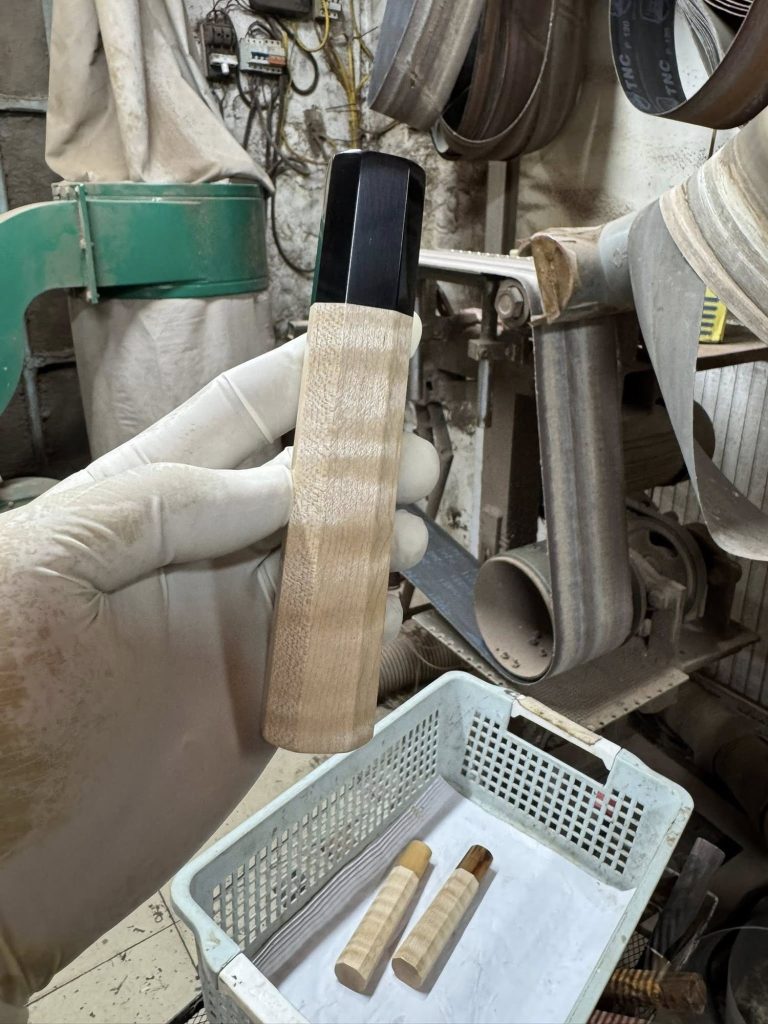
Build an identification record
Photograph the entire dry handle and take close views of the affected area in steady, even light. Do not pick at an edge to expose more material. Record:
- The original finish, if supported by reliable records.
- Every oil, wax, cleaner or other product applied since then.
- When the lifting first appeared and whether it is spreading.
- Its location relative to the ferrule, seams and front junction.
- Any recent prolonged water or heat exposure.
- Separate changes such as a crack, altered texture or movement at the joint.
Product names and sequence matter more than calling the surface an “oil finish.” The USDA Forest Products Laboratory describes finish selection as dependent on protection, appearance, cleanability and wood properties; it does not provide a universal coating identity from appearance. Likewise, Opinel varies its maintenance guidance across wood, coloured wood and polymer handles.
Separate residue from a damaged layer
Material that changes during ordinary, finish-compatible cleaning may include removable residue, but that observation is not a home test of the coating’s chemistry or integrity. A layer that remains raised or peeling after the handle is clean and dry still does not identify its cause. Avoid solvents, scraping, sanding and experimental refinishing: each can remove evidence or affect an otherwise repairable surface.
If the handle is merely smooth and less glossy, compare the dull-finish refresh guide. If there is a true crack as well as surface lifting, follow the separate cracked-handle triage. Movement, an opening joint or a changed seating position calls for assessment of the assembly; surface lifting alone does not justify a refit.
Bring the photographs, finish history and product sequence to whoever evaluates the handle. They provide a better basis for deciding between cleaning, finish repair, broader component repair or replacement. Until that assessment, follow only compatible routine handling from the wa-handle care guide.