A dull surface is suitable for a routine refresh only when the handle has a confirmed oil finish and remains smooth, clean and structurally unchanged. Dullness accompanied by tackiness, roughness, lifting or peeling is a different problem and should not be covered with another maintenance coat.
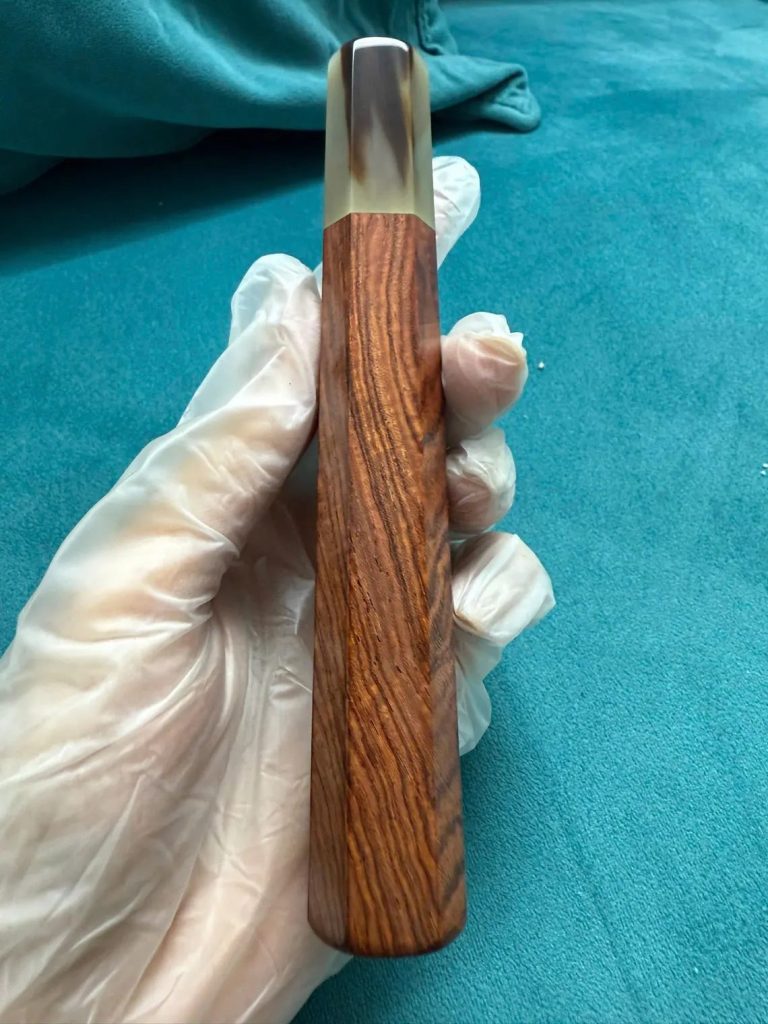
Read the surface before treating it
Examine the dry handle in even light and compare it with an earlier photograph if one is available.
Evenly dull but smooth: A uniform loss of sheen, with unchanged grain, seams and fit, may be ordinary cosmetic wear.
Cloudy, patchy or tacky: The surface may carry residue from food, cleaner or a previously applied product. Adding oil before resolving that uncertainty can conceal rather than clarify the condition.
Raised, flaky, peeling or newly rough: This is no longer a simple sheen question. Do not scrape, sand or buff the area to identify it. Use the guidance for a lifted finish instead.
Clean first, then compare again
Use only the cleaning method already known to be compatible with the handle’s finish, then dry it carefully and allow remaining moisture to leave before judging the sheen. Opinel’s material-specific guidance likewise places cleaning and careful drying before its own oil-care procedure. Japanese Knife Imports supports hand washing and prompt drying while limiting oil care to suitable natural-wood handles.
If compatible cleaning removes the cloudy or tacky appearance, the issue was not necessarily loss of finish. If the surface remains evenly dull, smooth and unchanged, follow the directions for the documented finish and its compatible maintenance product. Do not substitute a generic oil, invent a soaking period or expect a maintenance coat to reproduce the original factory appearance. The application itself is covered in how to oil a dry wa handle.
The USDA Forest Products Laboratory notes that finish choice relates to protection, appearance, cleanability and wood properties. That is why sheen alone cannot select the treatment. The broader wa-handle care guide covers routine care once the surface condition is understood.