After preparing raw fish, separate the knife and other used tools from anything intended for ready-to-eat food. Clean the handle promptly with a method compatible with its wood, ferrule and finish, then dry the front junction carefully. A handle that looks clean is not necessarily sanitized.
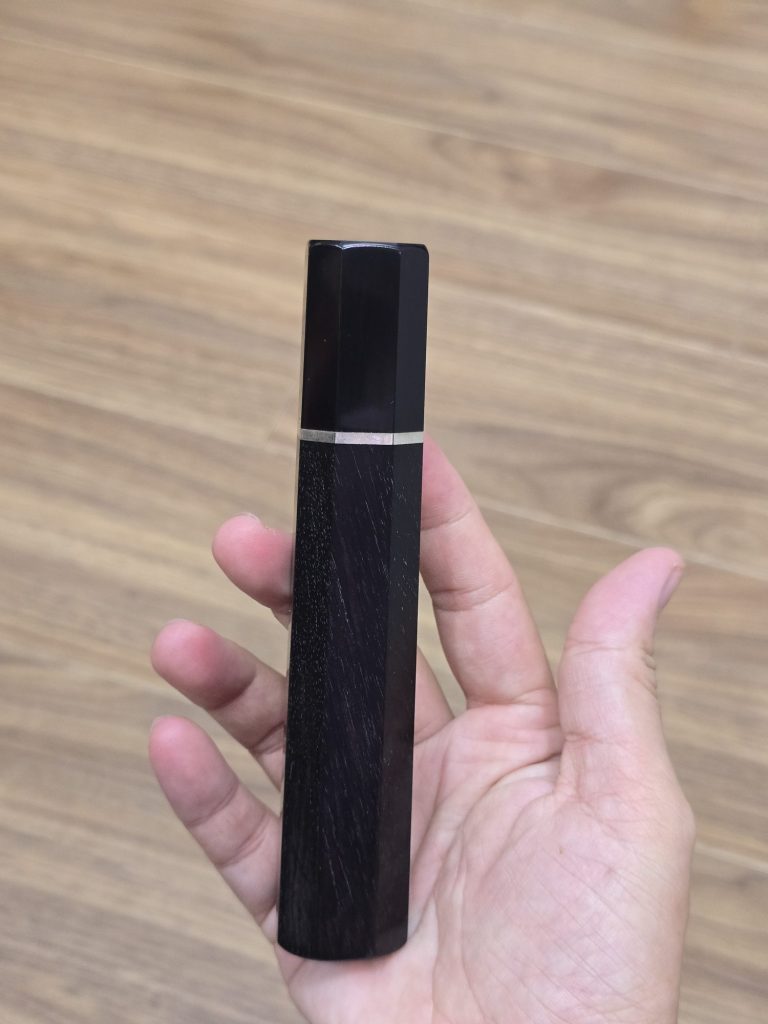
Change tasks before cleaning
Do not carry the fish-prep knife into salad, garnish or cooked-food work. The US Food and Drug Administration advises preventing transfer from raw seafood to ready-to-eat food and washing hands, utensils and preparation surfaces between those tasks.
Keep the used knife contained while you wash your hands and clear the work area. This prevents residue on the handle or your hands from reaching clean tools and food.
Remove residue without prolonged wetting
Use the cleaning method specified for the handle’s known materials and finish. Japanese Knife Imports supports hand washing, prompt drying and avoiding prolonged exposure to water and heat.
For a horn ferrule, Abbeyhorn’s material-care guidance specifies tepid water, very mild soap and a soft cloth, followed by immediate towel drying. It also rules out soaking, hot or boiling water, dishwashers, strong cleaners and abrasives. Keep water contact brief and avoid driving moisture into the junction around the blade.
Blot the handle, ferrule and accessible front junction with a clean towel. Leave the handle uncovered in a stable, ventilated place so remaining moisture can evaporate before storage. The handle-drying guide covers that step in more detail.
Clean-looking is not the same as sanitized
Gentle, material-compatible cleaning can remove visible residue, but it should not be described as sterilization or proven disinfection. Generic advice involving high heat or strong disinfectants cannot be assumed compatible with an assembled wood-and-horn handle.
If contamination control requires a procedure that the handle maker has not confirmed as compatible, do not improvise with bleach, heat or a soaking recipe. Use a different clean, suitable utensil for subsequent food preparation and obtain construction-specific guidance. If a sour smell remains or returns after complete drying, treat it as a persistent-odor concern rather than repeatedly washing the handle; see the sour-odor assessment guide.
For routine boundaries beyond fish preparation, use the wa handle care guide.