To clean a whole squid, pull the head and tentacles away from the body, draw out the clear quill from inside the tube, pull off the fins and peel away the thin skin, then cut the tentacles off just below the eyes and squeeze out the hard beak. Rinse the tube inside and out. Slice it across into rings for frying, or slit it open, score the inside in a crisscross and cut it into pieces for a stir-fry or the grill.
Buy it fresh and keep it cold
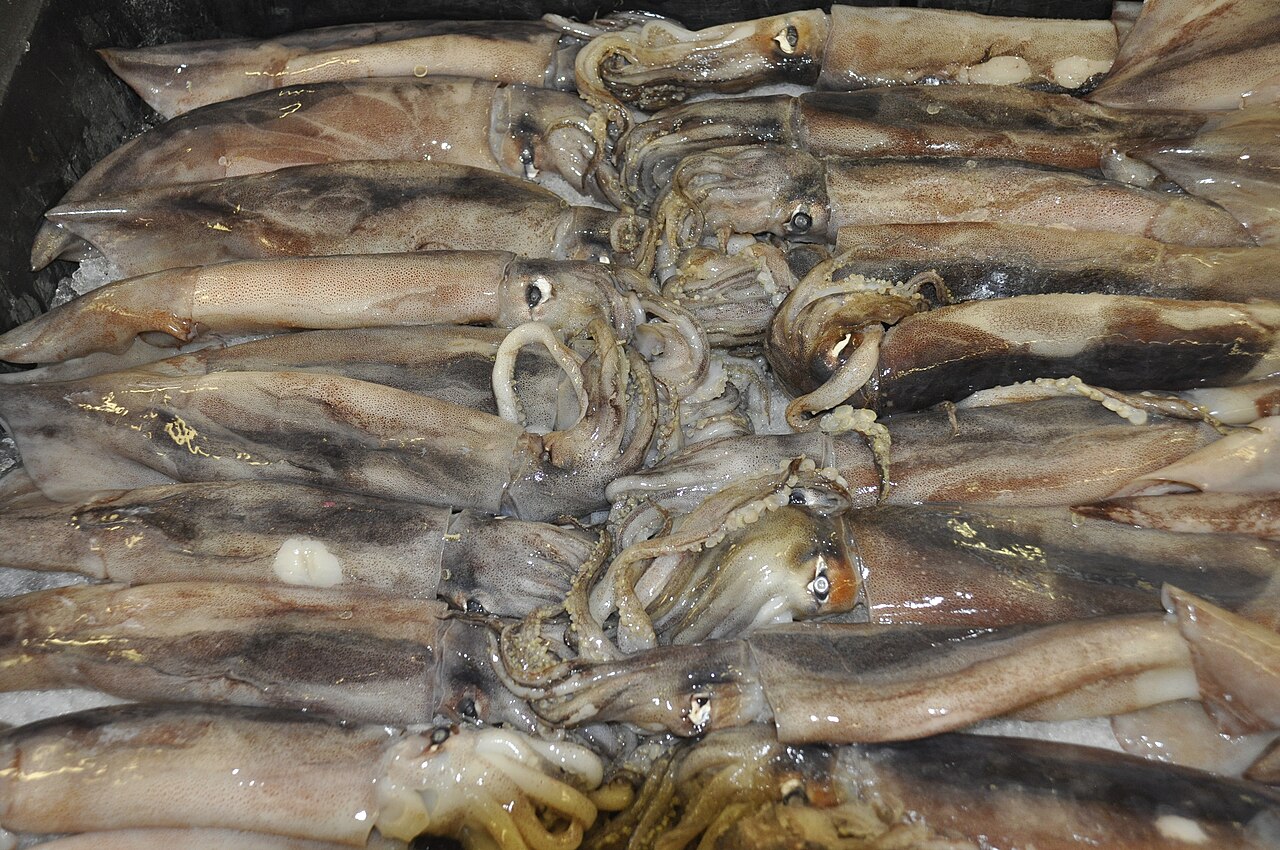
Great British Chefs says to make sure squid is absolutely fresh before cooking: it should be completely odorless. Most squid in shops has been frozen, America’s Test Kitchen points out; unless you buy it straight from the boat, assume it was. Squid also comes already cleaned, sold as bodies and tentacles, and buying whole bodies lets you cut them as you like.
Keep it in the refrigerator until you start, and do not leave it out for more than 2 hours, or 1 hour when it is above 90°F, as the FDA advises for seafood. Work on a board kept for raw meat and seafood; our guide to the cutting board for raw meat covers that setup. Have paper towels and a bowl for the scraps ready.
Clean the squid
- Pull out the head. Hold the body in one hand and the head in the other and pull the tentacles and innards away from the body. Kikkoman’s guide says to take care not to tear the innards as you pull.
- Take out the quill. Reach into the tube and pull out the quill, a thin, clear sliver of cartilage. Great British Chefs removes any remaining entrails along with it.
- Pull off the fins. Put your fingers in where the fins join the body and pull them off.
- Peel the skin. Starting where the fins were, peel the thin purple skin, the membrane, around and off sideways rather than lengthwise. Kikkoman notes that a dry paper towel grips the skin so it does not slip in your fingers.
- Trim the tentacles. Set the knife just below the eyes and cut, keeping the tentacles in one piece and discarding the head and innards.
- Remove the beak. Squeeze the center of the tentacles to push out the hard beak, as Great British Chefs does, and throw it away.
- Rinse. Rinse the tube inside and out and the tentacles under cold water, then pat everything dry.
Cut rings
For fried calamari or a quick sauté, lay the tube flat and slice straight across it into even rings. Keep the rings the same width so they cook at the same rate. Leave the tentacles whole. For strips, open the tube into a flat panel as described below and cut it lengthwise instead.
Score panels for stir-fry or grilling
- Open the tube. Kikkoman folds the body where the fins were attached, lays the knife sideways inside the fold and slices it open. Leela Punyaratabandhu of She Simmers makes a long slit from the inside, from the opening down to the pointed end, and opens it like a book.
- Inside up. Turn the panel so the inside faces up. She Simmers stresses that the cuts go on the inside of the squid, because squid curls from the inside out.
- Score one way. With the tip of a sharp knife, make parallel diagonal cuts about 1/2 to 3/4 of the way into the flesh. Do not cut through.
- Score the other way. Make a second set of parallel diagonal cuts in the opposite direction to form a crisscross.
- Cut pieces. Cut the scored panel into bite-sized pieces.
The scored pieces curl as they cook, and the grooves give a sauce something to cling to. She Simmers notes that an angled cut makes the tips of each square stand out and curl a little.
Cook it fast or slow
America’s Test Kitchen says squid benefits from being cooked either very fast, as in fried calamari, or very slowly, as in a stew or pasta sauce. In a slow cook its collagen turns to gelatin that lubricates the muscles. The FDA’s figure for most seafood is an internal temperature of 145°F.
Afterward, wash your hands for at least 20 seconds with soap and warm water, and wash the board, knife and counter with soap and hot water before preparing ready-to-eat food, as the FDA advises.
Which knife
Every cut here is through soft flesh with no bone, so you need a sharp, thin blade rather than a heavy one. A petty knife handles the trimming and scoring, and a longer knife makes quick work of rings. If you also prep shellfish, our guide to how to peel and devein shrimp uses the same small blade. For other ingredients, browse all our how-to-cut guides.
Sources: Great British Chefs, How to Clean a Squid (freshness, entrails and quill, membrane and fins, beak); Kikkoman, How to Prepare Seafood: Squid (pulling out the head and innards, quill, fins, peeling with a paper towel, opening the body, cutting below the eyes); Leela Punyaratabandhu, She Simmers, How to Score Squid (slitting and opening, scoring the inside, depth, crisscross, curling, sauce); Liz Bomze, America’s Test Kitchen, Why and How You Should Cook with Squid (most squid frozen, cleaned bodies and tentacles, fast or slow cooking); FDA, Selecting and Serving Fresh and Frozen Seafood Safely (the 2-hour limit, handwashing, washing boards, 145°F).