To peel and devein shrimp, pull off the head if it is still on, peel the shell from the body, and leave the tail on or pull it off. Then make a very shallow slit down the rounded back with a paring knife and lift out the dark vein with the tip. To butterfly a shrimp, cut along the back again, almost all the way through, and open it flat. Keep the shrimp cold while you work, and cook until the flesh is firm, pearly and opaque.
Keep it cold
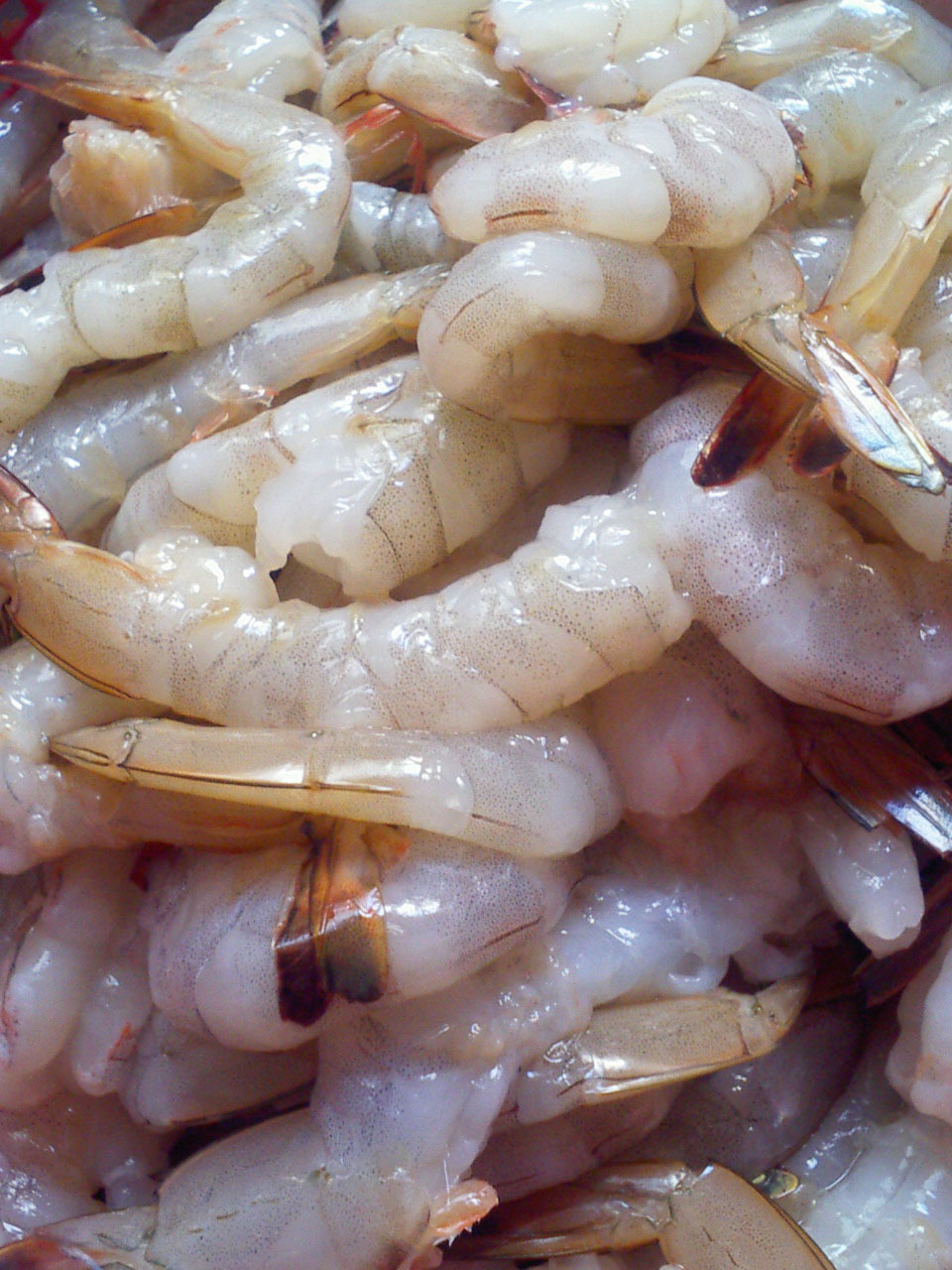
The FDA says to put seafood on ice or in the refrigerator or freezer soon after buying it. If you will use it within 2 days, keep it in a clean refrigerator at 40°F or below; otherwise, wrap it tightly and freeze it. To thaw frozen shrimp, the FDA’s first choice is the refrigerator overnight. For a quicker thaw, seal them in a plastic bag and immerse it in cold water, or, only if you will cook them right away, use the microwave’s defrost setting and stop while they are still icy but pliable. Raw shrimp flesh, the FDA adds, should be clear with a pearl-like color and little or no odor.
Work on a board kept for raw meat and seafood, as USDA’s Food Safety and Inspection Service suggests; our guide to the cutting board for raw meat covers that setup. Keep a bowl for the shells and paper towels handy, and do not leave the shrimp out of the refrigerator longer than you need: the FDA’s limit for seafood is 2 hours, or 1 hour when it is above 90°F.
Peel
- Take off the head. If the shrimp are head-on, pull the head off first, as What To Cook Today does.
- Peel the body. Peel the shell off the body, starting from the underside where the legs are.
- Decide on the tail. What To Cook Today finishes by pulling the tail off; to keep it, simply leave it on.
Peeling is easiest by hand. Kitchen shears are useful if you want to devein through the shell, and our kitchen shears guide covers what to look for.
Devein
Food Network’s guide explains that the vein runs along the back, just below the surface, and despite the name is the shrimp’s intestinal tract. The same guide treats removing it as a matter of preference: a dark vein can look unsightly and add grit, so deveining is usual but up to you.
- Back up. Hold the shrimp rounded side up between your thumb and forefinger, or lay it on the board.
- Make a shallow slit. Run the tip of a paring knife down the back, very shallow, stopping just before the last section before the tail.
- Lift it out. Use the knife tip or your fingers to lift out the vein. Food Network warns it can be sticky, so wipe the knife or your fingers on the paper towel as you go.
- Shell on. To devein without peeling, the same guide cuts a shallow slit right through the shell with a paring knife or kitchen shears, then spreads the sides gently and lifts the vein out.
- Back uncut. For an intact back, Food Network also describes lifting the vein out with a skewer pushed through the side of the shrimp.
Butterfly
A butterflied shrimp opens out and lies flat. Tasting Table’s Meggan Robinson suggests large, shell-on shrimp and a sharp paring knife.
- Hold it by the tail. Keep the back toward you, with the tail between your fingers.
- Cut deeper. Run the knife down the back again, almost all the way through, leaving only a thin layer attached. Do not cut it in two.
- Clean and open. Remove any vein left, then spread the two sides apart with your fingers until the shrimp lies flat.
Cook and clean up
The FDA says most seafood should be cooked to an internal temperature of 145°F. Without a thermometer, its sign for shrimp is that the flesh becomes firm, pearly and opaque.
Wash your hands for at least 20 seconds with soap and warm water after handling raw food, and wash boards, utensils and counters with soap and hot water before you prepare cooked or ready-to-eat food, as the FDA advises. A solution of 1 tablespoon of unscented liquid chlorine bleach per gallon of water adds a sanitizing step.
Which knife
Every cut here is shallow and short, so a small blade is all you need: a paring knife or a petty knife. Our paring knife vs utility knife comparison covers the size question. Use the tip and a light hand. For produce and other cuts, browse all our how-to-cut guides.
Sources: FDA, Selecting and Serving Fresh and Frozen Seafood Safely (buying, 40°F storage or freezing, thawing, the 2-hour limit, handwashing, washing boards, bleach solution, 145°F, firm, pearly and opaque); USDA FSIS, Cutting Boards and Food Safety (separate board for raw meat, poultry and seafood); Food Network Kitchen, How to Peel and Devein Shrimp (what the vein is, shallow slit, shell-on and skewer methods); What To Cook Today, How to Devein and Butterfly Shrimps (head, shell and tail, opening flat); Meggan Robinson, Tasting Table (butterfly cut).