Choose the cut for the way you plan to serve it: rind-on wedges for a platter, sticks for easy-to-hold pieces, or cubes for bowls and salads. Wash the whole melon first, then use the method that fits the dish.
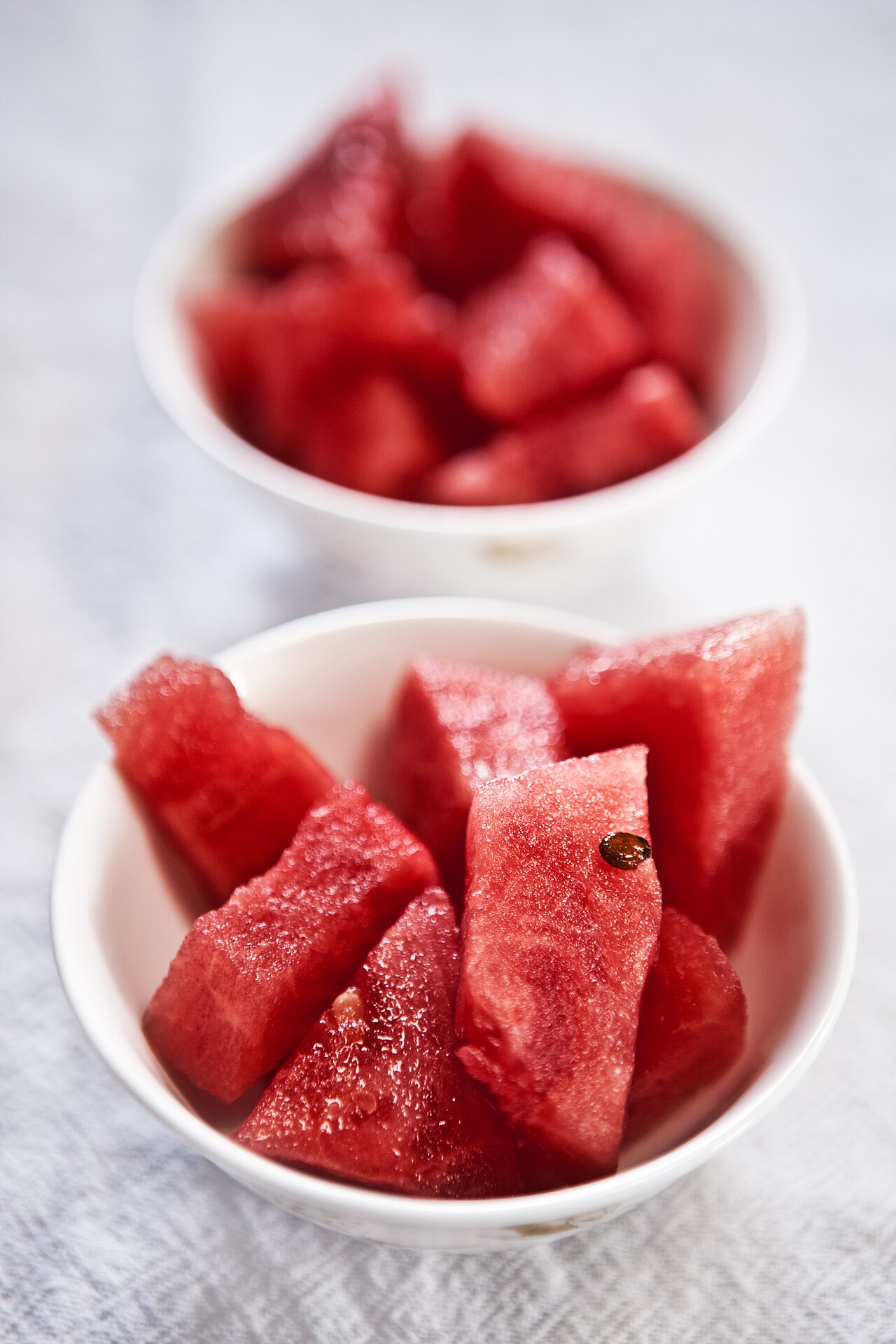
Clean and set up
Wash your hands with soap and water for 20 seconds. Rinse the whole watermelon under plain running water, rub the rind, scrub it with a clean produce brush, then dry it with a clean towel. Rinse before cutting so the knife does not carry dirt from the rind into the flesh. The FDA says not to use soap or produce wash on fruit. Place the melon on a stable board; if it rocks or slides, stop and reposition it before cutting.
Wedges
- Cut the melon in half lengthwise, from stem end to blossom end.
- Place one half cut-side down and cut lengthwise through it to make quarters.
- Set each quarter on one of its broad, flat cut faces. Cut crosswise through the rind at the serving thickness you want, leaving the rind on as a handle.
Rind-on sticks
- Cut the watermelon in half lengthwise and place one half cut-side down.
- Slice from stem end toward blossom end at roughly 1-inch intervals.
- Make a second set of cuts perpendicular to the first, also about 1 inch apart. The crosscuts divide the half into sticks, with rind left on one side to hold each piece.
Cubes
- Cut off both ends of the whole melon to expose flat surfaces. Stand it on one flat end.
- Starting where the white rind meets the red flesh, angle the knife and follow the curve to remove the rind. Turn the melon as you work so it stays supported on its flat base.
- Cut the peeled melon in half lengthwise and place one half cut-side down. Slice it crosswise into slabs as thick as you want the cubes. Lay each slab flat, cut it into strips, then crosscut the strips into cubes. Work one slab at a time; do not stack them.
Refrigerate cut watermelon in a covered container at 40°F (4°C) or below. For a fruit platter, see our guides to pineapple rings, spears and chunks and orange slices, wedges and segments, or cantaloupe wedges, slices and cubes.
Sources: Iowa State University Extension AnswerLine, “Watermelon” (rind-on sticks); National Watermelon Promotion Board, “Cutting & Yield” (stable base, peel, disks, strips and cubes); Iowa State University Spend Smart, “Melon” (washing and quarter/wedge sequence); FDA, “7 Tips for Cleaning Fruits and Vegetables” (washing and refrigerated storage).