Start with a clean, dry cantaloupe and a board that will not slide. Halve the melon lengthwise and scoop out the seed cavity. Leave the rind on for wedges, or remove it from stable wedges before cutting slices or cubes.
Choose by serving style: long wedges keep a rind handle; crosscut crescents fit a platter; peeled slices make neat bites; cubes are convenient for fruit salad. Cut thinner crescents for small bites or larger ones for a platter. The stable setup is the same for each cut.
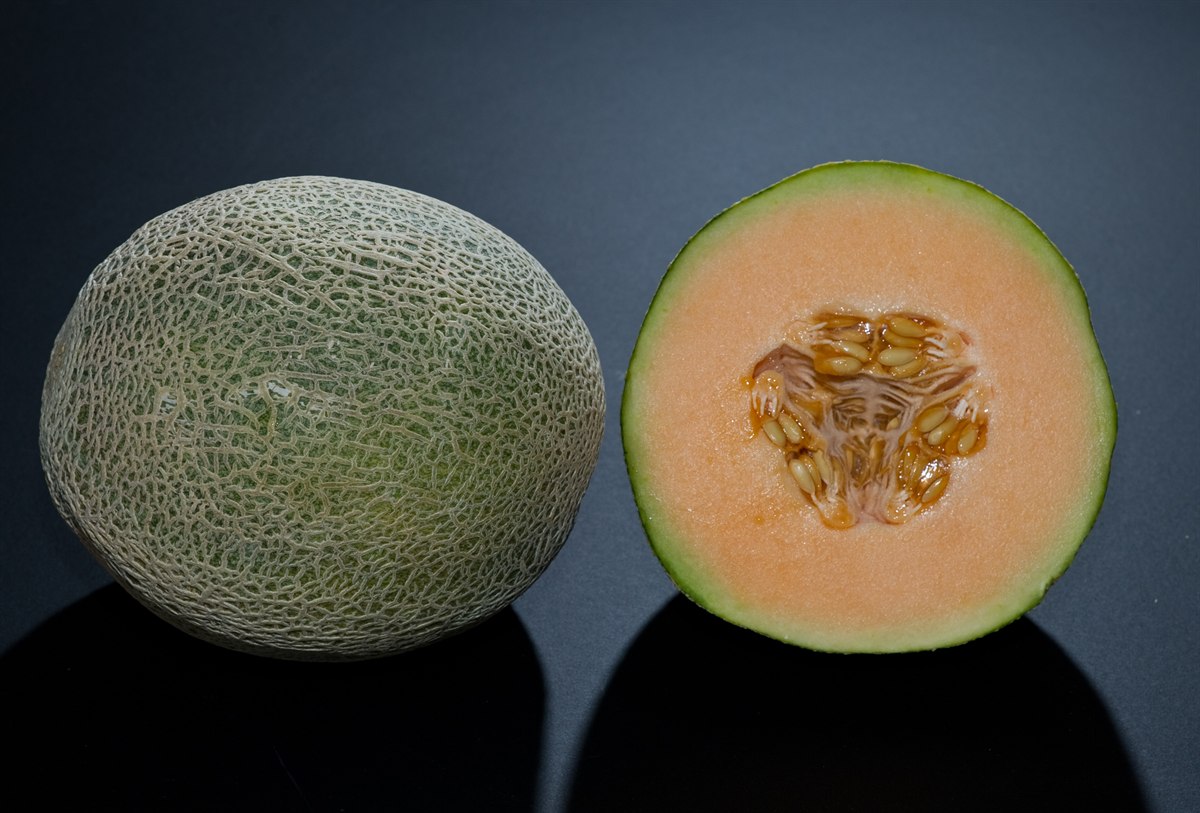
Wash and steady the melon
Rinse the whole cantaloupe before cutting or peeling. Because the netted rind is firm, scrub it under plain running water with a clean produce brush, then dry it with a clean towel. The FDA says not to use soap or produce wash. Cleaning the outside first helps keep the knife from carrying dirt from the rind to the flesh.
Set a stable cutting board on a secure counter. Trim a thin slice from one end to make a flat resting face. Stand it on that face before cutting; do not hold the round melon in your palm while slicing.
Halve, seed and make wedges
- With the flat end planted on the board, cut down through the center lengthwise.
- Scoop out the seeds and stringy center with a large spoon.
- Set each half cut-side down so its broad flat surface rests on the board. Cut each half lengthwise into three or four long wedges.
Leave the rind on: it gives each wedge a natural handle for a snack or fruit platter. For shorter crescent slices, keep a wedge stable on one of its flat sides and cut across it at the thickness you want. If a piece shifts, stop and reposition it before continuing.
Remove the rind for slices or cubes
Work with one wedge at a time. Set it on a broad cut side so it rests flat on the board. Keep the hand holding the wedge at the end opposite the knife’s path, with fingertips curled; guide the blade between flesh and rind in short strokes, cutting away from that hand. Turn the wedge only when another flat side is secure.
For slices, cut the peeled wedge crosswise. For cubes, cut the wedge lengthwise into strips. Lay the strips flat, then crosscut them into cubes one strip at a time.
Refrigerate cut cantaloupe promptly. The CDC says not to leave cut fruit out longer than two hours, or one hour when the temperature is above 90°F (32°C). For another whole-fruit method, see our guide to cutting a watermelon into wedges, cubes and sticks.
Sources: Purdue Extension FoodLink, “Cantaloupe” (halving, seeding, wedges and dicing); FDA, “7 Tips for Cleaning Fruits and Vegetables” (scrubbing and rinsing firm produce); CDC, “Preventing Food Poisoning” (refrigerating cut fruit promptly).